McConaughey rejects the safe bet to find meaning in the chaos
The Friction of This Onward March
We live in an age of hyper-optimized survival. We measure our steps, log our sleep, and track our biochemical metrics as if a longer life automatically equates to a better one. Yet this meticulous curation often hollows out the very experience of being alive. We find ourselves trapped in what the intellectual historian Isaiah Berlin called the "inner citadel"—a retreat into safety where, to avoid the pain of failure, we simply stop making significant bets. We hold one foot back from our relationships, our work, and our convictions. By refusing to fully commit, we ensure that while failure hurts less, success becomes impossible to truly own.
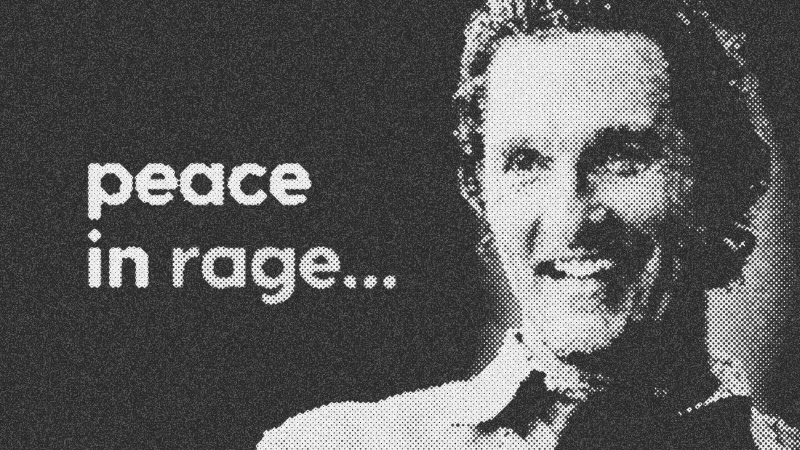
This tension between safety and soul is where our modern dilemma ripens. In a deep conversation on the Modern Wisdom podcast, actor and author Matthew McConaughey challenges this collective retreat. He argues that our obsession with longevity and metrics has come at the expense of life's actual quality. We are so busy projecting our lives into a hypothetical future that we miss the direct, messy reality of the present. To live deeply, we must be willing to abandon the renter's mentality—which views life as transactional, transient, and easily flipped—and adopt an owner's perspective that risks everything on the long term.
This is not a call for reckless hedonism. Rather, it is an invitation to explore the convergence of seemingly contradictory forces: self-reliance and faith, intellect and intuition, science and the divine. The deepest truths do not exist in sterile isolation. They emerge where disparate ideas overlap, requiring us to step out of our heads and drop below the neck to find what actually makes a life worth living.
The Rhyme in Our Imbalance
We often treat life as a series of linear equations. We expect that if we follow the rules, check the boxes, and execute the playbook, we will receive the desired outcome. But reality does not operate on clean math. Sometimes you do everything right and still get kicked in the teeth. When this happens, our immediate response is often cynicism or a retreat into intellectualism. We analyze the problem to death, trying to find a logical explanation for an inherently illogical world.
Instead of searching for a neat balance, McConaughey suggests we look for "the rhyme in the imbalance." This concept, drawing on the Emersonian philosophy of compensation and the cyclical nature of existence, posits that life moves in ebbs and flows that eventually equalize. For every technological advancement, we sacrifice an old piece of culture. For every asset gained, a debit is registered. The goal of a mature intellect is not to eradicate these fluctuations, but to navigate them with a sense of cosmic rhythm.
This perspective reframes how we view coincidences and serendipity. Rather than dismissed as mere statistical anomalies, these moments can be viewed as the universe swinging back into alignment—a manifestation of what McConaughey calls vu deja, the uncanny feeling of having been in a place before, inverted and flipped to reveal a deeper, underlying structure. It suggests that science is not the enemy of faith, but rather the practical pursuit of a divine order that we will never fully prove. The pursuit itself is the point. An atheist scientist mapping the cosmos and an agnostic asserting absolute self-reliance are both participating in this grand, unfolding design. When we take the wheel with absolute responsibility, we are not defying the divine; we are fulfilling our end of the bargain.
The Labor of Genuine Absolution
If we accept that we must play active roles in our own lives, we must also confront our inevitable failures. In a culture saturated with cheap grace and superficial resilience, we have turned forgiveness into a transactional commodity. We apologize quickly to relieve our immediate guilt, dust ourselves off, and jump right back into the fray. But this rapid rehabilitation often prevents us from doing the actual, painful work of transformation.
McConaughey draws a sharp distinction between a repeat offender who uses forgiveness as a crutch and someone who genuinely seeks reconciliation. If you steal from someone and ask for their forgiveness, the ledger does not simply return to zero once they grant it. The grace extended to you is an open door, not a wiped slate. The primary responsibility rests on the offender to do the heavy lifting required to ensure they never have to ask for that forgiveness again. Without this labor, we trap ourselves in a self-inflicted cycle of repetition.
This cycle is what McConaughey calls a "daymare"—a living hell that persists long after we wake up. Nightmares end when we open our eyes, but daymares walk with us through our waking hours. They are the accumulated weight of burnt bridges, compromised principles, and betrayals of the self. When we repeatedly break promises to ourselves, we lose our own self-trust. We can move from city to city, changing our external environments to escape a ruined reputation, but we cannot escape the mirror. If we look in the mirror and realize we no longer respect the person looking back, we have entered a uniquely personal purgatory. True rehabilitation requires us to pause, feel the genuine weight of our wrongdoing, and pay the necessary penance before we attempt to carry on.
The Relinquishment of the Safe Bet
To break free from this internal stagnation, we must examine how we approach risk. We have been conditioned to praise balance and moderation as the ultimate virtues. But greatness, whether in art, character, or intellect, almost always demands a period of profound imbalance. It requires us to go all in, exposing ourselves to the very real possibility of failure.
Consider the difference between two approaches to life: taking eight calculated risks and succeeding at seven, or taking a hundred wild risks and succeeding at eight. While the former looks cleaner on a resume, the latter represents a far more expansive engagement with reality. If we are not taking enough risks to fail, to stumble, or to "sin" (in the original sense of missing the mark), then we are playing a defensive game. We are returning to the grave with "even money," having risked nothing of substance.
This defensive posture often manifests as a renter's mentality in our work and relationships. We treat our partnerships as transactional, keeping one foot out the door in case things go wrong. We hire people for short-term utility rather than long-term alignment. In doing so, we deny ourselves the possibility of transformation. An owner's mentality, by contrast, enters every venture with the hope of a lifelong commitment. It is the willingness to treat a house not as a temporary shelter, but as a potential home. This approach is undeniably scarier; it makes us vulnerable to deep hurt and interpersonal trauma. But it is also the only vehicle through which we can experience genuine, transcendent growth.
The Difference Between Nice and Good
As we navigate these risks, we need a reliable moral compass. Our modern social vocabulary often conflates being a "nice guy" with being a "good man." However, these two archetypes represent fundamentally different orientations to the world. The nice guy is primarily concerned with social cohesion, consensus, and avoiding conflict. He says yes to appease those around him, often because he lacks the clarity or the courage to stand for anything specific. His identity is fluid, shifting with the social currents to maximize his immediate acceptability.
A good man, by contrast, is defined by his convictions. He has established clear boundaries—ideals he will actively stand for and, crucially, stand against. When these boundaries are tested, a good man is often not nice. He is willing to cause friction, to speak uncomfortable truths, and to enforce consequences when his boundaries or his loved ones are trespassed upon. This distinction became acutely personal for McConaughey during his transition away from Hollywood's romantic comedies. While he was highly successful and widely liked as the charming, affable lead in films like How to Lose a Guy in 10 Days, he felt his work was slipping into the passive category of the "nice guy." His actual life, meanwhile, was expanding with the arrival of his family, demanding a more robust, active masculinity.
To align his career with his personal growth, McConaughey had to make a highly risky move: he stopped doing what was easy and successful. He turned down a massive fourteen-and-a-half-million-dollar offer for another romantic comedy, effectively stepping off the Hollywood grid for twenty months. During this period of self-imposed exile, his industry peers questioned his sanity, and he seriously considered alternative paths as a teacher or wildlife guide. But by refusing to settle for the comfortable routine, he allowed his public persona to fade, making room for the dramatic roles in projects like True Detective and Dallas Buyers Club that ultimately defined his mature career. He traded the predictable safety of being liked for the unpredictable challenge of being respected.
The Redefinition of Our Inner Strength
This willingness to risk professional ruin for personal alignment points to a broader cultural need: a healthier, more constructive definition of strength and masculinity. In recent years, our collective efforts to dismantle toxic behaviors have occasionally overcorrected, leaving many men feeling paralyzed or uncertain of their role. In attempting to sanitize the harmful elements of male behavior, we have sometimes sterilized the positive ones.
True strength is not oppressive or domineering. It does not seek to control others to validate its own existence. Instead, it is rooted in competence, emotional composure, and the willingness to be relied upon. When a man feels a deep, synchronous alignment of his intellect, heart, and actions, he becomes a stabilizing force for those around him. This is not about reverting to outdated, macho caricatures. It is about embracing the responsibility of protection, decisiveness, and constructive action.
This reframing requires us to update our vocabulary. Consider how we define vulnerability. For a long time, vulnerability has been associated with passive surrender or the performative display of emotion. But a more potent definition is this: saying your truth in spite of the consequences, especially when it is terrifying to do so. This is an active, courageous stance. It is not a step back; it is a step forward into the arena. The same applies to humility. Humility is not about shrinking, lowering your shoulders, or rendering yourself small. It is simply the clear-eyed admission that you have more to learn. When we define humility this way, it ceases to be a limitation and becomes a catalyst for lifelong learning and continuous growth.
The Rhythm of the Unhurried Mind
To integrate these principles, we must ultimately change our relationship with time. We exist in a cultural landscape that is constantly accelerating. With the rise of artificial intelligence, instant communications, and an overwhelming deluge of daily information, we are pressured to think, act, and produce faster than ever before. We treat time as an scarce resource to be conquered and optimized.
But this frantic pace often produces a superficial cleverness rather than genuine wisdom. We collect vast quantities of data, yet we struggle to find the underlying soul of our stories. We are like musicians playing a song with nothing but high-pitched treble, missing the deep, grounding bass that gives the melody its meaning. To find that grounding, we must learn to dance with time rather than fight it.
As the legendary basketball coach John Wooden famously advised his players: "Be quick, but don't be in a hurry." When we hurry, we miss the vital details. We skip the instructions, rush the foundation, and end up with a structure that cannot sustain itself. When we move with a deliberate, unhurried rhythm, we find that time is on our side. It is not an enemy to be outrun, nor is death a final defeat to be feared. They are the natural boundaries that give our choices their gravity.
By dropping below the neck, aligning our hearts with our intellects, and refusing to settle for the safe, half-committed path, we reclaim our agency. We stop merely acting out roles written by others and begin to author our own narratives. It is a journey that requires us to embrace the friction, risk the fall, and find our own unique rhythm in the beautiful, chaotic music of life.
- Dallas Buyers Club
- 14%· movies
- How to Lose a Guy in 10 Days
- 14%· movies
- Isaiah Berlin
- 14%· people
- John Wooden
- 14%· people
- Matthew McConaughey
- 14%· people
- Other topics
- 29%
Living with Confidence & Going All In - Matthew McConaughey (4K)
WatchChris Williamson // 1:57:46
