The Commercialization of Adolescent Angst: Navigating the Gen Z Female Mental Health Crisis
The Digital Tipping Point and the Fragmented Self
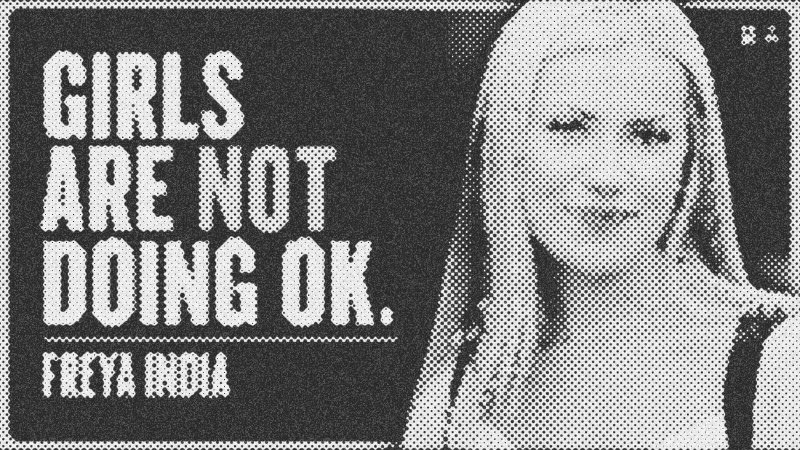
Something shifted in 2012. While the world watched the slow evolution of the smartphone, a silent psychological rupture occurred among Gen Z, specifically targeting young women. Statistics reveal a haunting divergence: while suicide rates for middle-aged men saw incremental increases, the rate for girls aged 12 to 14 skyrocketed by 138%. This is not merely a byproduct of "teenagers being teenagers." It is the result of a perfectly timed collision between biological vulnerability and a predatory digital environment. Freya India argues that the timeline—the release of the iPhone in 2007, Instagram in 2010, and sophisticated editing apps by 2013—provides the most compelling evidence for this decline.
Young girls are naturally more risk-averse, prone to perfectionism, and sensitive to social hierarchies. In the analog world, these traits were managed within the confines of physical communities. In the digital world, they are exploited by an "onslaught of advertising" that follows a girl into her bedroom. If she feels insecure about her skin, she is not met with reassurance; she is met with targeted ads for serums and procedures tailored to her exact digital footprint. This creates a feedback loop where natural adolescent turmoil is captured, analyzed, and sold back to the individual as a problem requiring a commercial solution.
The Marketization of Resilience and Therapy Culture
We have entered an era where normal human distress is being medicalized for profit. The "therapy industry," characterized by platforms like BetterHelp and Talkspace, has successfully rebranded professional psychological intervention as "texting with a bestie." While access to mental healthcare is vital, the promise of "unlimited messaging" creates a dangerous dependency. By allowing a young person to be instantly soothed via a screen the moment they feel an uncomfortable emotion, we are robbing them of the opportunity to develop internal resilience. Resilience is a muscle built through the endurance of discomfort, not the immediate outsourcing of it.
This culture pushes a seductive but damaging lie: that a "perfect soul" is achievable through consumption. If you feel anxious, there is a pill; if you feel sad, there is a therapist. This framework ignores the reality that negative emotions are often functional signals about our environment or behavior. When Gen Z girls are encouraged to "glamorize" their diagnoses—sharing "hot girl pills" or displaying Lexapro phone cases—the identity of being "mentally ill" becomes a badge of belonging. This normalization has crossed into a territory where recovery is secondary to the performance of the struggle itself.
The Algorithmic Conveyer Belt and Extreme Identity
Social media functions as an algorithmic conveyor belt, pushing children toward the extreme end-point of any initial interest or insecurity. A girl who starts by watching a makeup tutorial is gradually funneled toward content about cosmetic surgery. A girl questioning her mood is led toward videos that suggest being tired is a definitive symptom of a complex disorder. The goal of the algorithm is not the well-being of the user; it is engagement. And nothing engages like the extreme.
This explains why modern discourse feels so polarized and intense. Every child is on their own specialized path, receiving constant confirmation that their specific niche—whether it is gender identity, mental health, or politics—is the most urgent and absolute truth. Because Gen Z spend upwards of ten hours a day on screens, this digital environment has become their primary reality. The distinction between "online" and "real life" has evaporated. When a girl sees a filtered, chiseled version of herself on TikTok and then looks in a physical mirror, she doesn't just see her face; she sees a "failed" version of her digital avatar. This has birthed a specific type of "Snapchat Dysmorphia," where patients seek plastic surgery to look like their edited selfies.
The Performance of Vulnerability and the Loss of Presence
There is a perverse pressure today to capture and market every meaningful life moment. We see women filming themselves giving birth, families meeting newborns through the lens of a smartphone, and influencers setting up cameras to record their own panic attacks. This is the performance of vulnerability. When you know the camera is there, you are no longer in the moment; you are watching yourself live the moment. You are calculating how it will be perceived, how many likes it will garner, and how it fits your personal brand.
This performance cheapens the most sacred human experiences. Even "body positivity" has been co-opted into a form of a "bodily humble brag," where women post the most flattering version of an "unflattering" photo. This inauthenticity creates a world where everything is for sale, including our deepest pain. The advice that is missing from this landscape is simple: be a better person. We tell young women that everything they do is empowering and that their only duty is to their own happiness. We have stopped offering the moral scaffolding that young people crave. Without milestones or guidance on discipline and community, they are left adrift in a sea of self-obsession.
The Divide: Risk Aversion and the Future of Family
A massive divergence is occurring between Gen Z men and women. Young women are lurching toward a hyper-progressive, risk-averse worldview, often viewing dating and traditional family structures with deep cynicism. Terms like "love bombing," "narcissism," and "red flags" are used to pathologize the normal friction of human relationships. This risk aversion extends to the idea of children, fueled by the "child-free" movement on TikTok, which lists hundreds of reasons—from "parasites" to "ruined heels"—to avoid motherhood.
This trend prioritizes immediate emotional comfort over long-term flourishing. Data from Pew Research Center shows that adults now prioritize job satisfaction and friendships over marriage and parenthood. Yet, the irony is that job satisfaction is often a zero-sum game, whereas a happy family provides sustainable, non-marketized meaning. The role models for this new era—figures like the Kardashians or Taylor Swift—extol the virtues of fame and money, which are fundamentally incompatible with the quiet, self-sacrificing nature of family life. Until we provide young women with role models who value legacy over likes, the crisis of meaning will only deepen.
Conclusion: Reclaiming Agency and Reality
The path forward requires a radical backtracking from the "always open, always sharing" culture that has dominated the last decade. We must acknowledge that family breakdown, often ignored in academic circles for fear of "stigma," is a primary driver of the instability young people feel. Resilience is not something that can be bought or downloaded; it is built by logging off, engaging in the physical world, and accepting the inherent risks of being human. True empowerment for the next generation of women won't come from a new filter or a better prescription—it will come from the strength to look away from the screen and back toward each other.
- Gen Z
- 21%· people
- TikTok
- 11%· companies
- Alex Cooper
- 5%· people
- BetterHelp
- 5%· companies
- Chris Williamson
- 5%· people
- Other topics
- 53%
When Feminism Stopped Being About Women - Freya India
WatchChris Williamson // 1:35:38
