Beyond the Grind: Designing a Life for Peak Creativity and Purpose
The Boredom Trap and the Architecture of Choice
Most of us spend our lives reacting to the void of empty time. We find ourselves in a constant battle against boredom, yet our choice of weaponry usually involves the path of least resistance. You know the feeling: the reflexive reach for the phone, the endless scroll, the passive consumption of content that leaves you feeling more depleted than when you started. We must recognize that boredom is not a problem to be anesthetized; it is a signal for creation. If we do not provide ourselves with a project or a purpose to build toward, entropy takes hold.
This is where we must apply a new understanding of how life fills the space we give it. Just as work expands to fill the time allotted to it, a life without intentionality expands to fill the boredom given to it with mindless habits. The challenge isn't just about being busy; it's about choosing what to build. Whether you are building your body, a business, or a better version of your internal world, that focus acts as a shield against the decay of your potential. When you have a north star, your habits and behaviors no longer default to the easiest available option. They become deliberate steps toward a higher vantage point.
Dismantling the Delusion of Hard Work
There is a pervasive misconception that sheer effort is a currency that guarantees success. We’ve been conditioned to believe that if we put in enough hours, we deserve a specific outcome. But the universe doesn't operate on a meritocracy of sweat. Working hard on the wrong thing is simply a faster way to reach a dead end. You can spend a year writing a book that no one wants to read, and while the effort was immense, the market or the world doesn't owe you a six-figure salary for it.
We must uncouple the hours on a paycheck from the value of our creative output. This realization is often ruthless because it strips away the comfort of the 'grind' mentality. Intensity might win you short-term results, but consistency and leverage are what keep you in the game for the long haul. Creativity acts as a step function—a sudden leap in progress that hard work alone could never achieve. If you are working yourself to the bone but seeing no results, that pain point is a gift. It is telling you that you need a new direction, not more effort. You have to be willing to step back, look at the territory from a higher vantage point, and find the lever that actually moves the mountain.
The Four Phases of the Creative Cycle
Growth is never a straight line; it is a series of cyclical chapters, each with its own rhythm. To navigate this, we must identify which season we are currently inhabiting. The cycle often begins with Feeling Lost. This usually happens after we’ve achieved a major goal and the 'high' has worn off. Instead of panicking or filling that void with distraction, we must allow it to lead us into Curiosity. This is the rabbit-hole phase where we experiment, study, and try new things without the pressure of immediate results.
Once curiosity finds its mark, we are pulled into Intensity. These are the twelve-hour days where work feels like play, and fulfillment is at its peak. However, intensity is unsustainable. If you try to live there forever, you will burn out. This leads to the final, crucial phase: Consistency. This is where you build the systems to maintain a higher baseline. Think of it like physical fitness: intensity builds the muscle, but consistency is what reveals the definition and makes the strength permanent. Recognizing these phases allows you to stop fighting the natural ebb and flow of your energy and start working with it.
Designing Your Environment for Mindful Creation
Discipline is rarely about willpower; it is almost always about environment design. If you find yourself distracted by your phone in the morning, the solution isn't to 'try harder' to ignore it. The solution is to put it in another room. You are not undisciplined; you are simply placing yourself in environments that invite failure. To design a life for peak creativity, you must create constraints that protect your focus.
I recommend a morning routine centered on 'constraining entropy.' Do not let the world into your head before you’ve had a chance to produce something of your own. This means no emails, no social media, and no news. Use your morning for high-leverage building—the novel, the long-term project, or the deep writing that requires your best cognitive energy. Only after you’ve completed these blocks should you allow the 'releasing of entropy'—the admin tasks, the emails, and the external conversations. By creating a hard separation between your creative work and your maintenance work, you prevent your focus from being diluted by a thousand tiny interruptions.
Embracing Uncertainty as a Compass
Your potential is directly determined by how much uncertainty you are willing to embrace. Most people cling to the known because it feels safe, but the known is where growth goes to die. Think of uncertainty as 'progressive overload' for your mind. Just as you must lift heavier weights to grow physically, you must take on more responsibility and navigate more unknowns to grow psychologically.
When you feel anxious, it’s often because you are 'punching above your weight'—the task is too challenging for your current skill level. But once you navigate that challenge, the unknown becomes known. You expand your 'umbrella' of competence. The goal isn't to eliminate uncertainty but to become a person who can hold more of it without breaking. This is why having an Anti-Vision is so powerful. If you don't know exactly where you want to go, at least define exactly what you don't want to become. Use the pain of your past and the things you never want to experience again to reorient your mind. This simple act of inversion filters your environment, helping you spot opportunities you would have otherwise missed.
Writing as the Foundation of Thought
Writing is not an academic exercise; it is the act of organized thinking. When thoughts are stuck in your head, they are a chaotic mess. Putting them on paper allows you to see the gaps in your logic and the potential in your ideas. It is the ultimate skill because it amplifies every other domain of your life. Whether you are in sales, marketing, or management, your ability to communicate and persuade is rooted in your ability to think clearly.
Start a practice of externalizing your mind. This could be a newsletter, a blog, or even a private journal. The medium matters less than the act of synthesis. When you have a reason to remember what you learn—because you have a project to apply it to—your retention skyrockets. You no longer read just to read; you hunt for ideas you can utilize. This turns your entire life into a creative laboratory. You become a person who doesn't just consume information but transforms it, creating a feedback loop that continually refines your worldview and pushes you toward your highest potential. Remember, growth happens one intentional step at a time, and the most important step is the one that moves an idea out of your head and into the world.
- 4,000 Weeks
- 7%· books
- Chris Williamson
- 7%· people
- Dan Koe
- 7%· people
- George MacGill
- 7%· people
- Julia Cameron
- 7%· people
- Other topics
- 67%
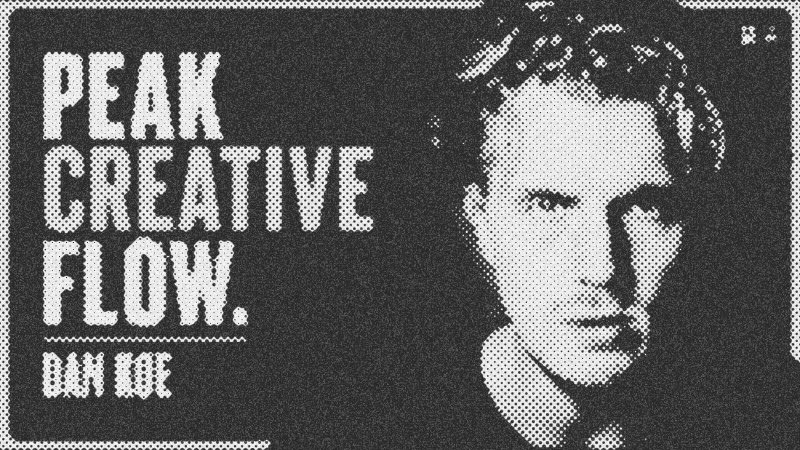
How To Design Your Life For Peak Creativity - Dan Koe
WatchChris Williamson // 1:00:12
