The Price of Potential: Navigating Success, Resilience, and the Modern Mindset
The Hidden Burden of Success
When you look at someone who has reached the pinnacle of their field, it’s easy to assume that life becomes a series of effortless wins. But the reality is far more complex. Reaching a level of high-tier success—what some call escape velocity—doesn't eliminate challenges; it simply changes their nature. In the beginning, your primary tool is raw, unadulterated hard work. You are gritting your teeth, pushing through the atmosphere, and relying on pure volume to make a dent. Without experience to unlock your latent talent, you have no choice but to be a grunt.
However, a strange thing happens as you ascend. The very habits that got you to the top—the frantic calendar, the obsessive attention to every email, the "insecure overachiever" energy—can become the things that hold you back. At the top, your job is no longer to work hard; it’s to have good ideas. For those with a working-class, Puritan-style mentality, this shift feels lazy or even opulent. It triggers a sense of guilt. Sitting on the couch to think rather than grinding in the gym or the office feels like a betrayal of the self that built the empire.
There is also the social cost. As a public figure like Chris Williamson notes, total support increases with scale, but the relative amount of hate skyrockets. This is often driven by a psychological mechanism where people see someone whose skills seem within reach—a "normal person doing a thing"—and feel a sting of envy. To close the gap between their reality and yours, they look for reasons to drag you down, often accusing you of having unfair advantages like wealthy parents. Recognizing this dynamic is essential for anyone aiming for high-level achievement: you must be prepared for the fact that the more you succeed, the more you will be viewed through a lens of privilege rather than effort.
The Fragility of the Physical Self
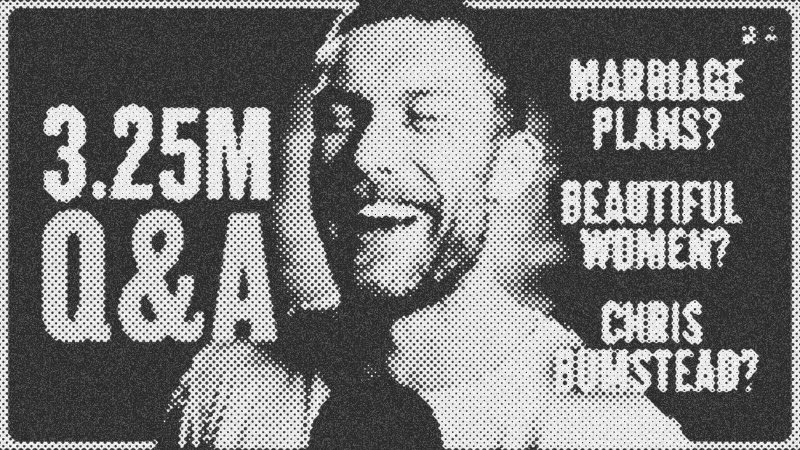
We often treat our health as a background process—something that just works until it doesn't. But as Chris Williamson candidly explores, the loss of health is perhaps the most profound "lowest point" an achiever can face. When you are grappling with autoimmune issues, toxic mold exposure, or chronic fatigue, the world shrinks. The "Wellman" wants a thousand things, but the "Sickman" wants only one.
Dealing with health issues in the public eye is a unique challenge. There is a pressure to remain professional, to "suck it up" and deliver a high-energy vibe even when your brain feels like it’s dripping out of your ears. For an individual whose career is built on memory, verbal fluidity, and intellectual engagement, the cognitive toll of illness is devastating. Imagine your job depends on your ability to recall specific words and concepts, yet your condition specifically targets that area of the brain. It creates a state of chronic frustration and a feeling that life is passing you by while you are forced to go to sleep at 8:00 p.m. just to survive the next day.
This experience offers a brutal but necessary lesson in gratitude. If your brain works, if your mood is stable, and if you have the energy to pursue your goals, you are already operating from a position of immense power. Resilience in this context isn't just about "pushing through"; it’s about the slow, methodical work of recovery—using every tool from Red Light Therapy to glutathione—and accepting that even a high-performer is ultimately a biological entity subject to the environment.
Relationships as a Long-Form Conversation
One of the most profound insights into long-term compatibility is the idea that marriage is essentially one long, never-ending conversation. When choosing a partner, many get distracted by surface-level traits like being "cute" or "kind," but the real metric is whether you can spend 20,000 hours speaking to that person without getting bored. You are looking for a conversation partner who can navigate the darkest parts of your life while also providing a Safe Harbor for your nervous system.
This leads to a difficult trade-off: what do you prioritize? Some find themselves with partners who are wonderful in every way but lack an intellectual spark. In these moments, you must ask yourself if you are willing to swap familiar problems for unfamiliar ones. No relationship is perfect; there are only trade-offs. If a partner provides emotional regulation and unconditional support, is that worth the sacrifice of complex intellectual debate?
Furthermore, when looking for a life partner, Chris Williamson suggests that the "timeline" is the most important first-date filter. You don't ask when someone wants to get married, but you do ask about their vision for a happy life and their timeline for children. If one person wants to be a "dgen world traveler" and the other wants five kids and four golden retrievers, the relationship is fundamentally pointed in different directions. Compatibility isn't just about liking each other; it’s about being aligned on the destination.
The Trap of Professional Busyness
There is a dangerous addiction in the modern world: the dopamine hit of being busy. Many of us use busyness to heal existential loneliness or a fear of not being enough. We press enter on emails, fill our calendars, and ride the threshold of burnout because it makes us feel important. But being busy is not the same as doing things that matter.
If you find yourself constantly moving between different interests, feeling "into" something for a week before dropping it, you are likely facing a planning problem or a discipline problem. You are use your fuel—your raw drive—but you are pointing your tires in opposite directions, resulting in zero net movement. To break this cycle, you must commit to a minimum timeframe—at least 30 days, ideally three months—and refuse to quit until that time is up.
This also requires a shift in how we view ourselves. Many high-achievers are driven by a fear of abandonment or a sense of always being on the outside. This is "diesel fuel"—it’s potent and will get you far, but it’s toxic if used for too long. The goal of personal growth is to switch from diesel to electric: to be driven by a pull toward a positive vision rather than a flight from a negative fear.
The Culture War and the Search for Role Models
Modern culture is increasingly polarized, especially for young men. There is a sense that the current social landscape is better at pushing men away than pulling them in. When young men are told they are inherently broken, privileged, or patriarchal, they naturally recoil. To win them back, the "left" or broader society must provide a positive vision of what a man can be—not just a list of things he shouldn't be.
Currently, there is such a vacuum of acceptable male role models that people are forced to look to fiction—characters like Aragorn from The Lord of the Rings—for examples of virtuous masculinity. This is a failure of culture. We need real-world examples of men who pursue mastery, contribute to their communities, and are valued for their strength rather than shamed for it.
At the same time, we must be wary of the "slop" created by the independent creator economy. Many podcasters have a vested interest in perpetuating culture war disputes because gossip and conflict drive views. It is easy to ride the "crest of now" by reacting to the latest news story, but true growth comes from building an evergreen body of work. As a consumer of content, your job is to be discerning. You don't need to be spoon-fed what to think; you need to find the underlying dynamics that are relevant to your own life and ignore the rest.
Conclusion: The Goalposts of Enough
Ultimately, the quest for personal development brings us to the question: what is enough? Humans aren't necessarily designed to be happy; we are designed to be successful in terms of acquiring resources, status, and partners. This biological drive means that if we don't consciously set our own goalposts, we will move them forever, ensuring we are never satisfied.
You should look at the ultra-successful—the Jeff Bezos types—with as much pity as envy. What is it inside of them that requires that level of extreme validation to feel like enough? For the rest of us, the path forward is one intentional step at a time. It’s about being consistent, being assertive about our needs, and recognizing that our greatest power lies in our ability to navigate challenges with our inherent strength. Growth isn't about reaching a final destination; it's about the quality of the journey and the people we choose to walk it with.
- Aragorn
- 7%· people
- Atomic%20Habits
- 7%· books
- Chris%20Bumstead
- 7%· people
- Chris%20Williamson
- 7%· people
- David%20Goggins
- 7%· people
- Other topics
- 67%
3.25M Q&A - Marriage Plans, Beautiful Women & Chris Bumstead
WatchChris Williamson // 1:41:14
