The Golden Algorithm: Navigating the Matrix of Emotional Integration
Breaking the Golden Algorithm: How Resistance Creates Your Reality
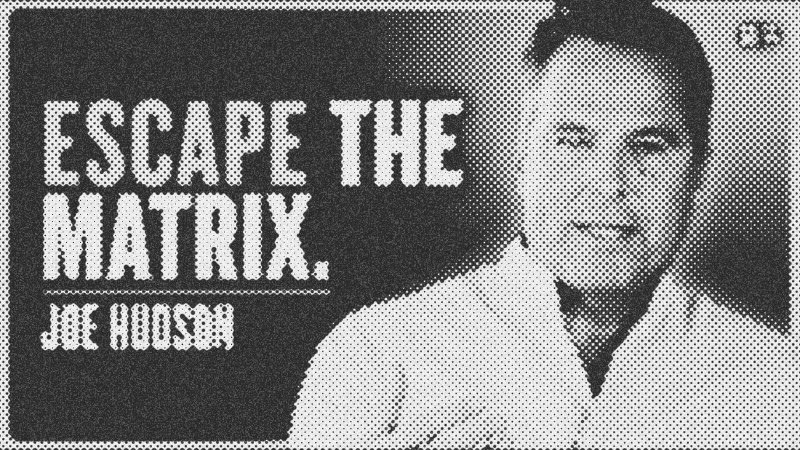
We often navigate our lives trying to outrun the shadows of our past, yet we find ourselves bumping into the same walls repeatedly. Joe Hudson describes a phenomenon he calls the Golden Algorithm. It is a sobering psychological reality: the exact emotion you spend your life trying to avoid is the one you inadvertently invite in. If you were emotionally abandoned as a child, you might spend your adulthood hyper-vigilant against abandonment. To prevent it, you might become defensive, or perhaps a pathological caretaker. In either case, your behavior creates resentment or distance in others, which eventually leads to the very abandonment you feared. You have effectively backwards-engineered your own pain.
To see the Matrix of your own life, you must name your unwanted emotion and list every way you try to dodge it. Usually, these avoidance strategies are the architects of your current misery. We act under the principle that what we resist, persists. This isn't just a catchy phrase; it's a mechanical truth of human psychology. When a CEO tries to avoid shame, they often take risks or hide information that eventually results in a public shaming event. The only way to break the cycle is to move from avoidance to a radical state of welcome. Instead of fleeing from anxiety, you must learn to say, "I can't wait to feel this." When you fall in love with the experience rather than fighting the sensation, the power of the pattern dissolves.
The Efficiency of Enjoyment and the Trap of Becoming
Many of us fall into the trap of believing that self-improvement is a prerequisite for self-worth. We tell ourselves, "I am not good enough yet," using the spiritual path as just another whip to drive ourselves forward. This creates a false dichotomy between being and becoming. In reality, these two states are in a cognitive superposition; they exist simultaneously. An oak tree is perfect at every stage of its development, from sapling to ancient giant. It is constantly becoming, yet it is never "broken" before it reaches full maturity.
We often use hard work as a sedative for low self-esteem. We convince ourselves that because we are a "work in progress," we don't have to face the fact that we don't like who we are today. We use the future as a shield. However, the most efficient way to grow isn't through self-castigation but through enjoyment. True efficiency isn't about speed; it's about energy return. If you do a task and leave with more energy than you started with, you are being efficient. When you prioritize enjoyment, your productivity often goes off the charts because you are no longer swimming against the current of your own resistance. You can either choose tasks that are inherently enjoyable or, more importantly, learn the skill of enjoying whatever you are doing. Even taking out the trash can be an exercise in presence if you shift your state of mind.
Unmasking the Tyrant: Deconstructing the Critical Inner Voice
Most of us live with a tyrant in our heads. We believe that if we weren't harsh with ourselves, we would simply collapse into laziness. This is a lie the critical voice tells to ensure its own survival. If you had a boss who criticized you every two minutes, you wouldn't be more motivated; you would be paralyzed and resentful. Why do we think the same strategy works internally? The critical voice is often a composite of caregivers, teachers, and early authority figures. It is not your voice; it is a learned survival mechanism designed to prevent you from experiencing pain.
Building self-esteem does not happen by following the orders of your inner critic. In fact, the louder the critic, the lower the self-esteem. We must learn to relate to this voice differently. Instead of trying to silence it—which is just another form of resistance—we should view it with loving attention. When the voice screams that you aren't doing enough, you can recognize that it is simply scared. By responding with, "I see you're anxious, and I'm right here with you," you change the relational dynamic. You move from being the subject of a tyranny to being the compassionate observer of a misguided part of yourself.
The Architecture of Emotional Fluidity and Decision-Making
Repressing emotions makes you fragile. It's a common misconception that being "logical" means being emotionless. However, the decision-making centers of the brain are inextricably linked to our emotional centers. If you remove the emotional capacity of a human, they can no longer make even the simplest decisions, like which pen to use, because they have no value system to prioritize one over the other. When you are stuck on a decision, it is almost always because there is an emotion you are unwilling to feel.
Emotional fluidity—the ability to let feelings move through you without resistance—is the key to clarity. We avoid emotions because of three primary fears: we fear sadness will last forever, we fear anger will destroy everything, and we fear fear itself will paralyze us. None of these are true. Anger, when unkinked, becomes determination and clear boundaries. Sadness, when fully felt, gives way to relief. The goal is to move from cerebral performance to integrated humanity. This requires somatic awareness. Emotions are held in the muscles; you can see repressed anger in the line of a jaw or a critical parent in the hunch of a shoulder. By putting curiosity into the physical sensation of the emotion—how dense it is, where it sits, how it moves—you begin the process of release.
Radical Honesty: The Power of 'No' and the Death of Perfection
If you cannot say no easily, you cannot be trusted. People who are perpetual pleasers are often the most dangerous because you never know where they actually stand. Their "yes" has no value because it isn't a choice; it's a compulsion to avoid conflict. This lack of boundaries leads to premeditated resentment, a term popularized by Neil Strauss. When you subjugate your needs to make others comfortable, you aren't being compassionate; you are being codependent. True compassion often involves making someone uncomfortable by speaking your truth.
Similarly, the pursuit of perfection is a barrier to connection. People don't want you to be perfect; they want to feel connected to you. Perfection is a moving target and a shield we use to hide our vulnerability. Whether in business, art, or relationships, the most successful outcomes stem from presence and attunement. When you stop trying to be impressive and start being interested, you unlock what Chris Williamson calls "reverse charisma." You become the person who makes others feel smart and interesting. This is only possible when you have welcomed all parts of yourself, including the messy, emotional, and imperfect ones.
Practices for a Transformed Life: Gratitude and Inquiry
To move these concepts from the head to the heart, we must run experiments. One of the most potent is a shared gratitude practice. This isn't just making a list; it's a seven-minute exchange where you must actually feel the sensation of gratitude before speaking it. Doing this with another person utilizes mirror neurons, deepening the emotional impact. It shifts your identity from a person of "lack" to a person of "abundance."
Another vital tool is emotional inquiry. This involves investigating your internal state with the wonder of a child. Labeling your emotions five times a day can break the trance of being controlled by them. If you can't find the words, make a sound that represents the feeling. This bypasses the analytical mind and speaks directly to the somatic experience. Whether it's through shaking to release fear or yelling to move anger, we must find ways to express what has been repressed. Only through this radical welcoming can we find the joy that is our natural birthright. Joy is the matriarch of the emotional family, and she will not enter a house where her children—anger, fear, and sadness—are not welcome.
- Art of Accomplishment
- 7%· organizations
- Black Swan
- 7%· books
- Chris Williamson
- 7%· people
- Descartes' Error
- 7%· books
- Hand-in-Hand Parenting
- 7%· organizations
- Other topics
- 67%
The Art Of Mastering Your Emotions - Joe Hudson
WatchChris Williamson // 2:16:38
