The Evolution of Meaning: Rationality, Biological Truths, and the Future of the Human Species
The Mirage of Cultural Christianity and the Vacuum of Meaning
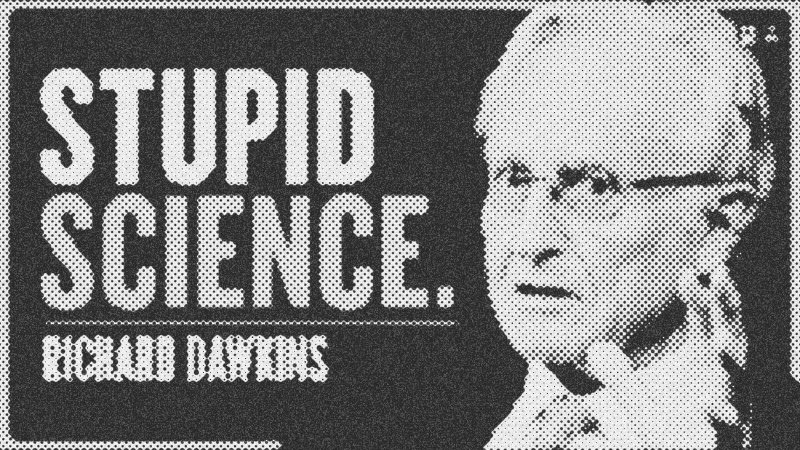
When we talk about the recent resurgence of Cultural Christianity, we often mistake aesthetics and heritage for genuine conviction. Richard Dawkins observes that while many people are returning to the rituals of the church—such as the growing interest in Latin Mass among the youth—this movement rarely signifies a return to supernatural belief. Instead, it highlights a deep-seated human desire for connection to our ancestral roots and a sense of ceremony that modern rationality often lacks.
This trend reveals a fascinating psychological tension. As traditional religious worldviews are dismantled by scientific evidence and critical inquiry, a vacuum of meaning often remains. Critics argue that by removing the "religious crutch," atheism has left people adrift, searching for purpose in ideological movements or identity politics. However, the idea that humanity requires a supernatural framework to maintain its psychological well-being is arguably a demeaning view of our species. We must find the courage to stand on our own feet, deriving meaning from the sheer wonder of the natural world and our capacity for reason rather than clinging to comforting myths.
The Biological Reality of Sex and the Spectrum of Race
In contemporary discourse, the concepts of sex and race are often treated as equally fluid social constructs. Yet, a rigorous biological analysis reveals a stark distinction between the two. Richard Dawkins argues that while almost every human trait exists on a continuum—height, skin color, intelligence—biological sex remains one of the few true binaries in nature. This binary is not defined by chromosomes, which can occasionally vary, but by anisogamy: the fundamental difference in gamete size.
Across the animal and plant kingdoms, the divide between large, resource-rich eggs and small, mobile sperm is absolute. Mathematical modeling shows that isogamy (equal-sized gametes) is evolutionarily unstable, inevitably leading to a runaway process where one sex specializes in quantity and the other in quality. In contrast, race is a product of polygenes—multiple genes working together to create an additive effect. This creates a genuine spectrum of variation. It is a striking cultural paradox that society often celebrates those who identify as a different sex—a biological binary—while harshly criticizing those who attempt to identify as a different race, which is biologically a fluid spectrum.
Evolution and the Hunger for Agency
One of the most profound questions in anthropology is why religious belief arises independently in nearly every human culture. This convergent evolution of the supernatural suggests that our brains are hard-wired for certain types of explanation. Before the advent of modern science, humans hungered for reasons behind the terrifying unpredictability of the natural world. We defaulted to personification, attributing the roar of a waterfall or the shaking of the earth to conscious spirits and gods.
This tendency is linked to what psychologists call compensatory control. When we feel we have lost control over our lives or when the environment becomes chaotic, our brains begin to see patterns in random noise. We prefer a world governed by a malign agent—a god who is angry or a scientist who leaked a virus—over a world governed by cold, indifferent chance. It is easier to negotiate with a conscious entity than it is to accept the mindless laws of physics. Recognizing this bias is the first step toward a more resilient, rational mindset.
The Fossil Record and the End of the Missing Link
The skepticism surrounding Evolution often stems from a lack of awareness regarding the sheer volume of evidence now available. While Charles Darwin was troubled by the lack of fossil evidence in his time, the modern era has seen the discovery of a rich, unbroken lineage of human ancestors, particularly in Africa. The concept of the "Missing Link" is largely a relic of the past; we now have numerous intermediates, such as Australopithecus, that clearly bridge the gap between our primate cousins and Homo sapiens.
Beyond fossils, the most undeniable evidence for evolution lies in molecular genetics. If you sequence the DNA of a shrew and a mole, the molecular signatures form a perfect hierarchy that matches their anatomical family tree. This "signature of a pedigree" is found in every living thing. To deny this evidence is not merely a matter of differing opinion; it is a refusal to look at the clear, documented history of life on earth. As we move forward, the challenge is not just to understand where we came from, but to decide where we are going.
The Ethics of the New Frontier: Genetic Selection
As we stand on the cusp of widespread embryo selection and genetic manipulation, we face a new set of ethical dilemmas. While most people agree that using technology to eliminate debilitating hereditary diseases like hemophilia is a moral good, the conversation becomes more fraught when we discuss "positive eugenics." The prospect of selecting for intelligence, height, or musical ability strikes many as a violation of the natural order.
However, we must examine why we feel this squeamishness. We do not condemn parents for being ambitious and forcing their children to practice piano for hours, which is a form of environmental manipulation. Is it truly more Draconian to select a gene than to exhaust a child with rigid training? The primary concern often shifts to inequality—that these advantages will only be available to the wealthy. While valid, this is a pattern seen with all new technologies, from the first iPhone to life-saving medicines. Eventually, cost curves drop, and access expands. Our task is to navigate these advancements with empathy and foresight, ensuring that as we gain the power to edit our source code, we do not lose the humanity that makes the journey worth taking.
- Richard Dawkins
- 7%· people
- Africa
- 4%· places
- AG1
- 4%· products
- Andrew Tate
- 4%· people
- anisogamy
- 4%· concepts
- Other topics
- 79%
Race, Science, Religion & Evolution - Richard Dawkins
WatchChris Williamson // 1:05:53
