The Architecture of Intimacy: Reclaiming the Private Self in a Post-Human Age
The End of Transparency and the Rise of Digital Modesty
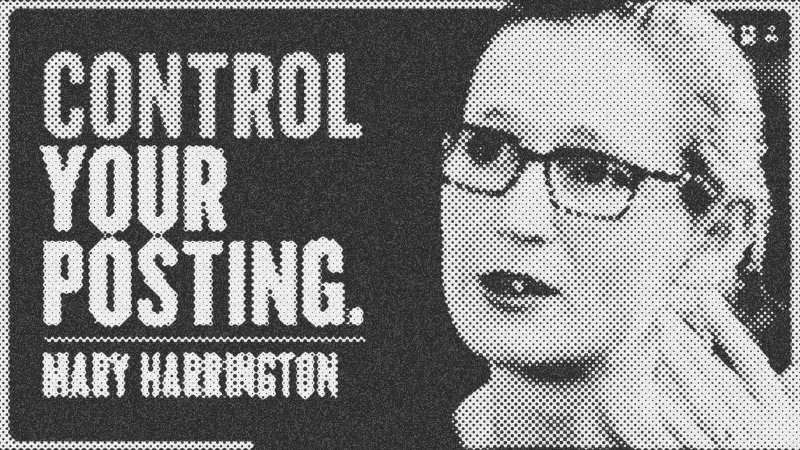
We are living through a grand experiment in radical transparency. For decades, the cultural momentum has pushed us toward an ideal where "letting it all hang out" was considered the pinnacle of authenticity. This 1960s-era utopianism suggested that if we were only more open, more honest, and more visible, society would naturally flourish. However, as Mary Harrington argues, this has led us to a tipping point where the boundary between the private self and the public persona has effectively dissolved. The cost of this dissolution is not just a loss of privacy; it is a loss of the self.
Digital modesty is the intentional act of drawing a line in the sand. It is a refusal to mine one's own life for content. When every moment is a potential post, every experience is filtered through the imagined eyes of an audience. This creates a performative layer that separates us from our own reality. The choice to stop posting selfies, to keep the interior of one's home off the internet, and to protect the faces of children is not merely about security—it is about preserving a sacred space for the spirit. Without a gap between what is said "on main" and what is held in private, intimacy becomes impossible. Relationships require a hidden chamber that the public cannot access; once that chamber is opened to the world, the oxygen of genuine connection is sucked out.
The Decentralized Stasi and the Death of Larry Culture
The technological shift from the early 2000s to today has transformed our social environment into a decentralized surveillance state. In the "mid-noughties," youth culture was defined by a certain liberated rowdiness—what Chris Williamson identifies as "Larry culture." It was messy, often emotionally immature, but fundamentally honest because it existed only in the moment. Today, every person in a pub or a club is a potential glial volunteer for a digital Stasi. The presence of the camera phone ensures that any lapse in judgment, any moment of wildness, or any controversial joke can be archived and used as evidence in the court of public opinion years later.
This surveillance has a chilling effect on human behavior. We no longer engage in the world; we perform for the record. The "imaginary audience" in our pockets has killed spontaneity. When young people film their dates in real-time or go to the restroom to make a TikTok about their partner's flaws, they are preemptively destroying the possibility of intimacy. They are inviting the world into a space that requires two people to be present, not two thousand. This constant recording scoops out the interiority of the human experience, leaving behind a hollowed-out version of life that is all surface and no substance.
The Crisis of Embodiment and the Information Economy
What we often describe as a crisis of masculinity or femininity is, at its root, a crisis of embodied humanness. Our economy has moved from the physical to the digital, from the world of atoms to the world of bits. When your job is to "drive a spreadsheet" or engage in the "opinion-haver" economy, your physical body becomes increasingly irrelevant to your economic output. This de-industrialization and shift toward knowledge-based work have created a environment where the sexes are treated as interchangeable units of production.
Ivan Illich famously distinguished between "vernacular gender" and "economic sex." In premodern societies, men and women occupied different but complementary roles. Their work was distinct, much like the relationship between the left and right hand—they were not the same, but they worked in unison to sustain the household. Modernity has replaced this with a unisex default. While this claims to be egalitarian, it often functions by rendering the specific biological realities of women invisible. When we pretend men and women are interchangeable, we create a world designed for a male default, ignoring the distinct physiological and psychological needs of women, particularly during the childbearing years. The gender ideology that suggests we can remodel our bodies like "meat Lego" is simply the logical conclusion of a culture that no longer values the biological reality of our physical forms.
The Myth of Having It All and the Productive Household
The industrial revolution didn't just move work into factories; it broke the productive household. For millennia, women’s work—such as weaving—was compatible with child-rearing. It was interruptible, social, and centered in the home. When weaving moved to textile mills, women were forced to choose between economic participation and the biological needs of their infants. The "have it all" feminism of the late 20th century attempted to resolve this tension by suggesting women could simply do both, but it failed to account for the sheer biological tax of motherhood.
Motherhood is not a task that can be subcontracted without loss. As Louise Perry has noted, breastfeeding alone can be a 40-hour-a-week commitment. This is not merely about nutrition; it is about the foundational layers of a child's capacity for self-regulation and integration. When we frame the family as a collection of individuals pursuing self-actualization, we lose the concept of the productive household—a team unit where everyone is in it for the long term. The modern "self-expressive marriage," as described by Mia Khalifa, treats partners as vectors for personal growth to be discarded when they no longer serve that purpose. This consumerist paradigm is a luxury belief that primarily hurts those at the bottom of the economic ladder, where family stability is the only safety net that truly exists.
The Moral Case Against the Surrogacy Industry
If we view the human body as a factory and the baby as a product, the surrogacy industry makes perfect sense. But if we view pregnancy as a transformative biological process that rewires a woman's brain and primes her for attachment, surrogacy appears as a profound moral failure. Pregnancy creates a mother just as much as it creates a baby. The hormone-bathed nine months of gestation are essential for the Attunement required to raise a human being.
To intentionally create a life with the express purpose of severing the maternal bond at birth is to prioritize adult desires over infant needs. We owe a duty of care to the most vulnerable among us. When celebrities like the Kardashians discuss their "struggle to bond" with children procured through surrogacy, they are telling on a system that treats human life as a commodity. It is, in many ways, a high-tech form of human trafficking. A society that prioritizes the "right" to a child over the child's right to its mother has fundamentally inverted its moral priorities. We must stop viewing children as accessories to our self-actualization and start viewing ourselves as servants to their well-being.
Reclaiming the Real in a Digital Wasteland
The way forward requires a radical re-engagement with reality. This means "touching grass" in a literal and social sense. It means recognizing that Twitter is not real life, even if its effects are. The most resilient subset of our culture will be those who figure out how to unplug from the "rage machine" and return to the simple, essential work of building families and communities.
We must move past the imbecilic, reductive versions of political movements that flourish online—whether it is the "Trad Wife" movement that harks back to an unrealistic mid-century template or the radical left's denial of biology. Growth happens when we step away from the screen and into the messy, unphotographed reality of our lives. We need to be brave enough to be invisible. We need to be modest enough to keep our most precious moments for ourselves. The future belongs to those who are still human enough to value a sunset without needing to prove they saw it.
- Barbie Movie
- 6%· products
- Ben Shapiro
- 6%· people
- Chris Williamson
- 6%· people
- Douglas Murray
- 6%· people
- Feminism Against Progress
- 6%· books
- Other topics
- 69%
Why You Shouldn’t Share Your Private Life Online - Mary Harrington (4K)
WatchChris Williamson // 1:19:38
