The Populist Awakening: Bridging the Divide in a Post-Establishment Era
The Collapse of the Establishment Bubble
True growth begins with a willingness to see the world as it is, not as we wish it to be. For many in the political and media elite, that clarity is missing. They exist within a self-reinforcing bubble where their status is the objective truth. Cenk Uygur explains that the establishment is specifically designed to preserve the status of the top 10% of society. When leaders provide a marginal 5% improvement in quality of life, those at the top feel like they have witnessed a miracle because their lives were already comfortable.
This creates a profound psychological disconnect. While those in the ivory towers celebrate minor tweaks, 60% of the population lives paycheck to paycheck. For them, a 5% shift is invisible. They require a 50% to 100% overhaul of the system to survive. The inability of the establishment to recognize this reality is not necessarily born of malice, but of a deep-seated ignorance. They have become like fish who do not realize they are in water. To bridge this gap, we must develop the self-awareness to step outside our socioeconomic contexts and listen to those whose lives are fundamentally different from our own.
The Two Spectrums of Modern Identity
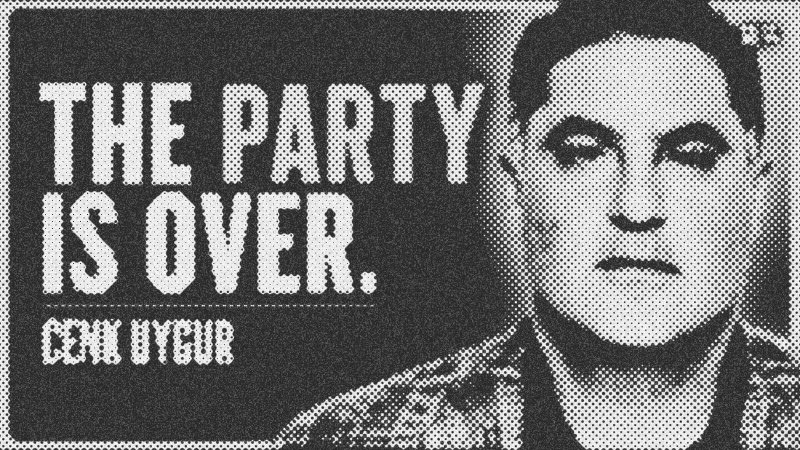
We often think of politics on a simple left-right horizontal axis. This is a limited way to view human potential and societal structure. There is a second, vertical spectrum: the Populist versus Establishment axis. Recognizing this distinction is the key to understanding why many people feel politically homeless. Cenk Uygur identifies as a The Young Turks advocate, meaning he holds progressive values but rejects the corporate-controlled mechanisms of the Democratic Party.
The establishment, regardless of party, focuses on protecting donor interests and maintaining the status quo. Populism, at its core, is about returning power to the individual. Whether you lean left or right, the shared enemy is often the same: a system that prioritizes corporate contributions over the well-being of the average citizen. By understanding that someone can be "left" and "anti-establishment," or "right" and "populist," we break the binary thinking that keeps us trapped in conflict. Real resilience involves looking past the labels and identifying the underlying power dynamics that affect everyone.
The Purity Trap and the Fear of Dissent
In the journey toward personal or political achievement, there is a dangerous temptation to prioritize purity over progress. Many modern movements have fallen into a "maximalist" trap, where anything less than 100% agreement is treated as treason. This intolerance for internal dissent prevents groups from sharpening their ideas and building broad coalitions. When we demand that everyone adopts the most extreme version of every position, we alienate the 98% of people who may agree with our core mission but find the peripheral rhetoric off-putting.
This fragility around being questioned is a hallmark of a weak mindset. Strong leaders and healthy organizations welcome hard questions because they know that scrutiny leads to better outcomes. On the left, this has manifested as a demand for "marketing" rather than journalism. Voters have been trained to view any criticism of their own leaders as an attack on the team. This creates a culture of propaganda that ultimately leads to failure. To achieve our potential, we must be "uncontrollable" by any party line. We must have the courage to take the win when our goals are met, even if the person delivering that win comes from the "other side."
The Illusion of the Culture War
If you want to keep people from noticing they are being squeezed by a system, you give them a "squirrel" to chase. This is the primary function of the culture war. Cenk Uygur points out that both Republican Party and Democratic Party use identity politics as a wedge to divide the 90% of the population who actually share economic interests. By focusing on highly emotional, low-impact issues, the donor class ensures that the public never unites against the "trash compactor" of corporate rule.
Issues like paid family leave have over 80% popularity across the political spectrum. Yet, these bills rarely pass because they might cost corporations a fraction of a cent. Instead of discussing why the United States is the only developed nation without guaranteed time off for new mothers, we are pushed to argue about bathrooms or sports. This is intentional. To break free, we must practice the mental discipline of focusing on what actually matters to our daily lives: our wages, our healthcare, and our families. We must refuse to be distracted by the "nutpicking" where each side finds the most ridiculous person on the other side and treats them as the representative of the whole.
The New Media Frontier and Personal Agency
For the first time in history, the gatekeepers are losing their grip. The 2024 election cycle demonstrated that YouTube, through platforms like Joe Rogan and The Young Turks, has become more influential than the legacy networks. This shift represents a massive opportunity for personal agency. We are no longer dependent on a handful of corporate-funded outlets to tell us what to think.
However, with this new power comes a greater responsibility for self-education. It is easy to move from one bubble to another. The true challenge of the modern age is to seek out diverse perspectives and do the "homework" that many leaders refuse to do. We should look for authenticity and honesty over partisan loyalty. If a leader delivers on a promise—whether it is cutting wasteful spending at the Pentagon or protecting constitutional rights—we should acknowledge the success regardless of their political brand. Our loyalty should belong to our principles, not to a helmet color.
- Cenk Uygur
- 17%· people
- The Young Turks
- 11%· organizations
- Bernie Sanders
- 6%· people
- Democratic Party
- 6%· organizations
- Donald Trump
- 6%· people
- Other topics
- 56%
How The Left Continues To Eat Itself - Cenk Uygur
WatchChris Williamson // 1:04:55
