The Collapse of Institutional Trust: Navigating a Post-Mainstream World
The Erosion of Modern Consensus
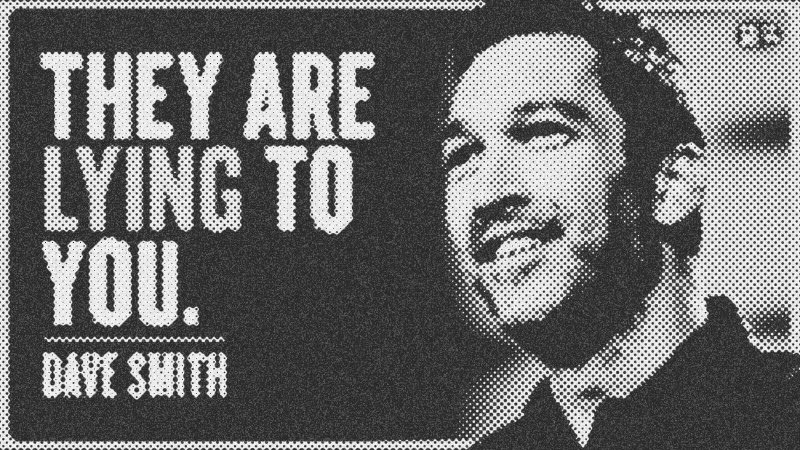
Trust functions as the invisible glue of a functioning society. When that glue dissolves, the structures built upon it begin to tilt and eventually crumble. We are currently witnessing a historic realignment in how information is consumed, processed, and validated. For decades, a handful of major networks and newspapers acted as the sole arbiters of reality, deciding which stories deserved oxygen and which should be extinguished. That era has ended. The rise of Independent Media is not a fluke or a fleeting trend; it is a direct response to a profound failure of institutional integrity.
When legacy outlets transition from reporting facts to managing narratives for the benefit of the powerful, they stop being journalists and start being agents of state propaganda. This shift creates a vacuum. People have an innate hunger for authenticity and raw, unfiltered truth. If they cannot find it on the nightly news, they will find it in three-hour unedited conversations or deep-dive investigative threads. The current friction we see in the political and social landscape is the sound of the old guard trying to maintain control over a population that has already stopped listening to them.
The Psychology of Narrative Control
In our coaching and psychological work, we often discuss the 'locus of control.' Institutional media operates on an external locus of control—it attempts to tell you how to feel, what to believe, and who to fear. In contrast, the movement toward independent platforms encourages an internal locus of control. It asks the individual to listen, synthesize, and decide for themselves. The friction arises because the 'Establishment'—those entrenched interests in Washington DC and corporate boardrooms—views individual discernment as a threat to stability.
Take the recent political cycle as a case study. The corporate media attempted to market specific candidates as 'phenomenons of joy' or 'sharp as a tack' despite glaring evidence to the contrary visible to anyone with an internet connection. This creates a psychological phenomenon known as cognitive dissonance. When what you are being told by 'authorities' contradicts what you can see with your own eyes, the authority loses its power. The lie becomes so blatant that it insults the intelligence of the viewer. At that point, the viewer doesn't just disagree; they defect. This is why figures like Joe Rogan and Dave Smith have lapped the networks in terms of influence. They offer the one thing the networks cannot: an unscripted, unguarded human connection.
The Death of the Monopoly on Truth
Historically, if a major network wanted to bury a story or smear an individual, they could do so with near-total efficiency. Today, that strategy has backfired. When a small outlet with a tiny audience is attacked by a massive network, it often results in the 'Streisand Effect'—the attempt to hide or censor information only makes it more visible. Furthermore, when the 'big players' get caught lying about someone who has a larger, more loyal audience than they do, they destroy their own remaining credibility. We see this with the New York Times and CNN, where their 'fact-checks' often contain the very truths they claim to debunk, just buried under layers of spin. They are playing a 20th-century game in a 21st-century arena.
Sovereignty and the New Social Landscape
As users migrate from platforms like X to BlueSky, we are seeing the physical partitioning of the digital world. This is a defensive mechanism. For those who rely on censorship to protect their ideas from scrutiny, a truly open marketplace of ideas is terrifying. If you cannot win a debate on the merits of your argument, your only recourse is to remove the opponent from the room. When you can no longer remove the opponent, you leave the room yourself. This mass exit of 'blue-check' journalists to echo chambers is a sign of intellectual atrophy.
Muscles only grow when they meet resistance. Ideas only become robust when they are challenged. By retreating to environments where everyone already agrees, these individuals are ensuring their own irrelevance. They are choosing comfort over growth. For the rest of us, the challenge is to avoid falling into the same trap. Even as we reject the lies of the mainstream, we must remain disciplined enough to seek out diverse perspectives and engage with 'heavy' ideas that stretch our understanding. True resilience is being able to stand in the middle of a chaotic information environment and maintain a steady, discerning mind.
The Libertarian Perspective on Corruption
To understand why the system feels so broken, we must look at the scale of the organization. As Libertarian Party suggests, the essence of corruption is often tied to size. When a government spends seven trillion dollars and controls the nation's credit supply through Federal Reserve, it becomes the ultimate prize for the corrupt. It is no longer about serving the public; it is about extracting wealth and handing it to political cronies. This is the 'Swamp' that many voters are desperate to see drained.
This isn't just a political issue; it is a moral one. When an institution uses the threat of force to take resources and then uses those resources to propagate lies that lead to unnecessary wars, it has lost its legitimacy. It has lost its right to exist. Whether it is the CIA influencing domestic narratives or the corporate media lying the public into foreign interventions, the result is the same: the destruction of trust and the loss of innocent lives. Draining the swamp isn't just a campaign slogan; it is a psychological and social necessity for a healthy civilization.
Building the Future One Step at a Time
We are in a transitional phase. The old world is dying, and the new one is struggling to be born. There is a lot of 'egg on the face' for the establishment right now, but that doesn't mean the work is done. It is easy to criticize, but it is much harder to build. As the 'rebellious voices' become the 'voices in power,' the burden of proof shifts. Can those who pushed back against the machine actually build something better?
This requires a shift from reactive anger to proactive creation. We need to build new institutions that value transparency, long-form inquiry, and basic human decency. We need to move past the era of 'owning' the other side and into an era of solving actual problems. The opportunity before us is unprecedented. We have the technology to bypass the gatekeepers and the community to support one another through the shift. Growth happens one intentional step at a time. By choosing to be informed, sovereign, and resilient, we aren't just changing our media habits—we are reclaiming our power as individuals and as a society. The future belongs to those who are brave enough to see the world as it is, not as they are told it should be.
- ABC News
- 3%· companies
- BlueSky
- 3%· companies
- Chris Cuomo
- 3%· people
- Chris Williamson
- 3%· people
- CIA
- 3%· organizations
- Other topics
- 83%
Why Does Mainstream Media Suck So Much? - Dave Smith
WatchChris Williamson // 1:02:25
