Huberman says prayer provides relief that neuroscience cannot yet explain
The Paradox of Relinquishing Control
Modern psychology often emphasizes agency, focus, and the strengthening of the anterior midcingulate cortex to build willpower. However, Andrew Huberman suggests that for many facing the most grueling human challenges, the solution is not more exertion, but the act of "giving over." This shift from self-reliance to a higher power represents a fundamental shift in behavioral management. While science excels at mapping how we construct memories and emotions, it struggles to quantify the profound efficacy of spiritual surrender.
Science of Spiritual Recovery
In the context of addiction, the requirement for constant top-down cognitive restriction is exhausting. A person in early recovery must exert immense mental energy to avoid triggers, leading to "jarring anxiety." Andrew Huberman notes that 12-step programs have long utilized the concept of a higher power to bypass this fatigue. By handing over the burden of control to an external entity, the individual reduces the need for constant internal monitoring, making the path to sobriety more sustainable.
Evolution and the Higher Power
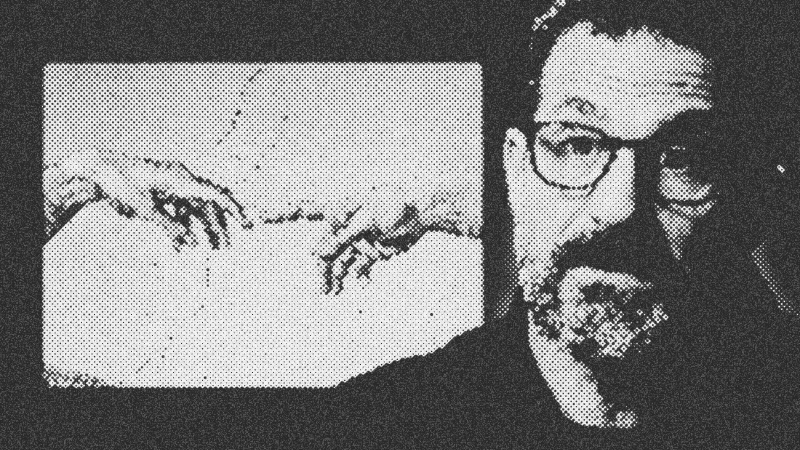
Human evolution did not occur in a vacuum of pure materialism. Andrew Huberman argues that humans evolved within the context of spiritual belief, making these notions central to our historical perspective. This isn't merely about abstract theory; it is a concrete mechanism that facilitates resilience against extreme loss and trauma. The brain appears to respond to these practices regardless of whether the source is viewed as strictly neurobiological or truly divine.
Personal Practice and Sustained Peace
Reflecting on his own life, Andrew Huberman admits he long resisted his inclination toward faith, fearing it was incompatible with his identity as a scientist. Since adopting a daily prayer practice, he reports experiencing deep, sustained peace for the first time. This suggests that even for the analytically minded, integrating faith-based practices can resolve the internal friction caused by the impossible attempt to control every aspect of life.
Implications for Human Potential
Recognizing that we are not in total control provides a unique form of psychological relaxation. This "surrender" allows individuals to navigate life's burdens with greater ease. As we continue to study consciousness, the intersection of neural circuits and spiritual practices remains one of the most promising frontiers for understanding how humans achieve radical transformation and lasting mental well-being.
- Andrew Huberman
- 44%· people
- 12-step programs
- 11%· organizations
- addiction
- 11%· psychology
- Chris Williamson
- 11%· people
- resilience
- 11%· psychology
- Rick Rubin
- 11%· people
How Religious People Beat Addictions so Easily - Andrew Huberman
WatchChris Williamson // 13:40
