The Alchemy of Agony: Dr. Elena Santos on Resilience and Nedd Brockman’s Journey
The Architecture of Extreme Resilience
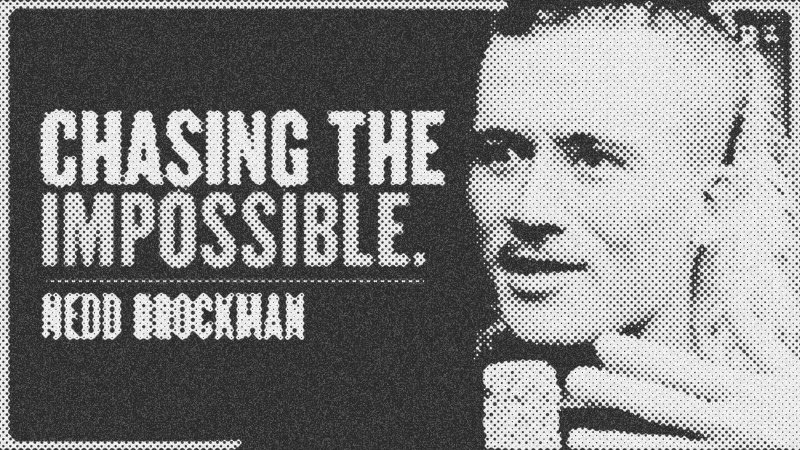
When we look at Nedd Brockman, we see more than an athlete. We see a mirror of the human capacity to endure the unendurable. Nedd recently completed a thousand miles around a 400-meter track, averaging 130 kilometers a day for over twelve days. This wasn't a scenic jog. It was a brutal, repetitive, and psychologically taxing descent into what I call the 'well of resilience.'
In my work as a psychologist, I often observe that people avoid discomfort because they fear it will break them. Nedd’s journey proves the opposite. He suggests that the more discomfort you intentionally invite, the more of a person you become. This isn't about masochism. It's about expanding the container of your soul. When you strip away the comforts of modern life—soft beds, regular meals, social validation—you are left with the raw materials of your character. Nedd’s naivety and stubbornness, as he calls them, are actually powerful psychological shields. They allow him to start before he is 'ready,' a lesson many of us need to hear. There is no perfect time to begin a daunting task. There is only the decision to step onto the track.
The Psychological Cost of the Infinite Loop
Running across a continent offers novelty—new horizons, changing weather, different faces. But running a thousand miles on a track? That is a psychological prison. Nedd describes the 'loop' as a traumatic experience where the scenery never changes. He would wake up after an hour of sleep and see the same blue track, the same physio table, and the same unmoving food. This lack of novelty creates a specific type of mental degradation.
When the brain is deprived of new stimuli, it turns inward, often in ways that are frightening. By day five, Nedd was losing consciousness while awake. He couldn't make basic decisions about eating or resting. His heart rate remained at 110 beats per minute even while lying still. This is the physiological manifestation of high-stakes stress. As a coach, I see this as the 'red zone' of burnout. Nedd’s mother had to step in and make decisions for him because his executive function had completely collapsed. This highlights a critical insight: even the strongest individuals need a support system that has permission to override their stubbornness when survival is at stake. Resilience is not a solo sport.
Reframing the 'Toxic' Narrative
There has been public criticism, notably an article by Jill Stark, suggesting that Nedd’s feats are merely 'toxic masculinity rebranded.' As a psychologist focusing on mindset shifts, I find this perspective remarkably limited. We must distinguish between the suppression of emotion and the strategic management of suffering. Nedd isn't running to hide from his feelings; he is running to find them.
Chris Williamson brings up a vital point: men who suppress positive emotions often face worse mental health outcomes than those who suppress negative ones. Nedd’s journey is fueled by a desire to 'live, give, and get uncomfortable.' He raised millions for Mobilise to combat homelessness. If the pursuit of mastery, glory, and philanthropic impact is labeled 'toxic' simply because it involves physical grit, we risk pathologizing the very traits that move society forward. Nedd’s anger at the finish line wasn't a sign of toxicity; it was a sign of total depletion. He had given every ounce of his jovial spirit to the track. Reclaiming that spirit takes time and intentional reflection.
The Shadow Side of Strength
Every great strength has a corresponding shadow. Nedd and Chris discussed how childhood experiences, including bullying, often germinate the seeds of future resilience. Chris shared his history of being socially excluded in school, noting how it forced him to develop a sense of agency and self-reliance. This is a classic psychological pattern: we build armor to protect ourselves from early pain, and eventually, that armor becomes our greatest asset in the professional world.
However, we must be careful not to fall into the trap of 'retrospective storytelling'—the idea that everything was 'meant to be.' When we say a car accident or a period of bullying was 'meant to be' because it led to a positive outcome, we strip ourselves of our agency. The truth is more empowering: you were in a terrible situation and you alchemized it into something magnificent. You are the alchemist, not just a passive recipient of fate. Recognizing this allows you to carry the strength of your past without being a slave to the trauma that created it.
Actionable Strategies for Your Own 'Uncomfortable Challenge'
How do you apply these extreme lessons to a more 'normal' life? You don't need to run a thousand miles to build a Nedd-level mindset. You can start by implementing 'intentional friction' in your daily routine.
- Define Your Own 'Lane Eight': Break your massive goals into 'master laps.' Nedd didn't think about 4,000 laps; he thought about the next two laps in the next lane.
- Practice Presence Under Pressure: Chris noted how easy it is to 'grip' an experience too tightly, focusing so hard on the outcome that you miss the presence. Ask yourself: Can I sacrifice 1% of my performance to gain 50% more presence?
- The Digital Diary: Record your thoughts during your hardest moments. Not for an audience, but for your future self. This creates a 'digital diary' of your growth, allowing you to see how your mindset evolves over time.
- Give Without Reciprocity: Nedd’s focus on Mobilise and homelessness provided a 'why' that was bigger than his pain. When your goal serves others, your capacity to endure increases exponentially.
The Journey Toward Integration
Nedd Brockman’s experience teaches us that the end of the race is only the beginning of the integration. The 'post-race PTSD' he describes—the waking up in a panic, the inability to turn off the 'fight' mode—is a natural response to extreme stress. Growth happens when we allow ourselves to crash, to feel the 'downs' as deeply as the 'ups.'
Your greatest power lies in recognizing your inherent strength to navigate challenges, even when you feel like you are losing who you are. Nedd felt he lost his jovial self on that track, but in doing so, he discovered a deeper, grittier layer of his soul. Do not fear the moments when you are stripped bare. Those are the moments when you are most capable of transformation. Step onto your track, whatever it may look like, and remember: the only way out is through.
- Mobilise
- 20%· companies
- AG1
- 10%· companies
- Chris Williamson
- 10%· people
- David Goggins
- 10%· people
- Jill Stark
- 10%· people
- Other topics
- 40%
Pushing The Boundaries Of Mental Toughness - Nedd Brockman
WatchChris Williamson // 1:31:43
