Robert Pantano warns self-awareness is a poison only birth can provide
The Dual Nature of Our Birthright
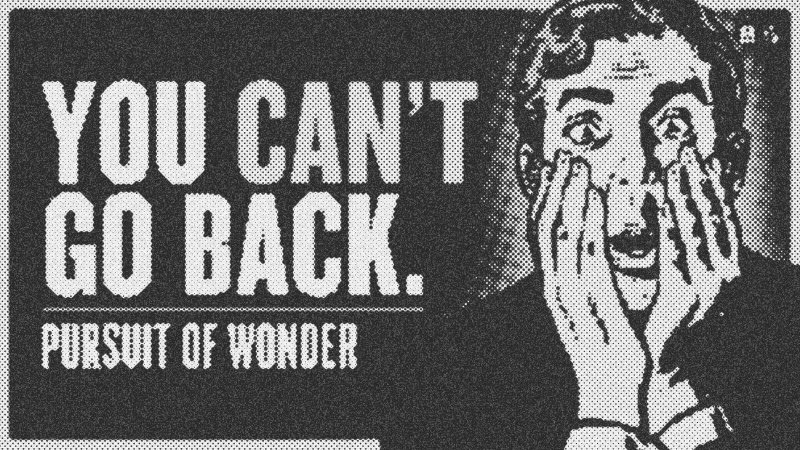
Self-awareness is often marketed as a linear ladder where more is invariably better. We assume that the highly self-aware individual is more functional, more at peace, and more successful. However, Robert Pantano suggests a far more unsettling reality: self-awareness is a biological paradox, a "poison" we consume at birth that separates us from the raw, unthinking flow of existence. This unique human capacity allows us to conceptualize beauty, wonder, and meaning, but it simultaneously tethers us to the horrific recognition of our own decay and the inherent chaos of the universe.
We arrive at this state through an evolutionary process that prioritizes continuation over the quality of the first-person experience. Evolution did not design our consciousness to find truth or peace; it designed it to propagate. Consequently, we find ourselves in a constant struggle with reality. We attach to a "self" that is essentially a construct, attempting to find stability in a "cosmic ocean" where the waves of change are perpetually crashing. This is the root of the human problem: we are aware of a self that we are destined to lose, yet we are hardwired with a refusal to give up. This tension creates a life that is both a terrifying tragedy and an exquisite masterpiece.
Why Regret is a Rational Illusion
One of the most corrosive byproducts of heightened self-awareness is rumination, specifically in the form of regret. We look back at our past through the lens of hindsight and believe we could have—and should have—acted differently. Yet, Pantano argues that regret is fundamentally irrational. If you were to rewind the clock to any specific moment in your history, you would arrive with the exact same physiology, the same information, and the same external constraints. In that specific context, you would make the same decision 100% of the time.
Regret relies on the illusion of limitless possibility, a refusal to accept the boundaries of foresight. We punish ourselves for not knowing then what we know now, which is a denial of the temporal nature of consciousness. By embracing the necessity of our past actions, we can dissolve the prison of "what if." The goal is not to justify our mistakes but to recognize that we are always operating under a set of constraints—emotional, cognitive, and environmental. True wisdom lies in the foresight-hindsight equilibrium, where we stop contorting our current reality to fit a fictionalized version of a better past.
Adversity as High-Octane Activation Energy
Chris Williamson notes that the most significant periods of personal growth rarely happen during times of comfort; they germinate in the low points. When we endure betrayal, loss, or failure, we are flooded with energetic emotions: anger, resentment, and bitterness. While these are often labeled "negative," they provide a rare surplus of activation energy that is simply unavailable when things are going well. This is why people often launch new lives after their old ones are stripped away. The pain becomes the fuel required to get a new existence off the launch pad.
However, there is a critical distinction between using adversity as fuel and letting it become a destiny. Not everyone survives the fire; some are crushed by it. The difference lies in the direction of that surplus emotion. If anger is not converted into purpose, it curdles into stasis. Pain has a time window; if you dwell too long without action, the "chip on your shoulder" calcifies and becomes your identity rather than your engine. You cannot return to the version of yourself that existed before the trauma. The only path is forward through the tunnel. Busyness, social connection, and a bias for action are the practical tools that prevent pain from turning into permanent self-destruction.
The Trap of Selective Optimization
Modern life presents us with a paralyzing "paradox of choice." For the self-aware individual, every decision feels like a proxy for their quality of life. Whether it's choosing a career or a brand of cereal, the over-optimizer believes there is a "perfect" choice that must be found. This leads to choice anxiety—a state where desires no longer serve the individual but enslave them. The solution is to recognize the "ceiling" of experience. There is a point at which additional optimization no longer significantly changes the quality of your existence.
We must consciously choose to be "de-optimized" in certain areas to save cognitive energy for the things that truly matter. When you make a high-level decision to stop caring about trivialities, all the sub-decisions fall away. This relinquishment is a form of liberation. It is the same sensation as leaving a toxic relationship; by letting go of the need for a perfect outcome in every arena, you reclaim the power to focus on your core orientation toward meaning. We cannot care about everything all the time; trying to do so is the fastest route to psychological exhaustion.
Anger as a Boundary Marker
Anger is frequently viewed as a "base" or juvenile emotion that the spiritually "elevated" person should transcend. Pantano and Williamson challenge this, viewing anger as a vital evolutionary tool. It is the emotion that signals a boundary has been crossed when no external authority exists to enforce justice. Without the capacity for anger, an individual risks a life of being taken advantage of, never signaling to themselves or others when something is wrong.
Problems arise when anger is turned inward, transforming into depression or agitation. Many people are "sad, not mad" because they were socialized to believe anger is pro-socially unacceptable. However, suppressing that raw fuel tank doesn't make the energy go away; it just makes it unproductive. We must learn to delineate between productive anger—directed at things that can be corrected—and existential anger directed at the nature of misfortune. By expressing healthy frustration, we provide others with the information they need to maintain a functional relationship. To be entirely passive is not to be virtuous; it is to be a ghost in one's own life.
The Pursuit of Wonder Over Happiness
If we accept that truth is largely a psychological security blanket designed to reduce the fear of the unknown, and that our minds are permanent filters we can never escape, what makes the trouble of living worthwhile? Pantano suggests that the "pursuit of happiness" is a flawed framework. Happiness is fleeting and often dependent on external conditions we cannot control. Instead, he advocates for the Pursuit of Wonder.
Wonder is the self-produced meaning we derive from art, nature, and relationships. It is the graphite we extract from the sludge of existence to create something beautiful. We are all underdogs in a boxing match with time and decay—a match we are destined to lose. Yet, there is an incredible spirit in putting up a "hell of a fight." Even if our conclusions are uncertain and our perceptions are flawed, the immediate experience of being is certain. By focusing on these moments of awe, we find the justification to keep moving through the chaos. Self-awareness might be a poison, but it is also the only medium through which we can perceive the light.
- Athletic Brewing Co
- 7%· organizations
- Chris Williamson
- 7%· people
- Cormac McCarthy
- 7%· people
- David Goggins
- 7%· people
- Function
- 7%· organizations
- Other topics
- 67%
The Terrible Paradox of Self-Awareness - Robert Pantano
WatchChris Williamson // 1:10:42
