The Architecture of Ambition: 15 Psychological Blueprints from History’s Greatest Founders
The Psychological Toll of Excellence
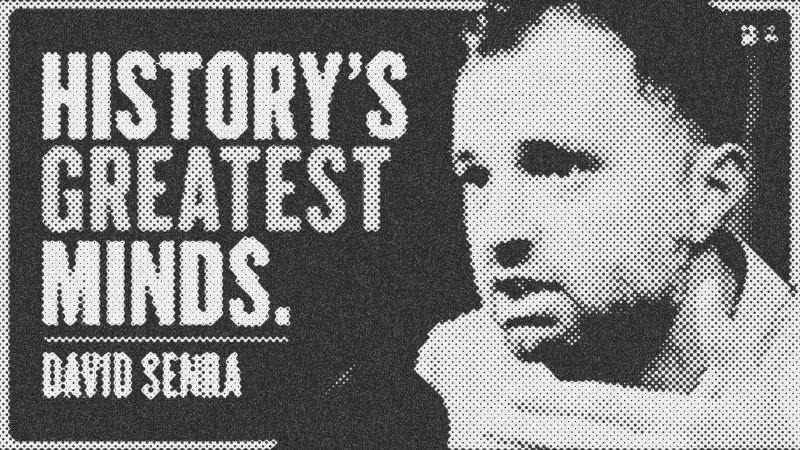
Your greatest power lies not in avoiding challenges, but in recognizing your inherent strength to navigate them. When we look at the giants of history—the Steve Jobs and Elon Musk of the world—we often see the final monument of their success without witnessing the brutal quarrying of the stone. David Senra, host of the Founders podcast, argues that excellence is fundamentally the capacity to take pain. It is a psychological endurance test that most people fail because they seek comfort over consequence.
Take Izzy Sharp, the founder of Four Seasons. He entered the hotel industry with zero experience, no capital, and a goal that seemed hallucinatory: to build the greatest collection of hotels in the world. His path was not a linear ascent but a series of sleepless nights, agonizing over unresolved debt and broken partnerships. This isn't just a business story; it’s a psychological case study in resilience. Most people quit when things become difficult because quitting is the sane thing to do. To achieve something extraordinary, you must possess a level of obsession that makes the pain of the process less relevant than the integrity of the goal.
1. Excellence is the Capacity to Take Pain
Persevering through discomfort is mandatory. There is no such thing as an audacious goal that arrives easily. As Jeff Bezos frequently emphasized during the early days of Amazon, doing things that you can tell your grandkids about is inherently difficult. If you don't love the mission, the pain will eventually force you to quit. The tools only feel light in your hands when the work aligns with your deepest values.
2. Problems are Opportunities in Work Clothes
This perspective shift, famously championed by Henry Kaiser, turns obstacles into raw material for growth. Effective companies are essentially problem-solving algorithms. If you can solve a friction point for another human being better than anyone else, you have a business. Instead of complaining about failure, the great founders see failure as a data point that narrows the search for a solution.
3. Ideas Worth Billions are Hidden in $30 History Books
There is a profound form of leverage found in historical context. Charlie Munger and Warren Buffett didn't invent their investment philosophies in a vacuum; they studied Henry Singleton, a man Charlie Munger called the smartest person he ever met. By reading biographies, you gain access to a world-class mentor's entire life of lessons for the price of a lunch. You aren't copying their specific business; you are copying their mental models.
The Social Dynamics of Power and Trust
We often think of organizations as abstract entities, but they are actually clusters of human relationships. The most valuable asset in the world is not a patent or a bank balance; it is a trusted personal network. David Senra highlights Charlie Munger’s concept of the "seamless web of deserved trust." When two high-performing individuals trust each other completely, the speed of execution becomes instantaneous. You bypass the legal friction, the second-guessing, and the bureaucracy that slows down the rest of the world.
4. Relationships Run the World
Personal networks are the ultimate leverage. Whether it was Ben Franklin mentoring a young George Washington or Warren Buffett partnering with Charlie Munger, these alliances are what enable founders to scale. You must make yourself easy to interface with by building a body of work that acts as an invitation for other serious people to join your orbit.
5. Bad Boys Move in Silence
When you find a competitive edge, the smartest move is to shut up. John D. Rockefeller was the master of secrecy. He didn't want to educate his competition on how lucrative the oil business was. Talking invites competition, and competition destroys profits. If your business model is working, protect it by avoiding the limelight until you have established a dominant position.
6. Actions Express Priority
We are not what we say; we are what we do. Steve Jobs didn't just talk about marketing; he held a three-hour marketing meeting every Wednesday without fail. He approved every pixel and every billboard. If you claim your health is a priority but don't lift, your claim is a lie. High performers look at how they spend their minutes, not their intentions.
The Intergenerational Drive and the Father's Story
A recurring theme in the lives of history’s outliers is a complex relationship with the father. Whether it is a desire to redeem a failed father or a fierce rebellion against a discouraging one, this primal drive is a source of extreme, often pathological, ambition. Francis Ford Coppola, the legendary director of The Godfather, was told by his father that there could only be one genius in the family—and it wasn't Francis. This sparked a decades-long pursuit of excellence fueled by a need to disprove that dismissal.
7. You Can Understand the Son by the Story of the Father
A desire to not end up like your father is a powerful source of drive. For many, success is a form of revenge against a difficult upbringing. While this drive is effective for achieving results, it often comes from a place of insufficiency. The goal for the next generation is to inherit the resources and lessons without inheriting the pathologies.
8. Pushing Kids Toward Success
Sam Walton understood that his children were not him. He didn't expect them to be as overactive or obsessive as he was. There is a psychological danger in trying to force outlier traits onto children. True success as a parent is providing a foundation of love and habits that allow the child to find their own version of a natural life, rather than living in the shadow of the parent's drive.
9. What Really Drives High Performers?
Most high performers are trying to fill a void. They want validation because they didn't feel loved or useful in their formative years. They build mountains of evidence of their competence to quiet an inner voice of doubt. Recognizing this allows you to utilize the drive while working toward the eventual goal of internal peace.
The Mechanics of Long-Term Victory
Success is often a result of simple endurance rather than flashes of brilliance. David Senra uses the Ernest Shackleton family motto: "By endurance we conquer." The world is filled with sprinters who burn out in five years. The founders who change history are those who build for durability. They choose to stay in the game long enough for the magic of compounding—both in capital and in knowledge—to take effect.
10. Belief Comes Before Ability
The world has it backward. It expects you to prove your worth before it grants you support. In reality, you must have the self-belief to start the work while the world is still laughing at you. Elon Musk believed he could build rockets before he ever saw one launch. That belief is the prerequisite for the action that eventually generates the evidence.
11. By Endurance We Conquer
Time carries most of the weight. Warren Buffett made over 90% of his wealth after the age of 65. If you optimize for growth at the expense of durability, you lose the long game. The goal is to build something that lasts decades, not something that pops for a season. Consistency beats intensity every single time.
12. Stay in the Details of Your Business
If you know your business from A to Z, there is no problem you cannot solve. Sam Zemurray, who built a fruit empire, was famous for being in the fields with a machete. He knew every link in his supply chain. This deep knowledge allows for high-agency decision-making that "hands-off" executives can never match.
13. Years of Practice Nobody Sees
The public praises people for what they practice in private. There is no such thing as an overnight success. Sam Walton spent decades refining a single store before he ever expanded. By the time the world noticed Walmart, Sam had already mastered the mechanics of retail through thousands of hours of invisible work.
14. Self-Pity Has No Utility
Charlie Munger famously argued that self-pity is a disastrous mental habit. No matter how tragic your circumstances—and Charlie Munger lost a child to leukemia while he was broke—wallowing does not solve the problem. Your goal is to use the bad in life in a constructive fashion. Grieve, mourn, and then find a way to be useful again.
15. Money is a Byproduct of Service
Wealth comes naturally as a result of service. If you focus on making someone else’s life better, the financial rewards follow. Henry Ford didn't set out to be the richest man in America; he set out to make a car the average person could afford. A business is simply a scaled-up version of an idea that provides value to others. Find the problem, solve it with gusto, and the market will take care of the rest.
Growth happens one intentional step at a time. By internalizing these 15 truths, you aren't just learning how to build a company; you are learning how to build a resilient, high-agency life. Which of these blueprints will you start laying today?
- Charlie Munger
- 15%· people
- David Senra
- 7%· people
- Warren Buffett
- 7%· people
- Elon Musk
- 5%· people
- Sam Walton
- 5%· people
- Other topics
- 61%
15 Harsh Truths From History’s Greatest Founders - David Senra
WatchChris Williamson // 2:19:53
