The Mimetic Self: Decoding René Girard’s Theory of Human Desire
The Architecture of Imitation: Understanding René Girard
Most of us live under the comforting illusion that our desires are our own. We believe we choose our careers, our partners, and our goals based on an internal compass of authentic preference. However, the work of René Girard suggests a far more unsettling reality: our desires are rarely directed at the objects themselves, but rather at what those objects represent in the eyes of others. This is the foundation of Mimetic Theory, a framework that explains how human beings are fundamentally social, imitative creatures who look to models to define their identity and worth.
Jonathan Bi, a scholar dedicated to Girard’s canon, explains that the core of this philosophy lies in the distinction between physical and metaphysical desire. Physical desire is straightforward; it is the hunger for food, the biological urge for sex, or the need for shelter. Metaphysical desire, however, is a desire "to be." It is an unrelenting drive to establish oneself as someone who exists in great measure—someone recognized, powerful, and permanent. We attempt to satisfy this hunger for being by obtaining objects or achievements associated with people we admire. We don't just want the sneakers; we want to "be like Mike."
The Two Faces of Mimesis: Convergence and Divergence
Mimesis operates in two distinct phases: positive and negative. Positive mimesis is the visible act of convergence. We see this in the high-stakes world of nightlife, where nightclubs are designed to facilitate "dick-measuring" contests between bottle-service tables. Men spend thousands on champagne not for the taste of the liquid, but because the table across from them just ordered a bigger "show." They are imitating the model's desire for status, leading to a feedback loop of escalating consumption. This is the social glue—and the social poison—that drives us to wear the same brands and seek the same prestigious titles as the "cool kids."
Negative mimesis is more insidious because it masquerades as independence. This occurs when we intentionally distance ourselves from models we perceive as having a "deficiency of being." A student might adopt radical economic views not out of a genuine love for the poor, but out of a reactive hatred for their wealthier peers. This "reflexive heterodoxy" is still entirely dependent on the group; if the mainstream says "one," the negative mimetic says "zero" or "negative one." They are not free; they are simply the inverse of the crowd. True authenticity, in a Girardian sense, is not found in being different, but in recognizing how deeply your choices are already mediated by others.
The Silicon Valley Obsession: Why Founders Study Girard
It is no coincidence that Peter Thiel and other Silicon Valley titans are fascinated by Girard. At its heart, Mimetic Theory provides a roadmap for understanding irrational human behavior and market dynamics. In a world that views humans as rational, utility-maximizing machines, Girard offers a lens that accounts for our spirited, social nature. He explains why we care more about closing the wealth gap with our neighbors than we do about our absolute level of wealth. This relativistic comparison is what drives geopolitical tensions, such as those between the United States and China.
Furthermore, Girard’s psychology describes the "psychology of pride" with brutal accuracy. High-achievers, founders, and leaders often possess an intense "desire to be" that borders on the delusional. Success frequently requires a refusal to meet reality as it currently exists. To build a company like Tesla or Palantir, one must be arrogant enough to believe they can reshape the world. This pride is a powerful fuel source, even if, as Girard warns, it leads to a life of existential exhaustion. The successful often stay with Girard because he validates their internal experience of envy, competition, and the constant need for recognition.
The Fallibility of Human Nature and the Path to Awareness
Girard’s view of the human condition is deeply pessimistic, often described as a psychology of "original sin." He rejects the Enlightenment idea that we can use reason to solve all social ills, and the Romanticism idea that we have an untainted authentic core. Instead, he sees us as "co-vibrating violin strings," constantly influencing and being influenced by those around us. This fallibility means that social pathologies like masochism or alienation are not accidents of capitalism or specific political systems; they are baked into our nature.
However, there is liberation in this diagnosis. By accepting that we are fallible and imitative, we can stop trying to reach an impossible state of "pure" independence and instead focus on "stacking the deck." As the military theorist John Boyd noted, superior judgment allows one to avoid situations where superior force is required. Understanding mimesis gives us the foresight to see a toxic social rivalry coming from a mile away and choose to step back. We cannot stop breathing, and we cannot stop being mimetic, but we can choose our models. We can intentionally surround ourselves with people who desire things that are actually worth wanting.
Conclusion: Navigating the Mimetic Landscape
René Girard’s work challenges the very foundation of the modern Western identity. It suggests that our quest for originality is often just a sophisticated form of imitation and that our greatest successes are frequently fueled by our deepest insecurities. As we move forward into an increasingly connected world—where social media acts as a global mimetic engine—these insights become more critical than ever. Life is not about escaping the winds of influence, for the winds never stop blowing. It is about understanding the parameters of our social environment and having the courage to navigate the trade-offs. The goal is not to be a loner, but to find a community that directs your desires toward growth rather than destruction.
- Apple
- 8%· companies
- China
- 8%· places
- David Perell
- 8%· people
- Elon Musk
- 8%· people
- John Boyd
- 8%· people
- Other topics
- 58%
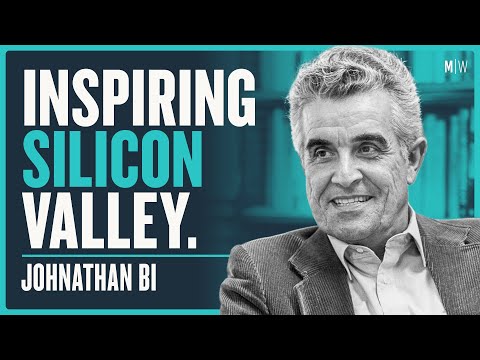
Why Do Founders Love René Girard? - Johnathan Bi
WatchChris Williamson // 1:09:32
