The Alchemy of Self-Understanding: Transmuting Stress into Resilience and Connection
The Architecture of Internal War: Beyond Self-Improvement
We often find ourselves trapped in a relentless pursuit of better. We treat our lives like projects to be optimized, our bodies like machines to be tuned, and our minds like unruly subjects to be brought into submission. This framework of self-improvement, while appearing virtuous, often conceals a deeper layer of self-abuse. When we tell ourselves we must be more productive, more disciplined, or more composed, we are fundamentally telling ourselves that who we are right now is insufficient. This creates a state of perpetual stress, a war zone within the mind where the "critical parent" voice is constantly on the attack.
True growth doesn't happen through the whip of self-criticism; it happens through the light of self-understanding. Think of the way you learn a complex piece of software or a new physical skill. You don't scream at the screen to be better; you seek to understand how the system functions. Once you understand the mechanics, the operation becomes fluid. We must apply this same curiosity to our own internal landscapes. Stress is not merely an external pressure from a busy world; it is a mammilian response to perceived threats. When your internal voice is your primary attacker, you are never safe. Moving from the desire to "manage" yourself to the desire to "understand" yourself is the most significant shift you can make toward a life of genuine enjoyment.
The Three Pillars of Human Stress
While we blame our phones, our bosses, and our political climate for our anxiety, the root causes are almost always internal and categorical. There are three specific domains where we consistently generate the friction that wears us down: repressed emotions, lack of connection, and negative self-talk.
Repressed emotions act like a kink in a garden hose. We exert immense energy trying to keep things like anger, grief, or fear from surfacing, believing that controlling our emotions is the same as emotional maturity. In reality, this tightening down of the system is the very definition of stress. Lack of connection—not just with others, but with ourselves—leaves us isolated in a world of perceived threats. Finally, the negative self-talk acts as a constant domestic irritant, a 24/7 news cycle of our own failures that prevents us from ever finding a state of rest.
The Trap of Hyper-Self-Reliance
Many high achievers pride themselves on their self-reliance. They view the ability to "do it all alone" as a badge of honor, a sign of extreme agency. However, hyper-self-reliance is often a defense mechanism designed to avoid the vulnerability of needing someone else. It is a protective shell grown from early experiences where help wasn't available or was conditional.
This "lone wolf" mentality eventually becomes a ceiling on your potential. You can accomplish a great deal as an individual, but you can only thrive as part of a connected system. The hyper-self-reliant leader often feels perpetually alone, even in a room full of people who want to help. They interpret their team's mistakes as evidence that they must do everything themselves, further entrenching their isolation. Breaking this cycle requires the terrifying step of letting your heart break—allowing yourself to feel the "aloneness" you've been running from so that you can finally move toward authentic connection.
Emotional Clarity: Welcoming the Storm
We are taught to regulate and manage our emotions, as if they were wild animals that need to be caged. This approach ensures that we remain disconnected from the wisdom our emotions provide. Consider anger. When we manage or repress it, it either leaks out as passive-aggression or explodes in a destructive burst. But when we welcome anger with an open heart, it transforms into clarity. It becomes the energy of boundaries, the fuel for justice, and the signal of what we truly care about.
Emotional clarity is the ability to let an emotion move through you without resisting it or being controlled by it. It requires a somatic curiosity. Instead of saying "I am angry," try to locate the anger in your body. Is it a heat in the chest? A tightness in the jaw? By observing the physical sensation without judgment, you allow the "tube" of emotion to remain open. The resistance to the emotion is always more painful than the emotion itself. As the saying goes, resisting the urge to go to the bathroom is far more uncomfortable than the act itself. The same is true for grief, fear, and joy.
The Illusion of Perfection and the Power of Play
We chase perfection because we believe it will eventually bring us a sense of completion—a finish line where we can finally stop and be happy. But in nature, there is no "done." An oak tree is perfect as an acorn, perfect as a sapling, and perfect as a decaying log. It is a continuous process of evolution. When we demand perfection from ourselves, we are essentially trying to kill the music of life so we can admire the silence of the end.
Confidence does not come from never messing up. It comes from the unshakable knowledge that your worth is not tied to your performance. When you view life as a series of experiments rather than a series of tests, you move from the heaviness of "getting it right" to the lightness of play. Play is the state where the ego evaporates because you are no longer protecting an identity; you are simply participating in the flow of the moment.
Defensiveness and the Architecture of Shame
Defensiveness is the primary way we protect a fragile ego. When someone criticizes us and we feel that familiar spike of heat and the urge to argue, it is because their words have "rhymed" with a negative story we already tell ourselves in private. If you are truly comfortable with yourself, a criticism might hurt, but it won't make you defensive. You might say "ouch," but you won't need to mount a counter-attack.
In relationships, defensiveness is often a fight over who should feel more ashamed. When we see a partner get defensive, we should realize they are actually in a state of shame. The most compassionate thing we can do is address the shame directly: "I don't want you to feel bad for what I just said. I see how much you care." This removes the need for armor and allows the conversation to return to truth.
Redefining Productivity: From Operator to Architect
There is a painful but necessary transition in every career: moving from the "operator" who gets things done to the "architect" who has great ideas. In the beginning, your only advantage is your work rate. You answer every email, take every call, and grind through the tasks. But eventually, this obsession with busyness becomes a liability.
Being busy is often a hedge against existential loneliness. If our calendars are full, we must be important. If we are constantly doing things we don't want to do, we feel like we are "paying the price" for success. However, the most effective work often looks like doing nothing—lying on a beach, thinking, and allowing the mind to synthesize complex ideas. We must transition from "dirty fuel" (beating ourselves up to perform) to "clean fuel" (enjoyment as a metric of efficiency). A car that uses less fuel is more efficient; a human who enjoys their work uses less internal energy and can sustain their effort indefinitely.
Opening the Heart: The VIEW Method
Opening your heart is not a vague, mystical concept; it is a practical state of being that can be accessed through four specific gateways: Vulnerability, Impartiality, Empathy, and Wonder (VIEW).
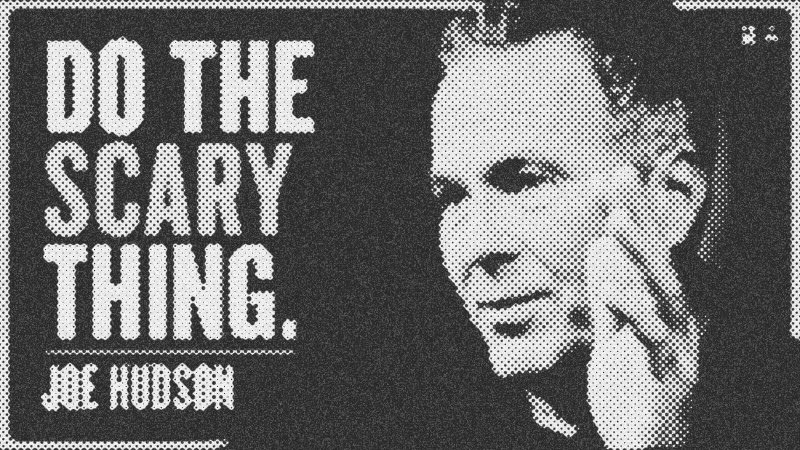
Vulnerability is the courage to say the scary thing—to tell your truth even when you're afraid of the reaction. Impartiality is the commitment to being with someone without trying to manage them or change their emotional state. Empathy is the ability to be emotionally present with someone without losing yourself in their story. Finally, Wonder is curiosity without the need for an answer—looking at a partner or a challenge with the same awe a child has for a ladybug. When you inhabit these states, you create a world where you are accepted for who you are, rather than the role you are playing.
- Alex Bell
- 8%· people
- Art of Accomplishment
- 8%· books
- Chris Williamson
- 8%· people
- Cleveland Clinic
- 8%· companies
- Gandhi
- 8%· people
- Other topics
- 58%
How To Let Go Of All That Heaviness - Joe Hudson
WatchChris Williamson // 2:23:39
