Beyond the Surface: Dismantling the Cognitive Mirages of Modern Society
The Cynical Genius Illusion: Why Negativity Isn't Intelligence
Popular culture has spent decades selling us the image of the brilliant misanthrope. From the biting wit of Hugh Laurie to the robotic condescension of Sheldon Cooper, we are conditioned to believe that a sour outlook is the hallmark of a superior mind. We often mistake a sharp tongue for a sharp intellect, assuming that if someone is critical of everything, they must see things the rest of us miss. However, psychological research suggests this is a profound misunderstanding of how the human mind actually functions. The Cynical Genius Illusion reveals that cynical individuals often perform significantly worse on cognitive tests than their more trusting counterparts.
Cynicism is not an expression of intelligence; it is a substitute for it. It functions as a psychological safety blanket, a defensive heuristic designed to shield the ego from the pain of betrayal or the embarrassment of being wrong. If you assume everyone is out for themselves and every endeavor is doomed to fail, you never have to risk your emotional capital. It is the ultimate intellectual shortcut because it requires zero cognitive effort to dismiss an idea or a person. You don't have to evaluate evidence, weigh nuances, or engage in complex social navigation if you simply default to "it's all a scam."
True intelligence is characterized by the ability to distinguish between when trust is warranted and when it is not. This requires cognitive flexibility and the willingness to expend mental energy. While cynicism was a useful evolutionary tool in low-information environments—the "better safe than sorry" approach to a potentially poisonous fruit—the modern world demands a more sophisticated filter. High-IQ individuals tend to be more trusting because they possess the resilience to handle occasional failure and the insight to see the long-term value in cooperation and innovation. They recognize that while the cynic never fails, they also never grow.
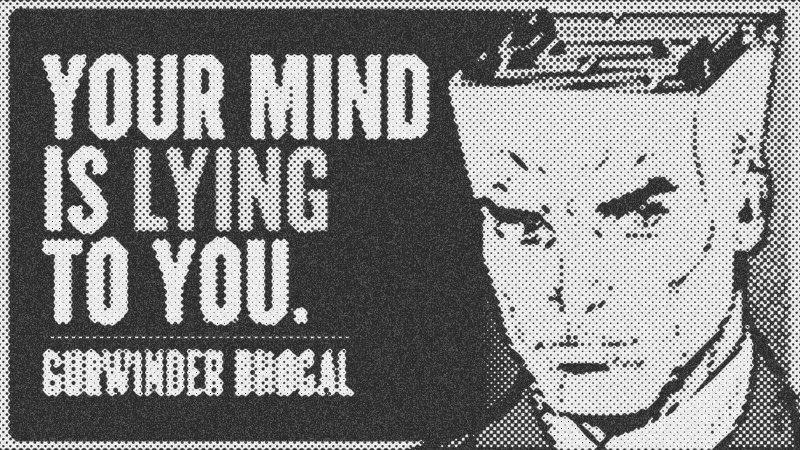
The Crisis of Trust and the Death of Shared Narratives
We are currently living through an era characterized by an information explosion, yet we feel more confused than ever. This phenomenon is perfectly captured by Seagull's Law: a man with one watch knows what time it is, but a man with two is never sure. In the past, societies operated under a centralized information architecture. There were fewer channels, fewer voices, and a more coherent shared narrative. Today, we are drowning in data, but we are starving for trust. This lack of trust is the primary bottleneck of human progress.
When trust in institutions—the World Health Organization, Harvard University, or mainstream media—erodes, the abundance of information actually becomes a liability. Without a trusted filter to help us navigate the cacophony, every piece of data becomes a weapon for a different tribe. We've seen this play out through the pandemic and various academic scandals where fabricated data destroyed the credibility of supposedly objective authorities. Once that tree of trust is chopped down, it cannot be regrown overnight with more "fact-checking" or data dumps.
This vacuum of institutional trust has led to a pivot toward individual integrity. We find ourselves looking for "high-integrity" individuals—those willing to admit they are wrong or those whose views are not perfectly predictable. If you can predict every one of someone's opinions based on a single stance, they aren't a serious thinker; they've simply adopted an ideological package. We crave thinkers who surprise us, because that surprise is evidence of a mind that values truth over tribal belonging. In a world of competing watches, we stop looking at the time and start looking at the character of the watchmaker.
The Anatomy of Ambiguity Aversion and Moral Certainty
Human beings are hardwired to prefer a certain bad outcome over an uncertain one. This is known as Ambiguity Aversion. In clinical settings, participants shown a high probability of an electric shock exhibit lower stress levels than those told they have a small, uncertain chance of receiving one. The brain finds the state of "not knowing" to be the most taxing emotional environment possible. To resolve this tension, we often rush toward explanations that provide order, even if those explanations are dark or conspiratorial.
This explains the rise of Compensatory Control. When randomness intrudes upon our lives—be it a global virus or an economic shift—we reintroduce order by seeing patterns in the static. It is psychologically easier for some to believe in a grand, malign plan by a shadowy elite than to accept that the world is often rudderless and shaped by random mutations or bureaucratic incompetence. Conspiracy theories and doomsday cults provide the comfort of a narrative where there was previously only chaos.
This desire for certainty often leads to Mono-thinking, where every problem in the world is retrofitted to a single cause: capitalism, climate change, or a specific political group. When the demand for answers outstrips our ability to supply them, we stop thinking and start narrating. We turn reality into a drama because stories are orderly, whereas data is messy. By collapsing the complex web of causality into a single thread, we save cognitive energy but lose our grip on the truth. We must learn to sit with the discomfort of the unknown if we want to avoid becoming prisoners of our own simplified stories.
The Performative Trap: Toxic Compassion and Preference Falsification
In the digital age, our success is increasingly tied to how we appear to others rather than what we actually do. This has birthed the Opinion Pageant, where social media rewards Proclamations over Deeds. One of the most dangerous results of this shift is Toxic Compassion—the prioritization of short-term emotional comfort over long-term flourishing. We see this when people support movements that feel empathetic in the moment but lead to disastrous long-term outcomes, such as discouraging healthy lifestyle changes in the name of body positivity or advocating for policies that inadvertently harm the very communities they intend to protect.
Closely linked to this is Preference Falsification. When people are afraid to say what they truly think due to social pressure or censorship, they lie. They don't change their minds; they simply hide their true beliefs. This creates a Spiral of Silence where an idea becomes increasingly "verboten" despite many people secretly holding it. Punishing speech is ultimately a request to be deceived. It limits sincerity and ensures that institutions remain blind to the actual state of public opinion until it explodes in a "backfire effect."
We also see a rise in Vice Signaling as a reaction to this performative virtue. Figures like Elon Musk or Donald Trump often gain massive followings by being intentionally obnoxious, signaling that they are "above" the social game of appearing good. However, even this is a form of signaling—a way to claim status by being orthogonal to mainstream norms. Whether we are virtue signaling or vice signaling, the trap remains the same: we are letting the social environment dictate our character rather than our inherent values. Breaking free requires a return to sincerity and the courage to value long-term flourishing over short-term social approval.
- Ambiguity aversion
- 7%· concepts
- Chris Williamson
- 7%· people
- Cynical genius illusion
- 7%· concepts
- Donald Trump
- 7%· people
- Elon Musk
- 7%· people
- Other topics
- 67%
17 Shocking Lessons About Human Psychology - Gurwinder Bhogal
WatchChris Williamson // 1:53:15
