The Disconnected Modern Male: Navigating the Manosphere and the Psychology of Belonging
The current social landscape reveals a striking paradox. While we have made monumental strides in inclusivity and representation for minority groups, a growing segment of the population—specifically young men—reports feeling increasingly alienated, lonely, and spiritually homeless. This void has not remained empty. It has been filled by a digital ecosystem known as the manosphere, a collection of creators and philosophies that offer a sense of identity and direction where traditional institutions have failed. Understanding this phenomenon requires looking past the surface-level controversies to see the psychological hunger for community and the structural failures that created this moment.
The Fallacy of the Cancellation Growth Curve
A pervasive myth circulates within online subcultures: the idea that getting canceled is a net benefit for a creator. This narrative suggests that when a platform like YouTube or TikTok removes a figure like Andrew Tate or Sneako, it only serves to make them more powerful. This is a massive cope. While a ban might trigger a short-term spike in attention due to the Streisand Effect, the long-term reality is a devastating loss of discoverability. Platforms with billions of users are the primary engines of growth. Moving to an alternative platform like Rumble might sustain an existing core audience, but it severs the connection to the wider world.
Getting rid of a person is easy; getting rid of an idea is nearly impossible. When a prominent voice is silenced, the underlying current of thought that elevated them remains. This current is often a mix of legitimate grievances and a desire for clear-cut answers in a confusing world. Politicians and creators don't create the Overton Window; they discover it. They identify where people are already standing and slot themselves into that space. If the mainstream refuses to engage with the problems men are facing, they effectively cede that territory to the most extreme voices, ensuring that the cycle of radicalization continues.
The Structural Crisis of Masculinity
To understand why the Red Pill movement has gained such a foothold, we must examine the structural realities of being male today. There is a documented, widening gap in educational attainment. In the United States, the gender divide in college graduation sits at roughly 60/40 in favor of women. This isn't just a minor fluctuation; it's a monumental shift from where we were fifty years ago. During the pandemic, this trend accelerated, with men dropping out at rates seven times higher than women. Yet, the public conversation remains hyper-fixated on the heights of power—the 85% of CEOs who are men—while ignoring the growing number of men at the bottom of the ladder who are struggling with incarceration, addiction, and suicide.
We are witnessing a failure to address the developmental needs of boys. Research indicates that a ten-year-old girl often possesses the impulse control of a 24-year-old man. Our current educational system, which prizes sitting still and quiet focus, may be fundamentally mismatched with male temperament. When men see these disparities and find that the only people willing to acknowledge them are on the far right, they naturally migrate in that direction. The refusal of progressives to provide a healthy alternative role model or to speak to these structural issues has created a monopoly on male mentorship for figures like Jordan Peterson or Joe Rogan.
The Zero-Sum Trap of the Red Pill
While the Red Pill movement offers valuable lessons in self-improvement—urging men to focus on fitness, finances, and personal accountability—it often falls into a toxic, adversarial trap. The prevailing philosophy frames the relationship between men and women as a zero-sum game. In this worldview, a man’s gain is a woman’s loss, and vice versa. It encourages a mindset where women are adversaries to be manipulated or conquered rather than partners in a shared life. This leads to a cynical, utilitarian view of human connection that ultimately deepens the very loneliness it claims to solve.
One of the most glaring contradictions within this sphere is the simultaneous praise for traditional values and the pursuit of a "one-sided open relationship." Many creators urge men to become "high-value" so they can sleep with as many women as possible, while demanding that those women remain monogamous and traditional. This isn't a sustainable social strategy; it’s a recipe for societal instability. By encouraging hypergamy and transactional sex, these influencers are often furthering the very social decay they complain about. A truly collaborative approach would focus on building men up as fathers and partners, emphasizing that growth doesn't have to come at the expense of others.
The Epidemic of Male Loneliness and Technological Friction
Loneliness is becoming a defining feature of the modern male experience. In the United Kingdom, data suggests that two out of five men have no close friends at all. Historically, friendships were forged through "natural friction"—the forced interactions of school, the office, or community organizations. Technology has masterfully removed this friction. We can work from home, order food through an app, and satisfy our social needs through endless scrolling on TikTok. While this is convenient, it is psychologically hollow.
When we remove the effort required to interact with the world, we remove the fulfillment that comes from those interactions. The "Region Beta Paradox" suggests that people often stay in mediocre situations—a boring job, a lukewarm relationship—because they aren't quite bad enough to force a change. Technology has created a world of "comfortable complacency" where men can stay stuck in the middle, never reaching for their full potential because the path of least resistance is so readily available. Real growth requires a return to intentionality, seeking out the discomfort of real-world connection and the effort of building something lasting.
Re-Engaging the Truth to Build Bridges
If we want to fix the divide, we must be willing to engage with uncomfortable truths. The ideological rigidity that currently dominates online discourse prevents meaningful bridge-building. When progressives deny basic biological or social observations—such as the reality of physical strength differences or the importance of status in dating—they lose all credibility with the audience they are trying to reach. You cannot build a bridge if you refuse to acknowledge the ground upon which the other person is standing.
Building a "Third Wave" manosphere requires a synthesis of hard truths and empathetic guidance. It means acknowledging the structural disadvantages men face without descending into misogyny. It means promoting self-improvement not as a weapon for manipulation, but as a tool for becoming a person capable of deep, meaningful collaboration. We need to move away from the "bigbitry of small differences" where we attack those closest to us for minor ideological deviations. Instead, we must focus on a shared vision of well-being where men and women are seen as compatriots in the struggle to navigate a complex, technological world. Growth happens one intentional step at a time, but we have to be willing to take that first step together.
- manosphere
- 10%· products
- Red Pill
- 10%· products
- TikTok
- 10%· companies
- Alex Jones
- 5%· people
- Andrew Tate
- 5%· people
- Other topics
- 62%
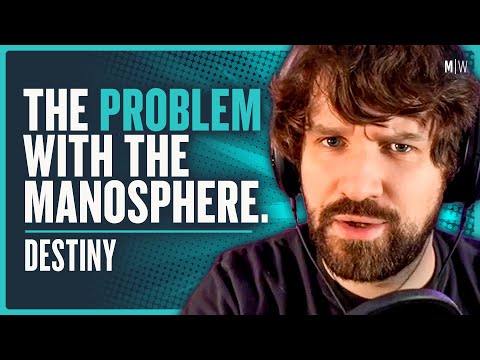
What Is The Manosphere Getting Wrong? - Destiny
WatchChris Williamson // 1:02:44
