The Evolutionary Blueprint of Female Connection and Competition
The Symmetrical Foundation of Female Bonds
To understand the modern dynamics of female relationships, we must first look back at the social structures of our ancestors. Tania Reynolds explains that throughout human history, many social groups were patrilocal, meaning women often left their genetic kin to live with their husbands' families. This displacement meant ancestral women were frequently surrounded by individuals with whom they shared no genetic relation. Unlike the coalitional, hierarchical bonds formed by men for hunting or warfare, women had to navigate a social world where cooperation was based on reciprocal altruism and mutualism.
Mathematical models and psychological research suggest that these types of relationships thrive under conditions of symmetry. When resources and power are relatively equal, cooperation is mutually beneficial. However, when a significant asymmetry exists—such as a vast difference in status or wealth—the relationship often devolves into exploitation or a unilateral extraction of resources. This evolutionary pressure created a preference for egalitarianism in female social circles. Even today, we see the remnants of this in how women respond to perceived imbalances. In a study of over 11,000 employees, women reported lower job satisfaction when reporting to a female supervisor, a finding that Tania Reynolds attributes to this ancestral aversion to power asymmetries between same-sex peers.
The Coalitional Divide: Men, War, and Hierarchy
Male social strategies evolved under drastically different pressures. Ancestral men were frequently involved in large-scale coalitionary contexts, such as group hunting and warfare. In these life-or-death scenarios, a numerical advantage and a clear chain of command were essential for survival. A strong hierarchy allowed for specialized roles—one man making spears, another strategizing the attack, and another executing it. Because the entire group stood to gain from the success of the mission, men evolved to tolerate, and even value, asymmetries in power. If a phenomenal quarterback leads the team to victory, every player benefits from the win, regardless of the individual status gap.
This history of coalitionary competition allows men to return to cooperation more easily following a conflict. Research by Joyce Beninson highlights this disparity, showing that men are more likely to engage in physical and verbal reconciliation after a match compared to women. For men, competition is often a means of establishing a functional hierarchy that serves the group's interests. For women, because their survival traditionally relied more on individual reciprocal bonds rather than large-scale war parties, competition acts as a corrosive force that can permanently damage the trust required for one-on-one cooperation.
The Moral Typecasting of Victims and Perpetrators
One of the most profound psychological biases discussed by Tania Reynolds involves our instinctive classification of people into moral roles. Based on the work of Kurt Gray, humans tend to view moral actions through a dyadic lens: there is a perpetrator and a victim. Across multiple studies, Tania Reynolds found a consistent gender bias in this classification. We instinctively categorize women as victims and men as perpetrators.
This bias has deep evolutionary roots related to reproductive value. Because women set the upper limit for a group's reproductive capacity, they are more "reproductively valuable" in a biological sense. A group with many women and few men can still produce many offspring, while the reverse is not true. This led to a societal drive to protect women from harm. However, this protective instinct has a dark side. When we cast someone as a victim, we often strip them of their agency. Conversely, by casting men as perpetrators, we become blind to their suffering. This is evident in modern social outcomes: while women are underrepresented in CEO roles (the top end of the distribution), men represent the vast majority of the "bottom end," including the homeless, the imprisoned, and those who die by suicide or overdose. Our inability to see men as victims prevents us from addressing these critical issues with the same sympathy we extend to women.
Indirect Aggression: Gossip as a Precision Weapon
Because physical violence carried such high risks for ancestral women—specifically the risk of leaving offspring without a primary caregiver—they evolved sophisticated methods of indirect aggression. As Ann Campbell argued, women must stay alive for their children to survive. Consequently, the weapon of choice in female competition is not the fist, but reputation. Gossip serves as a precision-engineered tool to lower a rival's social appeal without risking physical retaliation.
Tania Reynolds explores several nuances of this strategy, including the "Bless Her Heart" effect. This involves framing malicious information as pro-social concern. By saying, "I'm so worried about Tammy because she's been so promiscuous lately," a woman can damage Tammy's reputation while maintaining her own image as a kind, caring friend. Her research shows that people are less likely to recognize this as gossip when it is framed through personal victimization or concern. This allows women to navigate the social marketplace where "niceness" is the primary currency. To be popular, a woman must appear exceptionally kind; therefore, any aggression must be hidden beneath a veneer of altruism.
The Mating Market and Sexual Derogation
In the realm of intrasexual competition, women often target a rival's sexual reputation. This is because, historically, a woman's "mate value" was heavily influenced by her perceived sexual history. Men, seeking paternity certainty, evolved a preference for sexual chastity in long-term partners. Because chastity is a "negative state"—you cannot prove you haven't done something—it is incredibly easy to undermine and nearly impossible to defend against an accusation of promiscuity.
Interestingly, the intensity of this "slut-shaming" often fluctuates based on economic and ecological factors. Work by Candace Blake suggests that women are more likely to support restrictions on female promiscuity when they have sons (increasing their interest in paternity certainty) or when the local environment makes women more dependent on men's resources. As women become more financially independent, the societal pressure to condemn loose sexual norms often decreases. However, the rise of social media has globalized the comparison marketplace, forcing women to compete with billions of others, often leading to increased body dissatisfaction and a drive for physical perfection that far exceeds the local pressures of our ancestral past.
Strategic Friendships and Backup Mates
The formation of opposite-sex friendships also reveals hidden evolutionary motives. Research suggests that the preferences we hold for opposite-sex friends often mirror our preferences for romantic mates. This indicates that many of these relationships may serve as a way of cultivating "backup mates." Tania Reynolds notes that individuals often report distress when a backup mate enters a committed relationship, confirming the underlying mating interest.
Furthermore, female allies serve as essential troops in reputational warfare. Having a friend present can prevent others from spreading negative gossip, and a loyal ally can "shut down" a rumor before it gains traction. In a world where one's survival and reproductive success were tied to the quality of their social standing, these friendships were not merely for companionship; they were strategic alliances designed to protect against the ever-present threat of reputational ruin. By understanding these deep-seated psychological mechanisms, we can better navigate our modern social world with empathy and insight into the intentional steps required for true personal growth.
- Tania Reynolds
- 21%· people
- Ann Campbell
- 4%· people
- Candace Blake
- 4%· people
- Chris Williamson
- 4%· people
- co-rumination
- 4%· habits
- Other topics
- 64%
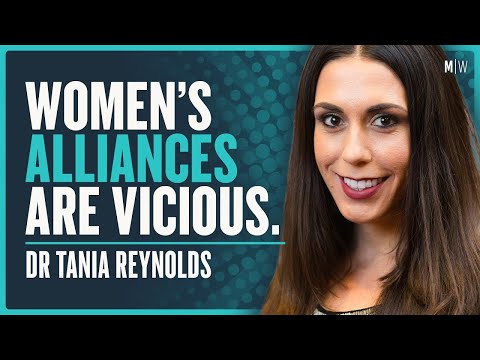
The Hidden Motives Behind Female Friendships - Dr Tania Reynolds
WatchChris Williamson // 1:18:33
