Paul Rosolie reveals how surviving Amazonian failures built his conservation empire
Standing barefoot at the edge of the world
A quiet stream in the Amazon rainforest seems like a paradise. Sunlight filters through a canopy rising one hundred and sixty feet overhead. The air thrums with the calls of macaws and the steady pulsing of frogs. For Paul Rosolie, a young naturalist eager to shed his hiking boots, this stream was a place to swim and play. Then came the strike. A stingray, invisible against the sandy bottom, drove its venomous barb straight into his arch. The tail wagged under the skin, flaying flesh from bone like a serrated steak knife.
He thought he knew pain. He was wrong. Within minutes, the venom acted like an electrical wire shoved directly into his veins. His body began to shut down. Local trackers immediately swung into action. They scraped specific trees, gathering medicinal barks to bake in a pan, wrapping the boiling hot poultice in leaves before strapping it to the raw wound. While a Western hospital trip often leads to permanent nerve damage and systemic infections, this ancient remedy sucked the venom clean out. Rosolie was back on his feet in forty-eight hours.
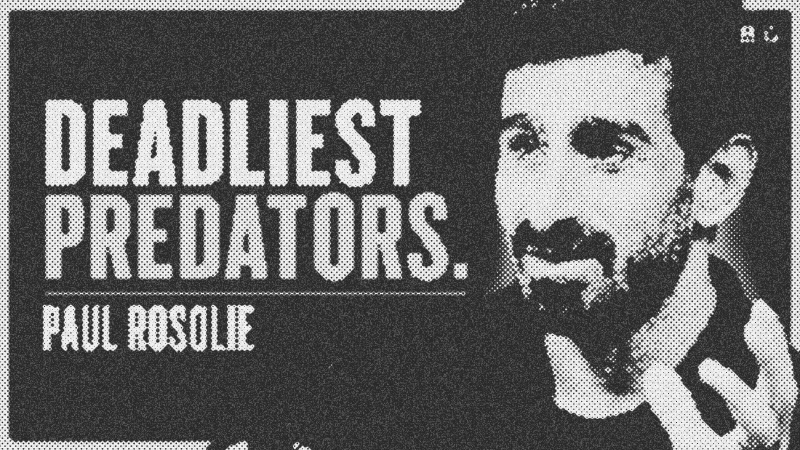
The physical pain was agonizing, but it paled in comparison to the mental anguish. Lying on that research station cot, his mind spun with anticipation. He worried about how much of his year this injury would steal. He wondered if he would be off his feet for months, useless to the forest he had sworn to protect. This moment of physical crisis serves as an entry point into a larger, more profound reality. True growth rarely happens when we are safe and comfortable. It is forged when we are pushed to our absolute limits and forced to find a way back.
The public disaster that saved a career
In his mid-twenties, Rosolie was offered what seemed like the ultimate dream. Discovery Channel producers approached him with a massive budget and a promise of international reach. They wanted him to host a show called Expedition Amazon. It would fund genuine scientific research on the largest anacondas on Earth. There was only one catch. The Hollywood executives sitting at their desks wanted a sensational hook. They wanted Rosolie to wear a custom-built suit and try to get eaten alive by a giant snake.
He shook hands on the deal, believing the stunt would earn the attention needed to fund his conservation work. But right before the premiere, the network changed the title to Eaten Alive and marketed it as a literal occurrence. The backlash was instantaneous and devastating. Talk show hosts mocked him, conservation groups branded him a charlatan, and scientists refused to work with him. He was even told he was no longer welcome in Brazil. His professional reputation lay in ruins.
He exiled himself to India, spending months living among elephants and wild tigers. In that period of isolation, he realized a hard truth. The public disaster was actually the best thing that could have happened to him. He was not yet ready for a mainstream television career. It would have destroyed his focus. This brutal failure taught him to spot a false handshake from a mile away. It forced him to stop seeking validation and start doing the actual work of protecting the land.
Converting enemies into allies in the deep jungle
When Rosolie and his local partner, JJ, looked out at the horizon, they saw dark plumes of smoke rising over the forest. Millennium trees were being felled. The destruction felt unstoppable. He wanted to call an authority, to find someone with the power to intervene. JJ simply looked upriver, then downriver, and asked a single question: "Do you see anybody else?"
There was no one else. If they wanted to save the river, they had to build an organization from nothing. They founded Jungle Keepers with a radical premise. Instead of fighting the loggers and gold miners destroying the forest, they decided to sit down and have a beer with them. They asked these men how much they made felling mahogany trees. The answer was fifteen dollars a day for dangerous, backbreaking work.
Rosolie offered them a different path. He hired them as conservation rangers. He offered them triple their daily wage, medical benefits, a steady paycheck, and a supportive community. Instead of carrying heavy, dangerous chainsaws, they were given light binoculars to monitor the boundaries of the park. Today, Jungle Keepers protects over one hundred and thirty thousand acres of pristine rainforest. It is a model of conservation that works by aligning incentives rather than relying on policing. By giving local people an alternative to poverty, they transformed their former enemies into the forest's fiercest defenders.
Facing the prehistoric shadow across the river
Deep in the interior, far beyond the reach of law enforcement or modern communication, lies a territory untouched by the passage of millennia. During a patrol near a remote indigenous community, Rosolie's team received word that members of an uncontacted tribe were approaching the riverbank. This was not a blurred, distant encounter. Over a hundred members of the Mashco-Piro tribe emerged from the trees, naked, with ropes tied around their waists and holding seven-foot bamboo arrows.
Standing on opposite sides of the river, two different eras of humanity stared at each other. The tribe had survived for thousands of years in complete isolation. They had missed the industrial revolution, world wars, and the rise of the digital age. They had been deeply traumatized by the historical atrocities of the rubber boom, learning that outsiders brought only slavery and death. As they stood on the beach, they shouted "Nomole," a word meaning brothers, and asked for plantains.
The team pushed a boat loaded with bananas across the current. Rosolie, standing taller and broader than the local guides, was called forward to show he meant no harm. He raised his hands in peace. The tribe sang back, a primitive but profound moment of connection across a vast historical divide. Yet, this beauty exists alongside extreme danger. The Mashco-Piro are highly defensive. Just days after this peaceful exchange, members of the same tribe fired a rain of arrows at a passing boat, sending a shaft straight through the body of Rosolie's friend. It is a reminder that the wild does not operate by modern human rules. It is a place of raw, unpredictable survival.
The call of an obsessive life
Many people spend their lives searching for safety, planning their investments, and managing their comfort. But Rosolie's journey shows that real satisfaction comes from a different source. It comes from committing to an obsession so deeply that you cannot imagine doing anything else. Discipline is simply accepting friction. Motivation is having friction removed. But obsession is friction inverted. It pulls you forward, demanding your sleep, your health, and your focus, turning what looks like hard work into your very identity.
This obsession has saved millions of heartbeats, ancient trees, and rare species. It has created a global movement where people from all over the world contribute to protecting a system that produces a fifth of our planet's oxygen. We are the first generation in human history with the technology to witness a planetary crisis, and the last with the power to stop it. By choosing action over anxiety, we can ensure that the wild places of our world remain whole for the children of the future.
- Amazon rainforest
- 14%· locations
- Discovery Channel
- 14%· companies
- Jane Goodall
- 14%· people
- JJ
- 14%· people
- Jungle Keepers
- 14%· companies
- Other topics
- 29%
The Amazon Has Dark Secrets - Paul Rosolie
WatchChris Williamson // 2:12:12
