The Emperor's Inner Fortress: Bridging Ancient Stoicism and Modern Mental Resilience
1. Topic/Challenge Framing
We live in an era of unprecedented noise. We are the first generation to carry the weight of the entire world’s tragedies in our pockets, scrolling through global crises while standing in line for coffee. This constant bombardment creates a state of chronic alarm, a feeling of being unmoored from our own values while adrift in a sea of social media influence and societal pressure. Many of my clients describe a sense of 'normlessness'—a feeling that the traditional anchors of religion or community have dissolved, leaving only a materialist void.
The challenge isn't just the external chaos; it's the internal fragmentation that follows. We find ourselves reactive, easily provoked into anger by a digital comment, and terrified of the very mortality that defines our existence. We are often looking for a 'Western Yoga,' a secular way of life that provides the same grounding as ancient spiritual traditions but remains rooted in reason. This is where the life of Marcus Aurelius and the philosophy of Stoicism offer more than just historical trivia; they provide a psychological blueprint for survival.
2. The Ancestry of Cognitive Resilience
It’s a common misconception that psychology began with Sigmund Freud in a Victorian office. In reality, the cornerstone of modern Cognitive Behavioral Therapy (CBT) was laid over two millennia ago in the painted porches of Athens. Donald Robertson highlights a profound link: the Stoics understood that it is not things that upset us, but our opinions about them. This is the exact principle that drives modern therapeutic interventions.
While Sigmund Freud focused on speculative theories about childhood trauma and hidden sexual drives, the Stoics were practicing what we now call 'objective representation.' They were clinical in their approach to the mind. They taught that our emotional distress stems from value judgments—we label an event 'catastrophic' and our nervous system responds accordingly. By stripping away the emotive rhetoric we use to describe our lives, we can reach a state of 'antirhetoric.' Instead of saying 'He destroyed my reputation,' a Stoic would say, 'He spoke words, and I have a choice in how I perceive them.' This isn't about suppressing emotion; it's about refining the logic that creates the emotion in the first place.
3. Facing the Great Taboo: Anger and Mortality
Two of the most difficult challenges we face are the management of our anger and the looming reality of our death. Modern self-help often treats these as problems to be 'hacked' or avoided. We use productivity tools and longevity diets as a way to stave off the fear of finitude, yet Stoicism suggests that the 'nuclear option' for personal growth is actually the contemplation of death. Seneca famously practiced a nightly ritual of imagining he would not wake up. This wasn't morbid; it was liberating. If you have already accepted your 'toast' status, the petty frustrations of the day lose their power over you.
Anger, too, is often the 'royal road' to self-improvement that everyone avoids. We see Marcus Aurelius, the most powerful man on earth, wrestling with his temper in his private journal, Meditations. He recognized that anger is the most interpersonal and socially threatening emotion. It narrows our attention, causing us to 'zero in' on a perceived threat until we lose the ability to see the human being in front of us. The Stoic practice of 'broadening the perspective'—viewing a person's character in its entirety rather than reacting to a single 'slice' of their behavior—is a vital tool for social cohesion in our polarized world.
4. Actionable Steps/Practices
To move from theory to transformation, we must implement 'voluntary hardship.' Our society is built on the pursuit of comfort, yet comfort is a prison for the soul. Here are four practices to build your inner fortress:
The View from Above
When you feel overwhelmed by a specific problem, consciously expand your field of vision. Imagine looking at yourself from the ceiling, then from the clouds, then from space. This 'cognitive distancing' helps you realize that your current crisis is a tiny speck in the vast flow of time and space. It dilutes the intensity of the emotional response by breaking the cycle of threat monitoring.
Functional Objective Description
Practice describing your stressors in the most banal, boring language possible. If you are stuck in traffic, don't say 'this is a nightmare that's ruining my day.' Say, 'I am sitting in a metal box, and there are many other metal boxes around me. I am currently stationary.' This 'antirhetoric' strips the power from the situation and allows you to remain a 'cool cucumber.'
Values Clarification and Meaningful Activity
Donald Robertson notes that when depressed clients are asked how much time they spent doing things consistent with their values, the answer is often 'zero.' Do not mistake pleasure for fulfillment. Eating chocolate is pleasurable; helping a friend is meaningful. Audit your week. If you cannot name your top three core values, you are living an unintentional life, blown about by the 'smoke' of societal opinion.
The Morning and Evening Review
Follow the lead of Marcus Aurelius. In the morning, prepare for the day by acknowledging you will meet difficult, ungrateful, and aggressive people. Remind yourself that they act out of ignorance of what is truly good. In the evening, review your actions without self-flagellation. Ask: 'What did I do well? Where did I fail? What will I do differently tomorrow?'
5. Encouragement/Mindset Shift
Growth is not about achieving a state of perfection; it is about the journey toward wisdom. Even Socrates, the 'Godfather of Stoicism,' refused to call himself wise, preferring the term 'philosopher'—a lover of wisdom. There is a profound beauty in 'swimming against the current.' When you decide to live by design rather than by default, people will think you are strange. They might laugh, just as the Athenians laughed at Socrates.
But remember: the inertia of societal norms is designed to keep you safe and comfortable, not fulfilled. Every time you step out of your comfort zone, every time you choose a 'meaningful' activity over a 'pleasurable' distraction, you are building a life that is truly yours. You are no longer a slave to the algorithms of the 'digital sophists' who profit from your outrage and anxiety. You are the architect of your own character.
6. Concluding Empowerment
Your greatest power lies in the recognition that while you cannot control the 'torrent of things rushing past,' you can always control the quality of your own mind. As the Stoics taught, 'Life itself is but what you deem it.' You have the agency to reframe your challenges, to forgive your enemies through understanding, and to face your mortality with a smile.
Growth happens one intentional step at a time. Do not argue about what it means to be a good person; simply be one. The world does not need more critics or more outrage; it needs more individuals who have cultivated an inner stillness, who can stand unruffled like a tortoise amidst the storm. You have the strength of empires within you. It is time to recognize it, to claim it, and to walk your path with the quiet, determined courage of a philosopher-king.
- Marcus Aurelius
- 13%· people
- Donald Robertson
- 8%· people
- Sigmund Freud
- 8%· people
- Socrates
- 8%· people
- Stoicism
- 8%· concepts
- Other topics
- 54%
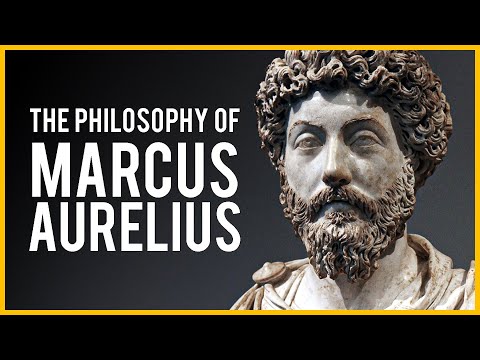
Stoicism: How To Think Like A Roman Emperor - Donald Robertson | Modern Wisdom Podcast 274
WatchChris Williamson // 1:32:38
