The Architecture of Resilience: Extreme Ownership and the Discipline-Creativity Spectrum
Navigating the Weight of Extreme Ownership
When we discuss the concept of taking responsibility, we often view it through a narrow lens of binary outcomes—success or failure. Jocko Willink introduces a more demanding and transformative framework: Extreme Ownership. This isn't just about admitting when you missed a deadline; it’s a fundamental psychological shift that requires you to view every element of your environment as something you can influence. The challenge many face is the fear that taking too much responsibility will lead to a crushing sense of guilt. However, true ownership is actually a release valve for anxiety.
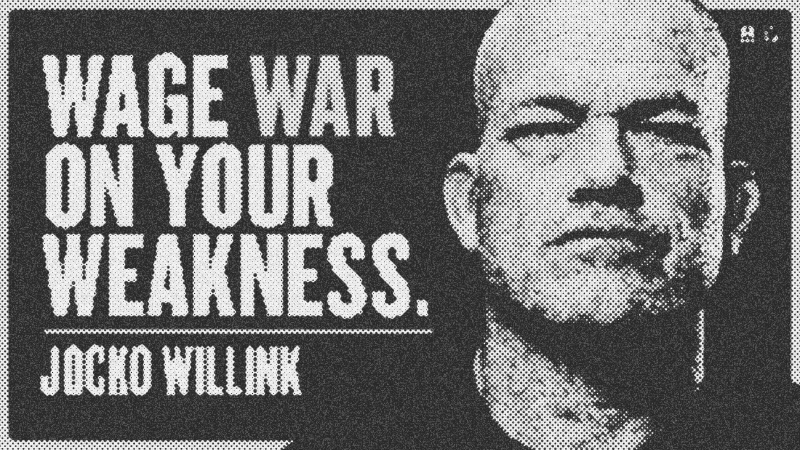
When you stop blaming external factors—the economy, your boss, your childhood—you reclaim the power to change your situation. If you are a leader and your team fails, taking ownership means acknowledging that you didn't provide enough clarity or resources. This doesn't mean you are a bad person; it means you are a person with the agency to fix the problem next time. The nuance lies in recognizing the difference between control and influence. You cannot control a random disease or a global pandemic, but you have absolute ownership over your response to those events. By focusing on the response, you move from a state of victimhood to a state of action. This prevents the psychological paralysis that occurs when we wait for the world to change for us.
The Paradox of Discipline and Creativity
There is a common misconception that discipline is a cage. We often imagine the highly disciplined person as a rigid, unthinking machine, following a checklist while their soul slowly withers. But the elite Navy SEALs and the high-level Brazilian Jiu-Jitsu athlete show us a different reality. These individuals operate on a spectrum where high structure provides the foundation for extreme creativity. Without the discipline to master the fundamentals—the basic moves, the tactical protocols, the physical conditioning—you lack the tools to be creative when the pressure rises.
In the chaos of the battlefield or the intensity of a match, the person who has internalized the rules is the one most free to break them. Jocko Willink notes that while the Army and Marine Corps rely on heavy doctrine, the Navy SEALs often found success through a more freethinking approach because they weren't trapped by rigid procedures. They used their discipline as a platform for adaptation. This maps directly onto personal growth. If you have the discipline to handle your chores, your health, and your finances in the morning, you create a psychological space where you can be innovative and playful in your work or hobbies for the rest of the day. Structure doesn't stifle the spirit; it protects it from the mundane distractions that drain our mental energy.
Reframing Setbacks: The Power of 'Good'
We all encounter moments where the plan falls apart. The project is canceled, the injury occurs, or the relationship ends. The natural human response is to mourn the loss and focus on the injustice of the situation. Jocko Willink offers a counter-intuitive response: "Good." This isn't toxic positivity. It’s an aggressive form of resilience that seeks out the hidden opportunity within every failure. If the mission failed, good—you have a chance to learn from the mistakes. If you didn't get the promotion, good—now you have more time to sharpen your skills.
This mindset is about maintaining forward motion. When you say "good" in the face of a challenge, you are choosing to accept reality immediately rather than fighting it. You stop asking "Why is this happening to me?" and start asking "What can I do with this?" This is the essence of Amor Fati, the love of fate. By embracing the obstacle, you turn the very thing meant to stop you into the fuel for your next achievement. It requires a level of detachment from your ego, recognizing that your value isn't tied to a perfect record, but to your ability to stay in the fight.
Mastering the Storms of Grief and Heartbreak
Loss is the most difficult test of our mindset. Whether it is the passing of a friend or the end of a long-term relationship, the emotional fallout can feel like an uncontrollable storm. Jocko Willink highlights that these waves of emotion are a natural part of being human, and trying to suppress them is a losing battle. The goal isn't to be a robot; it's to understand the pattern of the storm so you don't drown in it.
In the wake of a breakup, the protocol is clear: wish them luck, walk away, and don't look back. This is the ultimate form of self-respect and ownership. If there is a chance for reconciliation, it only happens when you show the strength to move on. If there isn't, you've already started the healing process. For those dealing with the death of a loved one, the key is to remember but not dwell. You honor their memory by living a life they would be proud of, not by remaining paralyzed in sorrow. Writing letters to the deceased or journaling your regrets can act as a form of "detachment," moving the heavy thoughts from your mind onto the paper, allowing you to view them objectively and eventually carry them more lightly.
The Illusion of Motivation and the Reality of Courage
We spend far too much time waiting to "feel" like doing the work. We watch motivational videos and wait for a spark of inspiration, but feelings are fickle and unreliable. Jocko Willink argues that discipline is infinitely more important because it functions whether the motivation is there or not. Courage follows a similar logic. Sam Harris famously noted that you cannot fake bravery; if you act brave while you are terrified, that is bravery.
This is a liberating realization. You don't need to eliminate your fear or your laziness to be successful; you just need to act in spite of them. This is where the "anxiety cost" comes into play. When you spend all day obsessing over a difficult task, you drain your mental resources. If you simply do the task first thing in the morning, you eliminate the mental weight. The discipline to start is what eventually creates the momentum that feels like motivation. Success is built on the days when you didn't want to show up but did anyway. That is where the real growth happens—in the gap between your feelings and your actions.
Actionable Practices for Radical Growth
To move from theory to reality, you must implement intentional habits. First, front-load your day. Handling your most difficult tasks or your physical training in the early hours resets your "to-do list" and provides a sense of victory before the rest of the world has even woken up. This creates a psychological buffer against the stressors of the day. Second, engage in a physical discipline like Brazilian Jiu-Jitsu or weightlifting. These activities provide a controlled environment where you are forced to confront discomfort, manage your ego, and solve problems under pressure. It keeps your "courage muscle" from eroding during times of ease.
Third, practice iterative decision-making. Stop trying to map out a perfect five-year plan. Instead, move in a direction, gather feedback, and adjust. This keeps you open to opportunities you couldn't have predicted. Finally, choose your regrets. Accept that every choice has an opportunity cost. Instead of trying to find the "perfect" solution, ask yourself which set of trade-offs you can live with. This perspective shifts you away from the pursuit of a non-existent utopia and toward a life of pragmatic, intentional progress. You are the architect of your resilience; every disciplined choice is a brick in the wall that protects your potential.
- Jocko Willink
- 20%· people
- Brazilian Jiu-Jitsu
- 8%· sports
- Navy SEALs
- 8%· organizations
- Andrew Huberman
- 4%· people
- Cam Haynes
- 4%· people
- Other topics
- 56%
Waking Up Early, Living with Purpose & Respecting Yourself - Jocko Willink (4K)
WatchChris Williamson // 2:33:06
