The Moral Evolution: Beyond Speciesism and the Logic of Suffering
The Core of the Ethical Argument
When we consider our relationship with the non-human world, we often lean on sentimentality. We talk about loving our pets or the beauty of nature. However, Peter Singer shifts the conversation from emotion to cold, hard logic. The foundation of his philosophy isn't a demand for affection toward animals; it's a demand for moral consistency. He argues that the fundamental wrong we commit against animals isn't a lack of love, but a failure to recognize their interests as sentient beings. This failure is a form of prejudice he calls speciesism.
Speciesism functions exactly like racism or sexism. It involves a dominant group—in this case, humans—disregarding the interests of those outside their group simply because they belong to a different category. If a being can feel pain, it has an interest in not suffering. There is no logical or ethical justification for ignoring that pain based on the number of legs a creature has or its level of intelligence. When we treat animals as mere tools for research or units of production, we reduce complex, sentient lives to property. This legal status as property is the structural root of the systemic abuse found in industrial settings today.
The Reality of Industrial Production in 2023
Five decades after the initial publication of Animal Liberation, the scale of animal use has expanded to staggering proportions. While some Western nations have banned the most restrictive forms of confinement, such as veal crates or battery cages, the global total of animals in the system has skyrocketed. This is largely driven by rising prosperity in nations like China, where the demand for meat has led to the construction of massive, high-rise factory farms. These "pig hotels" house thousands of animals in sterile, concrete environments where they never see sunlight or touch grass.
Consider the life of a modern broiler chicken. These birds are bred for extreme growth, reaching slaughter weight in just six weeks. Their bones are often too immature to support their unnaturally heavy bodies, leading to chronic pain and leg collapses. In many industrial sheds, the air is thick with ammonia from accumulated droppings, which can cause caustic burns on the birds' skin. Because individual care is economically unfeasible, a five percent mortality rate is simply accepted as a cost of doing business. This is not a failure of the system; it is the system working exactly as intended to produce the cheapest protein possible.
The Hidden Math of Aquaculture and Dairy
Aquaculture is often presented as a more sustainable alternative to wild fishing, but the math reveals a different story. Carnivorous fish like salmon require massive amounts of feed derived from wild-caught fish. A single farmed salmon may consume the equivalent of 147 other fish before it reaches the market. Furthermore, the dairy industry involves an emotional toll that consumers rarely witness. To keep cows producing milk, they must be impregnated annually. Their calves are typically removed within hours of birth to ensure the milk is preserved for human sale. This separation causes documented distress for both the mother and the offspring, highlighting that even "bloodless" industries rely on significant psychological suffering.
Ethical Alternatives and the Practicality of Choice
For those who find the industrial model abhorrent but aren't ready to adopt a strict vegan lifestyle, the question of "ethical meat" arises. There are pathways to a more reverent relationship with food, such as regenerative farming or genuinely free-range systems. In these environments, animals may live lives that are actually worth living—protected from predators and allowed to engage in natural behaviors. However, these products come with a significantly higher price tag, reflecting the true cost of animal welfare.
We must also confront our relationship with Companion Animals. While some radical wings of the animal rights movement view pet ownership as inherently exploitative, a more nuanced view sees it as a bridge to empathy. Living with a dog or a cat allows humans to witness the complexity of non-human emotions firsthand. We see their boredom, their joy, and their capacity for mourning. This proximity often serves as the catalyst for broader ethical shifts. When we realize the cat on our lap is a conscious individual, it becomes much harder to justify the suffering of the pig in the factory, who possesses comparable or even superior cognitive abilities.
The Paradox of Progress and Public Sentiment
Despite the clear ethical arguments, global meat consumption continues to rise. This is the great frustration of moral philosophy: logic alone rarely changes behavior. Eating habits are deeply culturally embedded and tied to social conformity. Most people would rather follow the crowd than lead a revolution at the dinner table. However, there are signs of shifting tides. The rise of "open rescues"—where activists film conditions inside farms and take ill animals to veterinarians—has begun to influence public opinion through legal channels.
In several recent court cases, juries have refused to convict activists for "theft" after seeing evidence of the conditions from which the animals were rescued. These "jury nullifications" suggest that when the average citizen is forced to look at the reality of industrial farming, their inherent sense of justice outweighs property laws. We are seeing a growing gap between what the law allows and what the public finds morally acceptable.
AI and the Future of Sentience
As we look forward, the definition of sentience may face its greatest challenge yet from Artificial Intelligence. While current models like ChatGPT are sophisticated word-predictors rather than conscious entities, we are approaching a horizon where the line blurs. If we eventually create AI agents that can convincingly claim to have a "felt sense" of experience, we will be forced to extend our ethical framework to them.
This creates a profound dilemma: how do we distinguish between a performance of emotion and the actual experience of it? If a machine is programmed to avoid "pain" and seeks to preserve its own existence, at what point does it earn moral status? Our history with animals suggests that humans are notoriously slow to recognize the interests of the "other." If we struggle to grant basic protections to biological beings with nervous systems similar to our own, our track record for recognizing machine sentience may be even more fraught. The goal, ultimately, remains the same: to minimize the total amount of suffering in the universe, regardless of the substrate in which that suffering occurs.
Conclusion
Growth is not a destination but a process of expanding our circle of concern. The journey from speciesism to a more inclusive ethics requires us to dismantle the idea that human dominance equals moral license. Whether we are discussing the contents of our grocery carts or the programming of future AI, the question remains: do we have the courage to acknowledge the interests of those who cannot speak for themselves? The next 50 years will determine if we can move beyond being a predatory species and finally become a truly ethical one.
- Alan%20Turing
- 8%· people
- Animal%20Liberation
- 8%· books
- Artificial%20Intelligence
- 8%· subjects
- California
- 8%· places
- ChatGPT
- 8%· products
- Other topics
- 58%
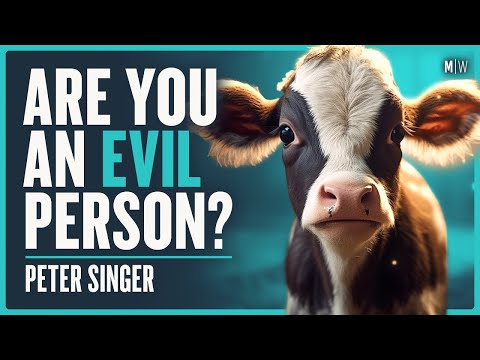
Are You An Evil Person For Eating Meat? - Peter Singer
WatchChris Williamson // 1:10:55
