Suffering Strategically Managed: Finding Resilience in the Depths of Extreme Endurance
The Architecture of Resilience: Beyond Gritting Your Teeth
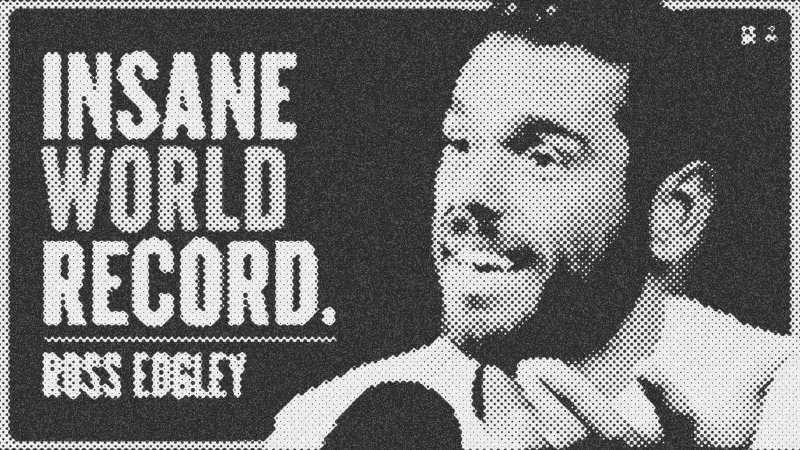
We often treat resilience as a brute-force mechanism. We imagine the hero gritting their teeth, Toxic Masculinity, and pushing through a wall of fire with nothing but willpower. But true endurance, the kind that survives 510 kilometers of the Yukon River or 157 days at sea, requires a more sophisticated blueprint. It is not about ignoring pain; it is about managing it as a strategic resource. Ross Edgley defines this beautifully: resilience is suffering strategically managed.
When you are fifty hours into a non-stop swim, the "just do it" mentality becomes a liability. High-intensity motivation spikes your cortisol, fries your nervous system, and depletes your remaining reserves. Instead, we must look at the body as a vessel in need of constant calibration. If there is a pebble in your shoe, you do not just run through it to prove you are tough; you stop and remove it. This is the difference between ego-driven grit and professional resilience. The former is a candle that burns out quickly; the latter is a well-regulated engine.
The Psychology of the Internal Press Secretary
Your brain is a hypochondriac. Its primary job is to keep you alive, and to do that, it acts as a relentless press secretary, spinning every sensation into a narrative of impending doom. It does not just deliver a signal of muscle fatigue; it crafts a story. It asks, "Did we train enough?" or "What would your mother think if you drowned here?" It personifies worry to convince you to pull the physiological handbrake.
To navigate this, we must adopt a practice of mindful resilience. Borrowing from Eckhart Tolle and the insights of drummer Benny Gordon, we can view these intrusive thoughts as clouds passing through a clear sky. Your job is not to shout back at the clouds or punch them in the face. Your job is to observe them. When the brain says you are too tired to continue, you acknowledge the thought: "That is an interesting perspective." Then, you return to the process. You separate your identity from the noise of your biochemistry. By refusing to let these thoughts alter your internal state, you prevent the spike in stress hormones that truly leads to collapse.
The Physiology of Extreme Output: Training the Gut and Ligaments
Preparation for extreme endurance is not about building a faster body; it is about building a more robust one. While an Olympic swimmer like Adam Peaty is a Formula One car—refined, poetic, and built for speed—the endurance athlete must be a John Deere tractor. Speed matters far less than the ability to avoid ligament failure or gastrointestinal implosion.
One of the most overlooked frontiers of human performance is training the digestive system. To maintain a non-stop swim, you must consume and, more importantly, assimilate calories at a rate that would break a normal person. Working with experts like James Morton, athletes are pushing the boundaries of carbohydrate intake, moving from the standard 60 grams per hour to over 120 grams. This involves using different substrates like MCT Oil and specific blends of sucrose and fructose to bypass single-channel bottlenecks in the gut. You are essentially training your stomach to be a high-performance engine, capable of turning Porridge into forward motion while submerged in near-freezing water.
Flipping the Pyramid: Purpose vs. Primitive Needs
Maslow's Hierarchy of Needs suggests that we cannot reach for self-actualization until our physiological needs—warmth, food, sleep—are met. In the wilderness of the Yukon, these needs are under constant assault. When your core temperature drops and you are shivering from the inside out, the base of the pyramid is crumbling.
In these moments, the only way to survive is to flip the pyramid. You forgo the primitive need for warmth and safety by anchoring yourself to a higher purpose. Whether that is a world record, a charitable cause, or the desire to contribute to sports science, that mission becomes the new foundation. You endure the burning sensation of scolding hot porridge because it is the only way to keep the engine running. This capacity to override the body's survival instincts requires a "why" so powerful that it makes the "how" bearable. If your goal is purely extrinsic—fame or a trophy—the pyramid will not flip. It must be an intrinsic, soul-deep commitment.
The Stoic Legacy: Lessons from a Father
Resilience is often inherited, not just through genetics, but through the quiet observation of those who raised us. For Ross, the ultimate example of Stoicism was his father, Richard Edgley. Faced with terminal cancer, his father did not rage or descend into bitterness. He simply asked, "Did I win the point?" after a fall on the tennis court and continued coaching from a wheelchair.
This brand of United Kingdom stoicism—the stiff upper lip combined with a genuine smile—is the secret weapon of the long-distance athlete. It is the ability to say "thank you" for a banana when you are fifty hours into a swim and suffering from Cellulitis. It is an attitude that views death and suffering not as enemies to be feared, but as facts of life to be met with dignity and humor. This perspective removes the "darkness" often associated with high performance. You do not need rage to win; you need a profound sense of gratitude for the opportunity to test your limits.
Actionable Practices for Personal Growth
- Outsource Your Common Sense: When you are in the middle of a "storm"—whether physical, emotional, or professional—do not trust your own brain. It is biased toward safety. Trust your team, your preparation, and your data instead.
- Focus on the Process, Not the Outcome: The moment you ask "how much further?" you have lost the battle. Focus on the mechanics: the next breath, the next step, the high elbow catch. If you manage the process, the outcome becomes inevitable.
- Cultivate Educated Stupidity: As we age, we learn why things are hard. This knowledge can create hesitation. Strive to maintain a degree of "naivety"—the willingness to throw yourself into a challenge without over-calculating the risks.
- Flip Your Own Hierarchy: Identify your "higher purpose" before the crisis hits. When life strips away your comfort, what is the one thing you will not give up? That is your anchor.
The Eternal Boulder
The struggle alone is enough to fill a man's heart. Like the The Myth of Sisyphus, we are all rolling our own boulders up a hill. The goal is not to reach the top and stay there; the goal is to find joy in the climb. Growth does not happen in the moments of ease; it happens when we are mashing our faces against the cold water of the unknown and deciding to take one more stroke. You are stronger than your biochemistry. You are more resilient than your narrative. Now, go find your river.
- Adam Peaty
- 3%· people
- Alpha GPC
- 3%· products
- Benny Gordon
- 3%· people
- Caffeine
- 3%· products
- Canada
- 3%· places
- Other topics
- 83%
317 Miles: Pushing The Limits Of Possibility - Ross Edgley
WatchChris Williamson // 1:56:53
