The Alchemy of Authenticity: Navigating the Path to Modern Manhood
The Architecture of a Healthy Man
We often overcomplicate what it means to live a good life. In my practice, I see so many individuals paralyzed by the search for a perfect moral compass or a specific set of rules. They want a progress bar for their character, much like a bank balance or a YouTube playback line. But true health in manhood isn't a checklist; it's a state of being. It starts with a simple, foundational requirement: do not be a liability to those around you.
Being a healthy man means showing up for the thirty or so people whose lives you actually affect. It involves being physically capable, financially stable, and emotionally reliable. When you provide confidence to your partner or children, you grant them the peace necessary to flourish in their own lives. They need to know that life will never get "too bad" because you are a person who can be counted on. This isn't about changing the entire world; it's about the intentional design of your immediate environment.
Robert Glover often suggests that a healthy man is someone comfortable in his own skin, who knows where he’s going, and has fun getting there. This comfort is the ultimate form of competence. In a world obsessed with "alpha" posturing—where young men study how to sit or dress to project power—the most masculine thing you can do is stop caring what strangers think. Jimmy Rex shares a humbling story from a Tony Robbins event where he tried to dance more "masculinely" than thirty other men to win a crowd's approval. The insight he gained was sharp: a truly grounded man doesn't get on a stage to impress strangers. The moment you perform for validation, you’ve lost the game of authenticity.
The Triple Pillars: Vulnerability, Authenticity, and Integrity
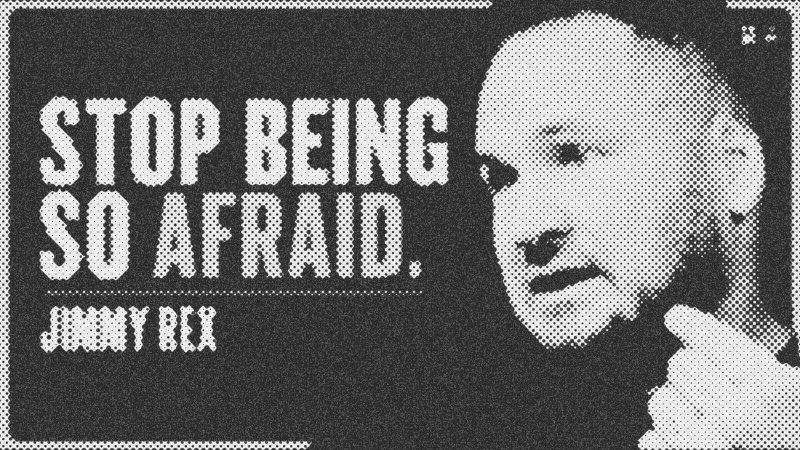
Many men live in a state of "hollow love." They play a character—a stoic provider, a successful CEO, a "tough guy"—because they are terrified that if people saw the real version of them, warts and all, they would be rejected. This creates a bucket with holes in it. No matter how much love and praise they receive, it never fills them up because they know the love is directed at the mask, not the person behind it.
To bridge this gap, we must lean into vulnerability. Vulnerability is a superpower, but it must be followed by a return to a grounded frame. It’s about creating a safe container where you can be seen. I’ve found that when men join a community like We Are The They, the first thing they realize is that their problems aren't unique. Whether it’s a successful entrepreneur or a blue-collar worker, they all share the same fears: the fear of letting their children down, the shame of past mistakes, or the struggle with isolation.
Integrity is the final piece. It is the act of aligning your external actions with your internal values. This often requires difficult conversations. I’ve seen men transform their marriages simply by going home and telling the truth about something they’ve hidden for years. They expected judgment; they found deep, empathetic love. When you are fully seen and still accepted, you finally experience a love you can trust. This is the only way to move from being a "character" to being a human.
Dissolving the Festers of Shame
Shame is a distinct beast from guilt. Guilt says, "I did something bad." Shame says, "I am bad." This distinction is vital for personal growth. Shame thrives in the dark; it feeds on the belief that you are fundamentally unlovable. In religious contexts, this is often exacerbated by the idea of being "broken" and needing to be saved. But growth requires grace.
Think of God—or the universe—as a character who appreciates your efforts, even the messy ones. If you had a child who was trying their best but constantly making mistakes, would you stop loving them? Of course not. You would laugh at their antics and encourage them to try again. Why do we not extend that same grace to ourselves?
Brene Brown teaches us that the second we start leaning into someone’s story, they become lovable. This is true for self-reflection as well. When you stop hiding your "bad" parts and start being curious about why they exist, shame begins to dissolve. You have to suck at things to get good at them. You have to fail your way into success. If you can’t give yourself permission to be a "work in progress," you will stay trapped in the dark. Whatever we want most—love, time, money—we must first give away to realize we live in abundance, not scarcity.
The Formula for Transformation
Real change isn't a nebulous concept; it follows a predictable path. I advocate for a five-step formula to bridge the gap between where you are and where you want to be.
First, you must take a moral stand. This is about radical self-awareness. You have to be honest. If you are out of shape, it isn’t your genes; it’s your habits. Second, you must change your behavior. We live in an information-rich age; the "how" is usually simple, but the execution is where we falter. Third, you need accountability. It is nearly impossible to change in a vacuum. You need someone holding you to the standard you set for yourself.
Fourth is community and support. Think of the story of "Q," a veteran with one leg who attempted to summit Mount Kilimanjaro. He fell hundreds of times. At the false summit, just 600 feet from the top, he was spent. But his friend and mentor, Dave Vobora, refused to let him quit. Dave carried him because he loved Q more than Q loved himself in that moment. That is the power of community—having people who will carry you when you are "done." Finally, you need a mentor. Find someone who has already fallen on the grenades you are trying to avoid. They can compress decades of learning into days.
Balancing Ambition with Grace
There is a common fear among high-achievers: if I give myself grace, I will lose my drive. They believe that self-castigation is the fuel for their success. This is a fundamental misunderstanding of how human motivation works. If your drive comes from a fear of not being enough, you are running on a toxic fuel that eventually leads to burnout and misery.
Success without fulfillment is the ultimate failure. If you hit your goals but have a peaceful mind, a healthy body, and loving relationships, you have won. If you hit your goals and are still a cynic who hates waking up, you’ve lost. The goal is to shift your energy from "proving yourself" to "expressing yourself."
I used to wear a hat where I wrote "not good enough" on the brim. It drove me for twenty years. But eventually, a voice told me, "This has served you, but it no longer does." You can work just as hard—even harder—from a place of love and contribution as you can from a place of fear. Releasing the brake of shame allows you to accelerate much faster than just pushing harder on the pedal of effort. Be a playful human. Don't take the "pickle ball game" of life so seriously that you forget to enjoy the sunshine while you're playing.
The Courage to Be Present
We live in a "dopamine nation," constantly seeking the next hit from a screen, a drink, or a notification. This makes presence—having your mind rest where your feet are—the most difficult task of the modern era. We use these hits to "feel better," but the real goal should be to "feel more."
When you feel lonely, sad, or bored, don't reach for the phone immediately. Sit with it. Let it pass through you. Stefanos Sifandos notes that God speaks in silence and solace. If you can’t spend two hours a week in nature without a device, you are plugged into a matrix that is stealing your life. Presence is a muscle. It starts with a 20-minute walk without a phone. It grows into the ability to look your partner in the eye and really hear them.
Every time you lean into a fear—whether it's jumping off a cliff or having a tough conversation with your boss—the world gets a little bit bigger. Everything you want is on the other side of the fear you're avoiding. Don't waste any more time arguing about what a good man should be. Be one. Wake up, be excited to be you, and remember that growth happens one intentional, vulnerable step at a time.
- Awaken the Giant Within
- 7%· books
- Brene Brown
- 7%· people
- Chris Williamson
- 7%· people
- Dave Vobora
- 7%· people
- Ed Mylett
- 7%· people
- Other topics
- 67%
The Reality Of What It Takes To Become A Better Man - Jimmy Rex
WatchChris Williamson // 1:42:40
