The 1,575-Foot Descent: Resilience and Rescue in the Abyss
The Phone Box at the Edge of the World
Imagine you are sitting in a standard telephone box. It is cramped, metallic, and smells faintly of industrial oil. Now, place that box on the pavement right next to the Empire State Building. Suddenly, the Atlantic Ocean sweeps in, rising until the water is ten stories higher than the very tip of the skyscraper's antenna. The lights flicker and die. You are in total darkness, 1,575 feet below the surface, and you know with chilling certainty that any hope of rescue is at least two days away. This was the reality for Roger Chapman and Roger Mallinson on an August morning in 1973.
The two men were pilots for Vickers Oceanics, operating a miniature submersible called the Pisces III. Their mission was routine: laying the Cantat-2 transatlantic cable between Canada and the United Kingdom. In an era before fiber optics, this cable was a technological marvel, capable of carrying 1,750 simultaneous phone calls. To protect this vital link from fishing trawlers off the coast of Cork, Ireland, the Pisces III would dive to the seabed, dig a trench, and tuck the cable safely into the silt. They had just completed an eight-hour shift and were bobbing on the surface, waiting to be towed back to their mothership, the Vickers Voyager, when a freak accident changed everything.
A Ton of Water and a Final Plummmet
While the sub was on the surface, a tow rope became entangled with a bolt on the aft sphere—a buoyant compartment at the rear of the craft. The tension snapped the hatch open. Instantly, a ton of seawater flooded the aft section. The Pisces III, now catastrophically overweighted, tipped its nose toward the sky and began to sink. In a desperate attempt to save themselves, the men tried to jettison their lead weights, but the mechanics failed. As the rope snapped, they began a terrifying, high-speed plummet toward the abyss.
Roger Mallinson shouted for them to stuff rags into their mouths to prevent biting their tongues off during the impact. The sound of water rushing through the external engines mimicked a Stuka dive bomber as they descended through the water column. They finally slammed into the seabed at 1,575 feet—deeper than any successful submarine rescue in history. They were alive, but they were trapped in a steel sphere six feet in diameter, with a ticking clock made of carbon dioxide.
The Psychology of the Silent Chamber
In the aftermath of the crash, the psychological battle began. Most people assume the greatest threat in a sunken submarine is running out of oxygen. In reality, the killer is the carbon dioxide you breathe out. As the levels of CO2 rise, the blood becomes acidic, leading to confusion, panic, and eventually death. To survive, the men had to use a "scrubber"—a motor that filters air through chemical canisters—but every second the motor ran, it drained the batteries they needed for warmth and communication.
Roger Chapman, an ex-nuclear submariner, and Roger Mallinson, an eccentric engineer who insisted on listening to Mozart and Bach organ music during dives, adopted a policy of extreme stillness. They reorganized the cabin to minimize movement, lying on their backs to keep their heart rates as low as possible. They spoke in whispers. They decided not to eat their meager supplies—a single jam sandwich and a tin of Corona lemonade—until they were found. This stoicism, a hallmark of the "stiff upper lip" era, was their greatest weapon. By remaining calm, they extended their theoretical life support from 33 hours to over 70.
A Global Web of Desperation
Above them, a massive international rescue operation surged into motion. This was a "Sub Smash" event—the naval code for a lost submarine that triggers universal cooperation. The Vickers Voyager had to leave the site to pick up rescue gear, leaving the two men alone on the seabed with no marker buoy to indicate their position. It was a needle-in-a-haystack problem on a continental scale.
Teams arrived from across the globe. Pisces II was rushed from the North Sea; Pisces V flew in from Canada via Hercules aircraft; and the United States Navy dispatched the CURV III, a remote-controlled vehicle famous for recovering a lost hydrogen bomb off the coast of Spain years earlier. Despite the wealth of technology, everything that could go wrong did. Rescue lines snapped. Engines failed. Electronic circuits were fried by salt spray. It seemed as though the Atlantic was determined to keep its prize.
The Turning Point in the Darkness
By Friday night, nearly 60 hours into the ordeal, the situation was bleak. The rescue teams were exhausted and despondent. Ted Carter, an engineer from Barrow-in-Furness, was flown in through a raging storm to take a final crack at the recovery. He was lowered onto the deck of the Vickers Voyager by a helicopter in conditions so treacherous that the ship would drop 30 feet beneath him as he tried to touch down.
Working with the Canadian team in Pisces V, they finally located the downed craft. They saw a faint glow in the water—the first sign of light the two Rogers had seen in days. The rescuers had to perform a feat described as "threading a needle while wearing a suit of armor." They attempted to attach a toggle—a device shaped like an upside-down umbrella—into the flooded aft sphere of the Pisces III. After multiple failed attempts and agonizing near-misses, they secured the line. Shortly after, the American CURV III successfully attached a second backup line. For the first time, there was a physical connection between the men in the dark and the world above.
The Violent Ascent
The rescue was far from over. The lift itself was a two-hour ordeal of mechanical violence. Because of the storm, the surface ships were tossing in 20-foot swells. Every time the mothership rose on a wave, it jerked the Pisces III upward like a fish on a hook. Inside, Roger Chapman and Roger Mallinson were being smashed against the walls of their sphere, terrified that the rescue line would snap and send them back to the bottom for a final, unsurvivable impact.
Communication was breaking down. The men were shouting into their underwater telephone, begging the surface to slow down, but their voices were garbled by the depth and the noise. When they finally broke the surface, they still weren't safe. The hatch was jammed shut by the pressure and the salt. It took nearly another hour of frantic work on the deck before the seal was broken and fresh air rushed in. They had been trapped for 76 hours. When the hatch finally opened, they had just 12 minutes of oxygen remaining.
Reflection: The Brotherhood of the Abyss
The story of the Pisces III is more than a technical account of a deep-sea salvage; it is a profound lesson in the power of collective will. As author Stephen McGinty notes in his book The Dive, this rescue succeeded because men from four different nations refused to give up, even when every piece of equipment they owned failed them. They improvised, they engineered on the fly, and they risked their own lives to save two colleagues they barely knew.
For Roger Chapman, the experience was transformative. He spent the rest of his career developing submarine rescue systems that are still used by navies worldwide today. He turned his catastrophe into a legacy of safety. The bond between the two Rogers remained unbroken for the rest of their lives; every year on the anniversary of their rescue, they would speak at the exact moment the hatch was opened. They understood a truth that few ever have to face: that resilience is not just about holding on, but about trusting that even in the deepest darkness, there are hands reaching down to pull you back toward the light.
- Pisces III
- 19%· products
- Roger Chapman
- 13%· people
- Roger Mallinson
- 13%· people
- CURV III
- 6%· products
- Pisces V
- 6%· products
- Other topics
- 42%
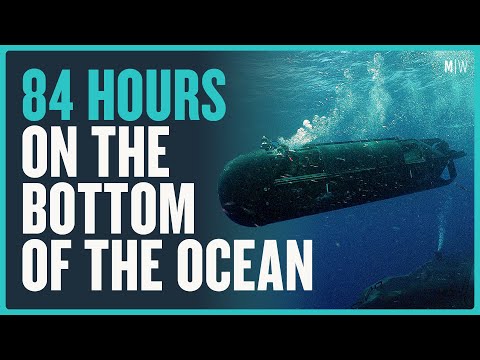
Stephen McGinty - The World's Deepest Submarine Rescue | Modern Wisdom Podcast 351
WatchChris Williamson // 57:21
