The New Timeline: Resilience, Efficiency, and the Future of Human Potential
The Psychological Shift of a New National Timeline
When we look at the current state of the world, it feels as though we have experienced a profound split in our collective reality. This isn't just about politics; it’s about a fundamental shift in the atmosphere of our institutions. For the last decade, many leaders have operated under a cloud of constant tension, a pressure to perform according to optical slickness rather than actual effectiveness. We are seeing a pivot where the air is finally draining out of the system's stress. This liberation allows for a return to core missions: businesses getting back to business and universities getting back to teaching. It is a moment of profound psychological relief for those who have felt stifled by a culture that prioritized a thousand-item checklist of 'goodness' over the hard, messy work of real-world results.
This shift is a stress test of our outcomes. We are moving away from the Karl Popper, where the drive to maximize tolerance led to the exclusion of anyone who didn't perfectly align with a shrinking coalition. From a mindset perspective, this is a transition from a 'mutual distaste' of outgroups to a 'mutual love' of an ingroup's goals. True resilience requires us to embrace a big tent, one that welcomes dissenting voices and focuses on shared success rather than punitive purity tests. The emotional intelligence required to lead in this new era involves recognizing that exclusionary strategies eventually starve an organization of the diversity of thought needed to survive.
First Principles and the Architecture of Competence
One of the most striking developments in modern efficiency is the rise of what we might call the 'Foundational Method.' We see this most clearly in the work of Elon Musk. While many observers focus on the drama, the psychological core of his success is an unusual operating method: a devotion to deeply understanding every technical aspect of an organization. This is a return to the style of the great industrialists like Henry Ford and Andrew Carnegie. These leaders didn't manage through generic processes; they were the lead problem solvers in their organizations.
Musk's approach is essentially a relentless search for the bottleneck. Every week, he identifies the single biggest problem holding the company back and moves his entire focus there. He bypasses the layers of middle management—the VPs and directors who filter information—to speak directly to the line engineers and coders. This creates a 'shocking zone of competence.' For a high-performer, being in such an environment is the most rewarding experience imaginable because the expectations are through the roof, but so is the level of mutual understanding. This isn't just a business strategy; it is a psychological contract. It attracts the best talent because they know their work will be seen, understood, and utilized.
The Eating Glass Phase: The Reality of Great Achievement
There is a romanticized view of entrepreneurship that does a disservice to the actual human experience of it. Real growth is painful. It is often described as 'staring into the abyss and eating glass.' The 'staring into the abyss' refers to the constant threat of extinction—the reality that most startups fail. The 'eating glass' is the discipline to work on the problems the company needs you to solve, rather than the ones you enjoy solving. This requires a high pain threshold and an almost obsessive level of commitment.
We must also look at the trait of neuroticism in leadership. Mark Zuckerberg, for instance, possesses a superpower of low neuroticism. In situations where others might hide under a table, he maintains an analytical frame of mind. On the other end of the spectrum, many highly creative founders are higher in neuroticism. They feel every blow more acutely. As a coach, I see my role as helping these individuals keep the team together during these dark times. Most business problems are fixable as long as the internal team doesn't crack. When founders turn on each other, the company dies. Resilience, therefore, is not just about the leader's strength, but the leader's ability to maintain the psychological safety of the core group.
The World Model: AI, Robotics, and Physical Reality
We are on the verge of solving one of the most difficult psychological and technical challenges: how a machine understands physical reality. Technologies like Sora are not just video generators; they are 'world models.' To create a video that looks real to the human eye, the AI must understand 3D space, light, gravity, and material textures. It has to know how water splashes and how light refracts. This understanding is the missing link for robotics.
By 2028, we will likely see robots that can navigate our world safely because they finally have a comprehensive understanding of physical reality. This isn't just disembodied software anymore; it's AI entering our personal space. We are seeing this already with Waymo and Tesla self-driving cars. Humans have a strange psychological relationship with this. We accept a million road deaths a year from human error—a literal apocalypse in slow motion—but we demand perfection from computers. Yet, we are slowly moving through this 'conceptual inertia.' We are beginning to accept that 'much better' is a worthwhile trade-off for the carnage we've grown used to.
The Identity Crisis of the West
There is a stark contrast between the American model of growth and the current state of Europe. In the US, we are entering an era of radical efficiency and technological optimism. Meanwhile, Europe often seems to be leading the world in regulation rather than innovation. There is a palpable identity crisis happening across the Atlantic. In countries like the United Kingdom, the system is running the people, rather than the people running the system. Ground-down by bureaucracy, even the most public-spirited individuals eventually become disillusioned.
This is a failure of vision and a lack of supportive culture for the 'staring into the abyss' mentality. When a society makes its primary goal 'regulation' rather than 'creation,' it effectively makes innovation illegal. We see this with the EU AI Act, which sends a massive red light to founders. To find our way back, we need a return to the Franklin D. Roosevelt style of transformational leadership—but in reverse. We need leaders willing to take the bureaucracy by the throat and dismantle the layers of unconstitutional regulation that have gummed up the works for eighty years.
Conclusion: The Path Toward Potential
The road ahead is not without its drama and strife, but for the first time in a generation, there is a clear roadmap for change. Whether it is through the 'Department of Government Efficiency' (DOGE) or the next breakthrough in quantum computing, the focus is returning to first principles. We are moving toward a future where we stop managing decline and start building toward our inherent potential. Growth happens one intentional step at a time, and right now, those steps are being taken with a renewed sense of purpose and a refusal to be held back by the systems of the past.
- Europe
- 9%· places
- Andrew Carnegie
- 4%· people
- China
- 4%· places
- Democratic Party
- 4%· organizations
- DOGE
- 4%· organizations
- Other topics
- 74%
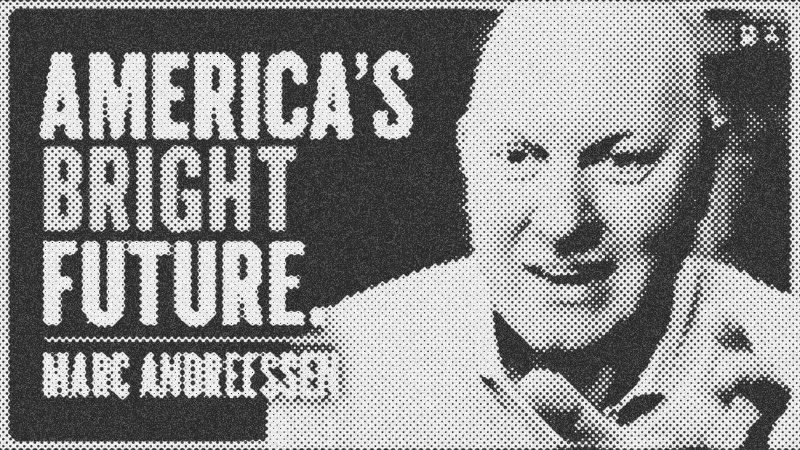
Elon Musk, The Changing World Order & America’s Future - Marc Andreessen
WatchChris Williamson // 1:29:32
