The Hidden Mechanics of Social Perception and Modern Resilience
The Statistical Mirage of the Friendship Paradox
Your social circle is often a source of quiet anxiety. You look around and feel as though everyone else is more connected, more invited, and more active than you are. This isn't just a personal failing of self-esteem; it is a mathematical certainty known as the Friendship Paradox. At its core, the paradox states that on average, your friends have more friends than you do. This occurs because highly social individuals—the "super-connectors"—are over-represented in social networks. Because they have so many friends, they are much more likely to be one of your friends, and their massive social numbers pull up the average of your entire circle.
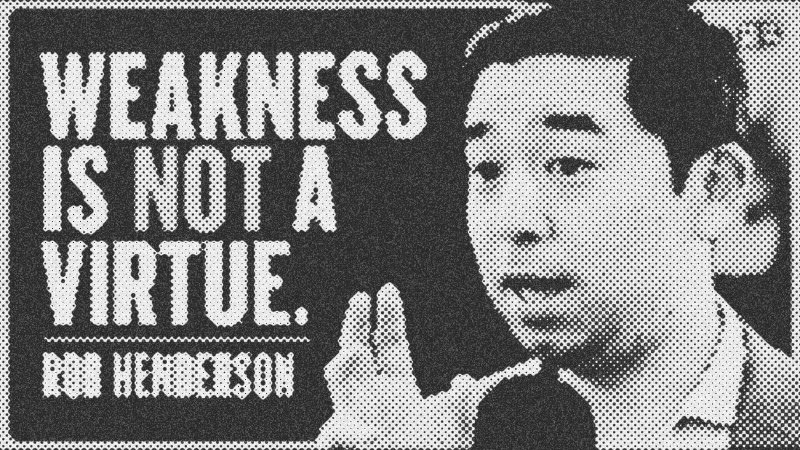
Rob Henderson explains that this phenomenon extends into every corner of our digital lives. Your Twitter followers likely have more followers than you. Even in the intimate sphere, your sexual partners have likely had more partners than you. It is a Paro-style distribution where a small percentage of the population holds a disproportionate amount of social capital. When Warren Buffett walks into a room, everyone becomes a millionaire on average, but no one's bank account actually changes. We fall prey to the psychological trap Daniel Kahneman described in Thinking, Fast and Slow: "What you see is all there is." We fixate on the visible extroverts and the loud creators, ignoring the vast, silent majority of people who are living lives very similar to our own.
Digital Leprosy and the 1% Rule
The digital environment has weaponized our natural tendency to compare our "blooper reel" to everyone else's "highlight reel." Social media is an engine of visibility bias. We never see photos of people eating lunch alone or spending a Tuesday night in their pajamas; we only see the peak experiences. This creates a "lesser than average" effect in the social realm, even though most people believe they are better than average drivers or more intelligent than their peers.
To understand the internet, one must understand the 1% Rule. Only 1% of users are creators, 9% are commenters, and a staggering 90% are lurkers. This means the "public opinion" we see online is often just the vocal 10% shouting at each other. Sam Harris famously coined the term "digital leprosy" to describe the benefit of removing oneself from this toxic feedback loop. Just as a leper might lose a limb without feeling it, a person offline might be "canceled" or trending in a storm of vitriol without ever suffering the psychological toll, because they aren't there to witness it. This detachment allows for a level of peace that is impossible for those who remain chronically online, reacting to every ripple in the digital pond.
The Evolution of Young Male Syndrome
Young Male Syndrome is a cross-cultural reality characterized by a spike in risk-taking, aggression, and diminished inhibition during the late teens and early twenties. Statistics show that criminality and even hospitalizations for punching walls peak around age 19. From an evolutionary perspective, this was once an adaptive strategy. In an ancestral environment, a young man who signaled toughness or the willingness to engage in violent conflict could improve his social standing and reproductive prospects.
In the modern world, this energy is often misdirected. We see men signal "surplus fitness" by crossing the street closer to oncoming traffic when women are present, or refusing to wear seatbelts when other men are in the car to avoid appearing weak. However, a significant portion of this demographic is now retreating into "male sedation." Rather than causing trouble in the streets, millions of young men are "NEETs" (Not in Education, Employment, or Training), spending thousands of hours in virtual worlds like World of Warcraft or Sonic the Hedgehog. While this reduces physical violence, it creates a crisis of purpose. These men are essentially "hijacking" their own status-seeking instincts with digital rewards, leading to a comfortable but unfulfilling nihilism.
The Paradox of Declining Female Happiness
One of the most unsettling findings in recent social science is the Paradox of Declining Female Happiness. Since the 1970s, despite massive gains in economic and political equality, women's happiness relative to men's has plummeted. In the 1970s, women were generally happier than men; today, the reverse is true. This suggests that the "cookie-cutter" track of high-powered education and 80-hour work weeks may not be the universal key to fulfillment that modern culture promises.
Research indicates that relationship satisfaction is often tied to traditional status dynamics, even if we wish it weren't. For instance, the use of erectile dysfunction medication increases by 50% in households where the woman is the primary breadwinner. Furthermore, Melissa Kearney's work in The Two-Parent Privilege highlights how family structure remains the single greatest predictor of success for children. The decline in stable, two-parent homes has created a "Matthew Effect"—to those who have a stable upbringing, more is given, while those from unstable backgrounds struggle to catch up, regardless of their inherent potential.
Solomon's Paradox and Social Distancing
Solomon's Paradox is named after the biblical king who was legendary for his wisdom in judging others but notoriously foolish in his personal life. We possess a remarkable ability to reason wisely about the problems of strangers while remaining blinded by emotion when it comes to our own. Psychological studies show that people are more likely to make rational, long-term decisions when they create "social distance" from their own situations.
This highlights the critical importance of a social network. When we isolate ourselves, we lose the "phone a friend" lifeline. Without external perspectives to point out our blind spots, we become trapped in recursive, suboptimal decision-making. For men, this connection often happens "shoulder-to-shoulder" rather than "face-to-face." Men tend to bond while working toward a shared mission—fixing a lawnmower, playing sports, or building a business. These activities provide the necessary distraction for deeper emotional communication to occur. To achieve our potential, we must recognize these inherent psychological patterns and intentionally build the structures that allow us to thrive.
Conclusion: Navigating the Modern Landscape
Growth happens one intentional step at a time, but we must first understand the terrain. Whether it is recognizing the mirage of the Friendship Paradox or understanding the biological roots of our social anxieties, awareness is the first step toward resilience. We must move away from the allure of victimhood and toward a mindset of agency. By reclaiming our social connections and embracing the challenges that forge character, we can navigate the complexities of the modern world with insight and strength. The goal is not to avoid the struggle, but to ensure that our struggles are meaningful and our decisions are wise.
- Chris Williamson
- 6%· people
- Daniel Kahneman
- 6%· people
- David Buss
- 6%· people
- Friendship Paradox
- 6%· psychology
- Melissa Kearney
- 6%· people
- Other topics
- 72%
Why Is Everyone Acting Like A Victim? - Rob Henderson (4K)
WatchChris Williamson // 1:49:02
