The Psychology of Risk and the Architecture of Modern Decision-Making
The Statistical Reality of Modern Elections
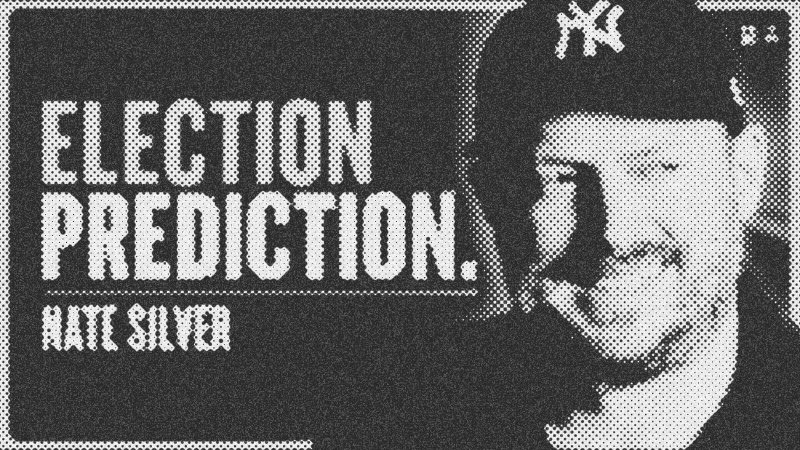
Predicting the future of a nation is less about gazing into a crystal ball and more about understanding the complex correlations of a diverse and often contradictory population. Nate Silver, the statistician who founded FiveThirtyEight, views the current political climate through a lens of probability rather than certainty. The architecture of his models, often written in thousands of lines of code rather than simple spreadsheets, must account for an United States Electoral College system that frequently diverges from the popular vote. In this environment, a candidate can win the most individual votes but still lose the presidency, a reality that necessitates a sophisticated understanding of how states like Pennsylvania, Wisconsin, and Michigan move in tandem.
Modern polling is facing a crisis of participation. The "Golden Age" where people answered landlines and spoke honestly to strangers is dead. Today, pollsters deal with "weird" respondents—those few individuals who still pick up unknown calls—and must use complex statistical weighting to turn that "mince meat into sausage." This creates a landscape where the margin of error is as important as the data itself. When the data suggests a 50-50 toss-up, it isn't an admission of ignorance; it's a precise calculation of a country divided at its core, where a shift of a single percentage point in a few specific counties can alter the course of history.
The Village and the River: A Cultural Dichotomy
To understand modern influence, we must look at the tension between two distinct psychological profiles: "The Village" and "The River." The Village represents the East Coast establishment—Harvard University, the The New York Times, and the halls of government. It is a culture built on credentials, social cohesion, and the fear of ostracization. In the Village, the goal is often to say the "right" thing and maintain status within the collective. It is an environment that prioritizes consensus and often utilizes moral language to exclude those who don't fit the group's ideological parameters.
Conversely, the River is populated by high-stakes risk-takers: Silicon Valley founders, Wall Street traders, and professional poker players. These individuals are fiercely competitive and intensely analytical. They don't care about social niceties or being "canceled"; they care about whether their bets are correct. The River is a place of decoupling and contrarianism, where the only metric that matters is the expected value of a decision. While the Village provides the social fabric and institutional stability of the country, the River drives the technological and financial engines that propel the economy forward. However, both have catastrophic failure modes. The Village can succumb to groupthink and partisan blindness, while the River often produces overconfident "Main Characters" who risk everything—including the livelihoods of others—on a single roll of the dice.
High-Stakes Personalities and the Seduction of Risk
The case of Sam Bankman-Fried serves as a haunting case study in what happens when the River's risk tolerance goes unchecked. Risk-taking is a psychological operating system, and for figures like the founder of FTX, it can become pathological. When an individual believes that anything less than risking their entire life is a failure of ambition, they stop being a rational actor and start being a hazard. This overconfidence is a common pitfall for the highly intelligent; they believe they can charm their way out of any "rapid" or navigate any legal storm through sheer cognitive processing power.
This pathology often thrives because of the "bystander effect" in elite circles. When prestigious figures like Bill Clinton or Tony Blair vouch for a newcomer, others stop performing their due diligence. They assume someone else has checked the books. This social validation, combined with a period of historical boredom and excess capital—such as the pandemic-era "Boredom Market"—creates the perfect conditions for bubbles and fraud. The psychology of the scam is rooted in the victim's desire for massive upside and the architect's belief that they are too smart to lose. Whether in crypto or the GameStop short squeeze, the underlying human drive remains a cyclical cycle of greed, envy, and the desperate search for an edge.
Emotional Regulation Under Pressure
True growth happens when we learn to manage our biological responses to high-pressure environments. Whether you are walking onto a stage for public speaking or sitting at a poker table with five figures on the line, your body enters a "fight or flight" state. The heart rate climbs, and the nervous system shifts. The elite performers—the professional golfers and the sharpest bettors—don't try to suppress this arousal; they use it. They recognize that being "in the zone" is a state where the brain actually intakes more information, seeing the world in slow motion.
The danger lies in freezing or over-complicating. When the stakes are highest, the most effective strategy is often to slow down and simplify. This is the essence of "Founder Mode" in a personal context: removing the noise of pointless meetings and manager-level distractions to focus on deep, intellectual work. By batching tasks and protecting the "maker's schedule," we create the mental space required to make high-quality decisions. It is about recognizing that your time and attention are your most valuable assets, and spending them on anything that doesn't move the needle is a form of self-sabotage.
Navigating the Future with Agency and Reciprocity
As the world becomes more algorithmic and data-driven, the individual must fight to maintain three core values: Agency, Plurality, and Reciprocity. Agency is the ability to have real, uncoerced choices in how you lead your life. We are increasingly manipulated by invisible algorithms that narrow our worldviews; reclaiming agency requires a conscious effort to step outside these filter bubbles. Plurality ensures that no single faction—whether from the Village or the River—dominates the discourse. It is the friction between different perspectives that keeps a democracy healthy.
Reciprocity is the ultimate expression of fairness derived from game theory. It is the "Golden Rule" for a complex age: treat others as you wish to be treated, not out of naive altruism, but because it is the only sustainable long-term strategy. Exploiting others might yield a short-term win, but in a connected world, the "poker game" never truly ends. Building a life of resilience and potential means understanding the numbers, respecting the risks, and never losing sight of the human element that data can't quite capture. Growth isn't about avoiding the gamble of life; it's about making sure you're the one holding the cards, playing with a cool head and a clear heart.
- Bill Clinton
- 5%· people
- Caroline Ellison
- 5%· people
- Donald Trump
- 5%· people
- DraftKings
- 5%· companies
- FiveThirtyEight
- 5%· companies
- Other topics
- 77%
The Hidden Factors Influencing The Election - Nate Silver
WatchChris Williamson // 1:10:48
