The Education Revolution: Why AI and Personalized Mastery Are the Future of Learning
The Industrial Ghost in the Classroom
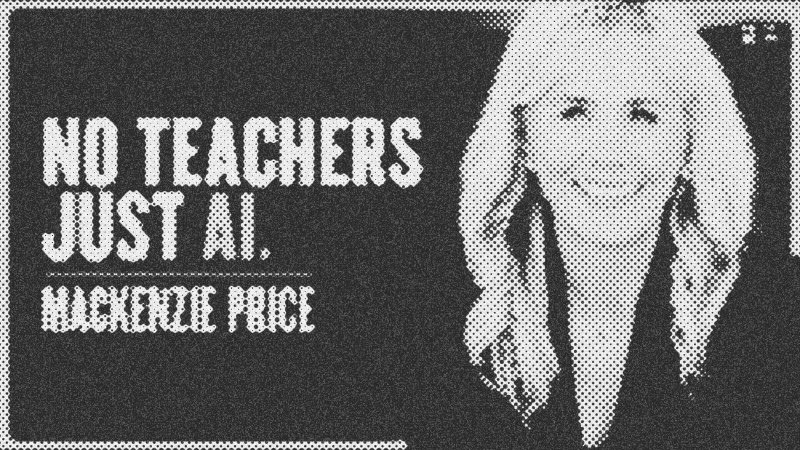
Our current school model is a relic of the Industrial Revolution, designed to produce compliant factory workers rather than innovative thinkers. The structure—one teacher lecturing to thirty students—is fundamentally flawed because it ignores the reality that every child learns at a different pace. MacKenzie Price points out that this "one-size-fits-all" approach is the primary reason why academic performance has plateaued for decades. We are essentially asking teachers to perform a miracle: educate a diverse group of kids, ranging from those who struggle with basic literacy to those who are years ahead, all within the same fifty-minute block.
This system forces teachers to target the "middle," which means the advanced students are bored to death and the struggling students are left behind. The result is a massive efficiency gap. In traditional settings, children spend six to seven hours a day in school, yet many graduate without mastering basic math or reading. This inefficiency isn't a failure of the teachers—who are often working heroic hours—but a failure of the antiquated Industrial Revolution of education that prioritizes time spent in a seat over actual mastery of a subject.
The Motivation Crisis: From Kindergarten Curiosity to High School Apathy
There is a tragic trend in modern education: curiosity peaks in kindergarten and steadily declines until the junior year of high school. We treat school like spinach—something children must endure because it's supposedly good for them. This "grind it out" mentality destroys the inherent love of learning that every child is born with. By the time many students reach middle school, they have either learned to "play the game" of jumping through hoops for grades or they have checked out entirely.
True growth happens when a student is motivated, yet 90% of learning success depends on this internal drive. Traditional schools rely on extrinsic motivators like report cards and the distant promise of university, which hold little weight for a six-year-old. Alpha Schools seeks to flip this by creating an environment where kids actually want to be. When students feel ownership over their progress and see tangible results from their efforts, the "motivation lever" turns on. Education shouldn't be a thirteen-year sentence of sitting still; it should be an exploration of potential.
The Two-Hour Academic Miracle
One of the most provocative claims made by MacKenzie Price is that core academics—math, reading, and writing—can be mastered in just two hours a day through the power of AI-driven, one-on-one tutoring. This isn't a theory; it's a reality being practiced at Alpha Schools. By using adaptive learning platforms, students get a precise measurement of exactly what they know and where their "Jenga tower" of knowledge has holes.
Personalized Mastery via AI
AI serves as a tireless, patient tutor that never gets frustrated when a student needs to hear an explanation five times. It adjusts the difficulty in real-time, ensuring the student is always in the "flow state"—challenged enough to grow, but not so much that they give up. This eliminates the "math cliff" where students fail a concept and are forced to move on anyway, eventually leading to a total collapse of their understanding in later years. At Alpha Schools, a student doesn't move from level 4 to level 5 until they have 100% mastery. This foundation allows them to learn two to five times faster than their peers in traditional schools.
The Shift from Teacher to Coach
When AI handles the data-heavy task of academic instruction, the human teacher is freed to do what only humans can do: provide emotional support, mentorship, and high-level coaching. Instead of grading papers and lecturing, these "guides" focus on the child's mindset. They help students navigate frustration, set goals, and build resilience. This transformation makes teaching a noble profession again, focusing on the soul and character of the student rather than the administration of standardized worksheets.
Life Skills: Moving Beyond the Three Rs
If academics only take two hours, what happens with the rest of the day? This is where the real preparation for the 21st century begins. The modern world requires more than just reading, writing, and arithmetic. It demands the "Four Cs": critical thinking, communication, creativity, and collaboration. Alpha Schools fills the afternoon with high-stakes, project-based learning that builds these traits in the real world.
Children at these schools aren't just reading about grit; they are building it by training for triathlons, running profitable food trucks, or giving public speeches to strangers. These aren't simulations; they are real-world experiences with real-world feedback. For example, a student might use AI tools to refine a speech, then practice it in front of an audience at a bookstore or an open-mic night in New York City. This "test to pass" model ensures that life skills like public speaking, financial literacy, and teamwork are actually internalized, not just memorized for a test.
Addressing the Screen Time and Dystopia Concerns
Critics often worry that an AI-centric school is a dystopian environment where children are tethered to monitors in isolation. However, the reality is quite the opposite. Because the academic portion is so efficient, students at Alpha Schools actually spend more time in social, outdoor, and collaborative settings than kids in public schools. The average US student gets about 22 minutes of recess; Alpha Schools students get 90 minutes of unstructured play.
Furthermore, the screen time is active, not passive. There is a fundamental difference between "doom scrolling" TikTok and engaging with a high-level math algorithm that requires constant input and critical thinking. The goal is to move children from being passive consumers of technology to being active creators. Whether it's coding a game or building a dating-advice chatbot, students learn to use technology as a superpower to solve problems, rather than a distraction to escape them.
The Future of Global Education
While Alpha Schools currently operates primarily in the private sector, the model is designed to scale. As the cost of AI drops and "school choice" policies gain traction, this high-performance model will become accessible to more families. MacKenzie Price envisions a world where the "Prussian factory" is replaced by a global network of learning hubs. A student could spend a month in Austin and another in New York City without missing a beat in their personalized curriculum.
We are on the verge of the greatest change in education in two hundred years. By recognizing that every child is limitless and providing them with the tools to unlock that potential, we can finally move away from a system of compliance and toward a system of mastery. The goal isn't just to make kids smarter; it's to help them love the process of growth so they can navigate a rapidly changing world with confidence and competence.
- Alpha Schools
- 33%· organizations
- MacKenzie Price
- 14%· people
- Industrial Revolution
- 10%· places
- New York City
- 10%· places
- Angela Duckworth
- 5%· people
- Other topics
- 29%
Alpha School: A New Approach To Education - MacKenzie Price
WatchChris Williamson // 1:08:07
