The Architecture of Transformation: Rewiring the Soul for Lasting Freedom
The Mirage of Self-Esteem and the Truth of Purpose
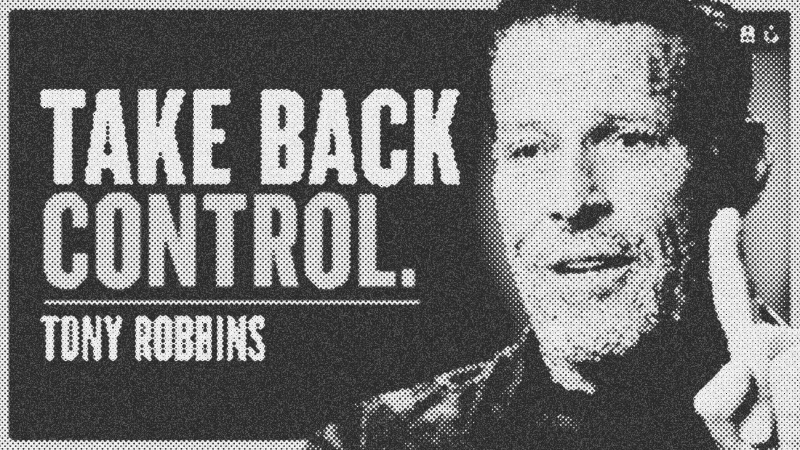
Many of us walk through life under a heavy cloak of self-judgment. We hold ourselves to impossible standards, believing that if we are just a little harder on our flaws, we will eventually emerge as the polished versions of ourselves we desire. In my coaching sessions, I often see people chasing 'self-esteem' as if it were a prize to be won or a gift to be bestowed by others. But self-esteem is not a trophy; it is a byproduct of character. It is earned in the quiet moments when you push yourself to do something incredibly difficult and meaningful—not for the applause of the crowd, but because your soul demands it.
The real trap of self-esteem is that it keeps the focus inward. When you are perpetually 'working on yourself,' you are trapped in a loop of reductionism, constantly measuring your worth against an shifting internal yardstick. To break free, you must find something you care about more than your own ego. Whether it is your children, a career that serves a higher mission, or a local community project, shifting your focus to external contribution dissolves the paralyzing neurosis of self-evaluation. When you are obsessed with a mission, your self-doubt becomes irrelevant. You stop asking if you are 'good enough' because the work simply needs to be done.
The Alchemy of Ambition and Gratitude
High achievers often operate from a place of fear—the fear that if they stop being so hard on themselves, they will lose their edge. They treat their drive as a finite resource fueled by discontent. However, there is a profound difference between push motivation and pull motivation. Push motivation requires immense willpower; it is the act of dragging yourself toward a goal while looking over your shoulder at the failure you’re trying to outrun. It eventually leads to burnout or, perhaps worse, 'miserable success'—reaching the mountaintop only to find you’ve lost the capacity for joy along the way.
Pull motivation occurs when you are drawn toward something magnificent. It is fueled by an obsession to create or serve, and it doesn't deplete your energy; it generates it. To sustain this, you must learn to balance ambition with gratitude. Gratitude is the antidote to the 'scarcity mindset' that plagues even the most successful individuals. If you can’t find a way to be grateful for what you have now, you will never be happy with what you get later. Achieving a goal provides a momentary spike of dopamine, but gratitude provides the steady hum of fulfillment that allows you to enjoy the journey. You can be hungry for more while being deeply thankful for the 'now.'
The Three Decisions That Map Your Destiny
Every moment of your life, you are making three decisions, usually unconsciously, that dictate your emotional reality. The first is what to focus on. At any given time, there are a million things going right and a million things going wrong. If you focus on what is missing, you will live in a state of permanent lack, regardless of your bank account balance. If you focus on what you can’t control, you will live in a state of anxiety. The second decision is what it means. Is a challenge a 'problem' or is it 'coaching'? Is a partner’s mistake an 'insult' or a sign they are 'overwhelmed'? Meaning is the architect of emotion.
The third decision is what you are going to do. Your actions are a direct result of the meanings you’ve assigned to your focus. If you feel attacked, you will defend or retreat. If you feel challenged, you will grow. To take control of your life, you must make these decisions consciously. You must train your nervous system to focus on what you have, what you can control, and how you can use the present moment to build the future. This isn't about 'positive thinking'; it's about intelligent direction of your mental resources.
Priming the Internal Environment
We often believe we are the authors of our thoughts, but most of our mental states are actually 'primed' by our environment. If you start your day by checking news alerts or social media, you are letting the world prime you for outrage, comparison, and fear. To reclaim your autonomy, you must have a daily practice that primes your own nervous system for the states you want to live in.
A powerful practice is a ten-minute 'priming' routine. Start with three minutes of gratitude—vividly experiencing three things you are thankful for until you feel the biochemical shift in your body. Follow this with three minutes of 'blessing' or sending positive intention to others; this breaks the cycle of self-obsession. Finish with three minutes of 'thriving'—visualizing three goals as already accomplished. When you do this, you are training your reticular activating system to notice opportunities that align with these states. You are not just hoping for a good day; you are engineering the internal conditions to ensure one.
The Hero’s Journey: Letting Go of the Past
One of the greatest barriers to growth is the 'victim' role. Many of us carry deep wounds from childhood, and while those experiences are real, they do not have to be our destiny. Biography is not destiny unless you choose to make it so. The secret to letting go of the past is not 'forgiveness' in the traditional sense, but a radical reframing of your history as a 'Soul Contract' or a necessary training ground.
If you look at the parts of yourself you are most proud of—your resilience, your empathy, your drive—you will often find they were forged in the fires of your most painful experiences. The bullying you faced as a child might be the reason you are now so self-sufficient. The lack of support you felt might be why you are so dedicated to supporting others. When you stop holding the 'pain' and the 'growth' as separate entities and instead see them as a single, transformative process, the need for 'closure' disappears. You realize the past didn't happen to you; it happened for you, to prepare you for the person you were meant to become.
Mastering the Seasons of Life
Life, like nature, moves in seasons. We often experience stress because we expect it to be 'Spring' all the time—a period of constant, easy growth. But Spring is followed by the heat and testing of Summer, the harvest of Autumn, and the reflective, often harsh, stillness of Winter. Understanding which season you are in allows you to stop fighting the natural rhythm of your life.
If you are in your 'Summer' (roughly ages 21 to 42), expect to be tested. This is the time of the soldier, where you build your foundation and learn through trial and error. If you are in your 'Power Phase' or Autumn (ages 43 to 63), this is the time to reap the rewards of the work you did in your youth and lead with wisdom. By recognizing these patterns, you remove the fear of the unknown. You realize that a 'Winter' in your business or relationship is not the end; it is a necessary cycle of pruning and rest before the next Spring. Anticipation is power. When you can see the season coming, you don't react in fear; you prepare in strength.
- Bill%20Maher
- 8%· people
- Bruce%20Springsteen
- 8%· people
- Chris%20Williamson
- 8%· people
- Feeding%20America
- 8%· companies
- Golden%20State%20Warriors
- 8%· companies
- Other topics
- 62%
The Formula For Freedom, Confidence & Happiness - Tony Robbins (4K)
WatchChris Williamson // 1:28:20
