The Resilience of Tradition: Navigating Identity and Scepticism in a Polarized Age
The Psychological Landscape of Modern Conservatism
To understand the current friction in political discourse, we must look at the underlying psychological motivators that drive Darren Grimes and the broader movement he represents. Roger Scruton, the late philosopher, often described conservatism as a "philosophy of love." This framing shifts the perspective from a collection of rigid policies to a deeply rooted emotional attachment to one's home, community, and the structures that have historically provided safety.
However, this attachment faces significant hurdles when communicating with a younger generation. There is a inherent lack of "pizzazz" in tradition. While the left often utilizes high-energy symbols of "resistance" and "revolution," conservatism asks for a "steady as she goes" approach. This creates a marketing deficit. Psychology tells us that novelty is a powerful dopamine trigger; thus, radical change is naturally more seductive to a developing brain than the preservation of established norms. To find growth in this environment, one must recognize that strength often lies in the unsexy work of maintenance and incremental improvement rather than the constant upending of the wheel.
Identity Boxes and the Cost of Dissent
When a person like Darren Grimes—who is gay, working-class, and from the Northeast—adopts a right-leaning stance, they often face a unique form of vitriol. This stems from a sociological expectation of "identity ownership." In modern political circles, there is an assumption that certain demographics are a homogenous mass. When an individual steps out of their assigned "identity box," it challenges the psychological comfort of the group.
This dissent is often met with what can only be described as snobbery or paternalism. The narrative suggests that those who do not align with progressive values are "thick" or "betraying their generation." This is a common tactic in group dynamics: when you cannot argue against the logic of a position, you attack the character and intellectual capacity of the dissenter. True personal growth requires the resilience to withstand this social pressure. It involves developing a self-awareness that is not dependent on the validation of a "rainbow coalition" or any other political collective, but rather on one's own reasoned conclusions.
The Politicization of the Personal and Professional
We are witnessing an unprecedented expansion of the political into arenas previously considered neutral, such as professional sports and healthcare. The case of Laurel Hubbard and the subsequent silence of athletes like Sarah Robles highlights the tension between biological reality and social ideology. From a psychological perspective, when fairness in competition is perceived to be compromised, it creates a sense of cognitive dissonance and resentment among those who have dedicated their lives to mastery within a specific set of rules.
Furthermore, the discussion around gender identity clinics, such as the Tavistock Clinic, reveals a concerning trend toward medicalizing emotional distress in children. Resilience is built through navigating the discomfort of growth, not necessarily through immediate medical intervention for identity confusion. High-profile figures like J.K. Rowling have argued for the protection of single-sex spaces, citing the psychological necessity of safety for vulnerable populations. The "cancellation" of those who raise these concerns—such as therapist James Esses—demonstrates a shift toward an "affirmation-only" model that may prioritize ideological compliance over deep, therapeutic exploration.
Media Scepticism and the Search for Competence
The erosion of trust in legacy institutions, particularly the BBC, is a logical outcome of perceived paternalism. When media outlets and political technocrats adopt a "we know what's best for you" attitude, it triggers a psychological reaction known as reactance—the urge to do the opposite of what one is told to regain a sense of autonomy. This was a primary driver behind the Brexit vote and the 2019 General Election results.
The search for competence is a fundamental human drive. As children, we imbue our parents with a sense of total competence; as we mature, we realize that adults are often just as confused as we are. Transferring this realization to the state is a key part of intellectual adulthood. If the people in power seem more interested in "virtue signaling" through arbitrary environmental targets or polarizing social narratives than in ensuring basic societal functions—like literacy or public safety—scepticism is not just a choice; it is a survival mechanism.
Conclusion: A Path Toward Intentional Growth
The future of our societal well-being depends on our ability to move past the "limbic hijacking" of social media. We must prioritize diversity of thought over the superficial diversity of identity boxes. By fostering a culture that rewards hard work, merit, and the courage to question the prevailing narrative, we can build a more resilient society. Growth happens when we stop being "voiceless" and start taking intentional steps toward understanding the complexities of our world, rather than accepting the oversimplified, often divisive scripts handed to us by those who claim to have our best interests at heart.
- Darren Grimes
- 12%· people
- 2019 General Election
- 6%· events
- BBC
- 6%· companies
- Boris Johnson
- 6%· people
- Brexit
- 6%· events
- Other topics
- 65%
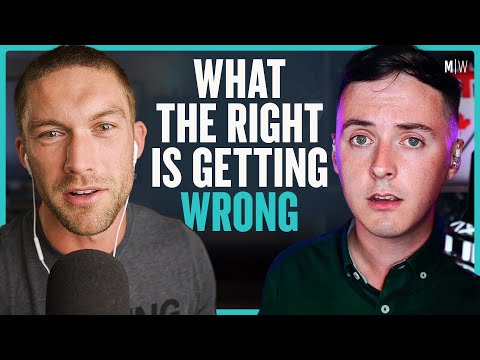
What The Right Is Getting Wrong - Darren Grimes | Modern Wisdom Podcast 361
WatchChris Williamson // 1:22:06
