The Neurobiology of Retribution: Why Revenge is the World’s Most Dangerous Addiction
The Primal Blueprint of Retaliation
Revenge is not a moral failing; it is a biological legacy. To understand why humans are so consistently drawn to striking back, we must look to the Pleistocene epoch. In early social communities, humans needed mechanisms to ensure survival and procreate. If someone stole your food or your mate, you couldn't just call the police. You needed a way to signal that transgressions carried a heavy price. Evolutionary psychologists suggest that those who developed an intense desire to retaliate were more likely to protect their resources and offspring. This adaptive strategy promoted human development by enforcing social norms through the threat of pain.
However, in our contemporary world, this ancient wiring has become increasingly maladaptive. We are no longer defending scarce winter calories; we are defending our egos. The brain, however, doesn't distinguish between a physical threat to our life and a perceived threat to our identity. When someone insults us, shames us, or betrays our trust, the brain registers this as a survival-level grievance. This "mortal consequence" response in a comfortable world creates a dangerous disconnect. We are operating with an Ice Age brain in a digital landscape, reacting to a snide comment on Facebook with the same visceral intensity our ancestors felt toward a resource thief.
The Addictive Architecture of the Mind
Psychological harms do not just hurt our feelings; they activate the brain’s physical pain network, specifically the anterior insula. Because the brain is hardwired to avoid pain at all costs, it immediately begins seeking a "pleasure" counterweight. This is where the cycle of revenge takes on the characteristics of a substance use disorder. When we imagine or enact revenge, the brain activates its pleasure and reward circuitry—specifically the nucleus accumbens and the dorsal striatum. These are the exact regions exploited by drugs, alcohol, and gambling.
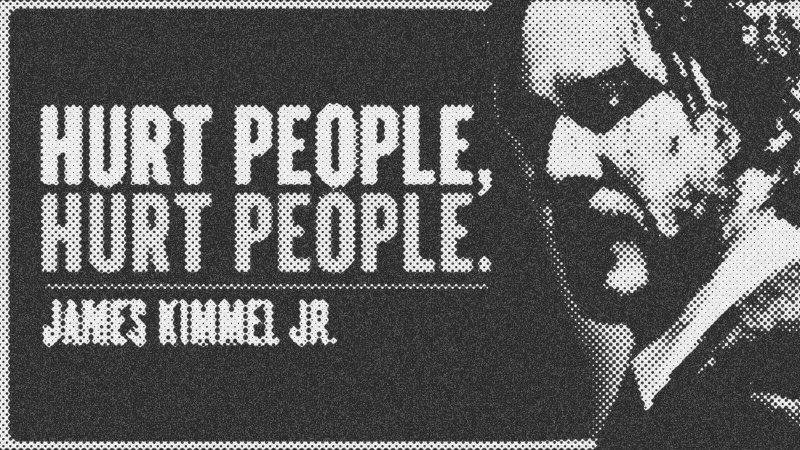
The resulting flood of dopamine creates an instantaneous, brief high. Like any drug, this high eventually fades, leaving the individual in a state of craving. This craving drives the cycle of rumination, where we replay the injury over and over, effectively re-dosing ourselves with the pain to justify the next "hit" of vengeful fantasy. If the prefrontal cortex—the seat of executive function and self-control—is hijacked or inhibited by this dopamine loop, the individual loses the ability to resist the urge to strike back, despite knowing the negative consequences. This is the hallmark of addiction. Revenge seekers aren't necessarily "evil"; they are often individuals caught in a compulsive loop where harming others is the only perceived way to regulate their internal pain.
The Confusion of Justice and Retribution
One of the most profound obstacles to moving past revenge is the way we sanitize it through the language of justice. We have muddled two opposing concepts under a single word. On one hand, justice refers to fairness, equity, and the recognition of human oneness—the kind of justice advocated by Martin Luther King Jr. and Mahatma Gandhi. On the other hand, we use "justice" as a brand name for punishment, execution, and getting even.
Our legal system functions largely as a professional revenge business. Litigators are given special licenses to distribute revenge under the guise of the law, much like pharmaceutical companies distributed opioids under the brand name OxyContin. By calling it a "criminal justice system" rather than a "criminal revenge system," society avoids the tension of admitting that we are simply avenging wrongs. This rhetorical masking allows for horrific acts of violence to be sanctified. For example, the 20-year war following 9/11 was framed as "bringing terrorists to justice," a phrase that shielded the American public from the reality that much of the kinetic response was driven by a deep, collective craving for revenge rather than pure self-defense.
Self-Defense vs. Pathological Retaliation
It is vital to distinguish between healthy boundary setting and pathological revenge. Self-defense is fundamentally present-looking and future-oriented. It asks: "What must I do right now to stop this threat?" Removing yourself from a toxic relationship is an act of self-defense. However, if you have already left that relationship but spend your nights ruminating on how to destroy your ex-partner's reputation to feel better, you have moved into the territory of revenge.
Revenge is always past-looking. It seeks to punish a wrong that has already occurred. This distinction is critical because it prevents the "victim trap." Forgiveness does not mean condoning abuse or staying in harm's way. You can forgive someone while simultaneously calling the police or ending a friendship. Forgiveness is an internal process aimed at deactivating your own pain networks, whereas self-defense is an external process aimed at physical or emotional safety. When we confuse the two, we mistakenly believe that letting go of the desire to hurt our offender makes us a "doormat," when in reality, it is the only way to reclaim the mental energy consumed by the addiction to retribution.
The Power of the Internal Courtroom
Healing from a traumatic grievance often requires more than just a vague intention to let go. Victims frequently need to feel heard and to hold the offender accountable. In the absence of a legal system that offers true emotional resolution, we can utilize the "courtroom of the mind." By creating a structured, virtual role-play experience—like the Miracle Court app—individuals can move through the steps of a trial internally.
In this process, you play every role: the victim testifying, the defendant explaining their actions, the judge handing down the sentence, and the warden administering the punishment. Interestingly, when people imagine themselves as the instrument of the offender's pain, they often find it doesn't provide the healing they expected. They feel the impact of the blow they are striking. This psychological exercise often leads to a breakthrough: the realization that the "justice" of revenge is actually just a form of re-traumatization. Only after the "trial" is complete do many feel ready to choose the second path—forgiveness—as a way to lift the weight of the grievance once and for all.
Forgiveness as a Biological Superpower
Forgiveness is often dismissed as a religious platitude, but its biological effects are nothing short of a wonder drug. Brain scans show that when a person decides to forgive, the anterior insula (the pain network) deactivates. Simultaneously, the prefrontal cortex (executive function) comes back online, and the craving circuitry in the nucleus accumbens shuts down.
Beyond neurology, the physiological benefits are documented: lower blood pressure, reduced anxiety, improved sleep, and a decrease in heart disease. Forgiveness is a human superpower that allows us to bypass the "revenge bender" and secure long-term peace. We see this at a population level in the aftermath of World War II. Rather than continuing a cycle of punishment, the allies chose to rebuild Germany and Japan. This act of collective forgiveness secured decades of peace that a purely retributive approach could never have achieved. By viewing violence through a public health lens—treating it as a contagious addiction rather than a moral stain—we can begin to educate society on how to manage the most dangerous craving of all: the urge to hurt those who hurt us.
- 9/11
- 5%· events
- 5%· companies
- George W. Bush
- 5%· people
- Germany
- 5%· places
- Hitler
- 5%· people
- Other topics
- 74%
Why Violence & Revenge Fantasies Feel Good - James Kimmel Jr.
WatchChris Williamson // 1:35:46
