The Somatic Shift: Why You Can’t Think Your Way Out of Emotional Numbness
The Trap of the Intellectual Fortress
Many of us navigate life as floating heads, severed from the body at the neck. We rely on our intellect to solve every problem, assuming that if we can just understand our anxiety or rationalize our grief, we can somehow manage it. This is a profound misunderstanding of how the human system works. When we live exclusively in our heads, we aren't actually experiencing our lives; we are merely observing them from a safe, analytical distance.
Jonny Miller points out that this intellectualization often acts as an armor. For the high-achiever, the "type A" personality, or the rationalist, the brain is a magnificent tool for control. But you cannot control an emotion. You can only feel it. By trying to "think" our way through feelings, we create a loop where the story of the emotion—the "why" and the "who to blame"—prevents the physical energy of that emotion from ever leaving the body.
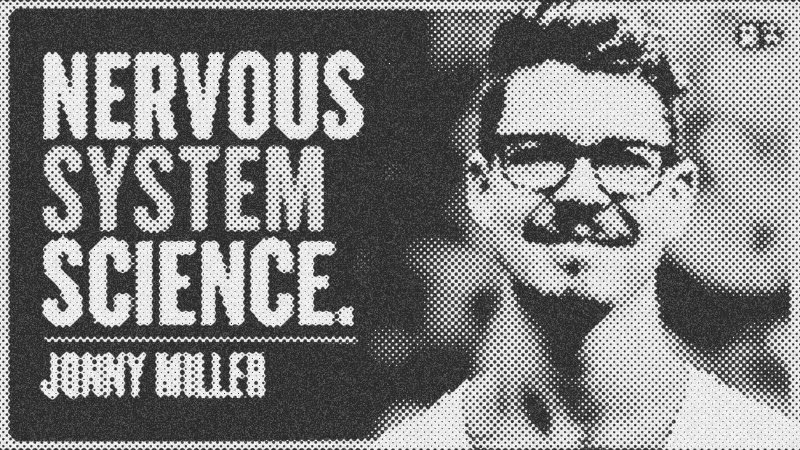
This disconnection often stems from early environments where expressing vulnerability or intensity wasn't safe. We learned that to be competent, we had to be stoic. However, this stoicism is frequently just a mask for numbness. Real resilience isn't the absence of feeling; it is the capacity to be with intensity without collapsing or lashing out. To move beyond the intellectual fortress, we must first acknowledge that our bodies are not just vehicles for our brains—they are the primary site of our lived experience.
The Three Pillars of Nervous System Regulation
If we want to stop living in our heads, we need a roadmap for returning to the body. This involves three critical skills: Interoception, self-regulation, and emotional fluidity. These are the foundations of what Miller calls Nervous System Mastery.
Interoception is your internal GPS. It is the ability to perceive the internal state of your body—the fluttering in your stomach, the tightness in your chest, or the warmth in your limbs. Without this, you are flying blind. Most reactive behaviors happen because we miss the "upstream" signals. By the time you’re in a full-blown panic attack or a fit of rage, the train has already left the station. Interoceptive awareness allows you to catch the sensation when it’s still just a whisper, giving you the agency to respond rather than react.
Self-regulation is the second pillar. This isn't about suppressing feelings; it's about shifting your physiological state to find a sense of safety. Top-down strategies like affirmations often fail because the body's alarm system is louder than the brain's logic. Bottom-up strategies, such as 448 breathing or humming, work because they communicate directly with the parasympathetic nervous system. They tell the body, at a cellular level, that the threat is gone.
Finally, emotional fluidity is the ability to let the full spectrum of human experience move through you. Most people operate with a "limited box of crayons," comfortable only with a few familiar emotions like worry or frustration. Fluidity is about reclaiming the "forbidden" colors—grief, joy, rage, and elation—and realizing that no emotion is a life sentence. An emotion is a reflex that, if left unblocked, usually lasts only 10 to 20 seconds.
Allostatic Load and the Debt of Unfelt Feelings
Every time we use willpower to "grit our teeth" through a stressful situation without eventually processing the physiological residue, we incur what is known as Allostatic Load. Think of this as emotional debt. Your body keeps a scorecard of every time you suppressed a sob, swallowed your anger, or ignored your exhaustion.
For a while, you can carry this debt. High-performers are particularly good at this, using "rocket fuel" like resentment or the need for validation to power through years of burnout. But the body has a limit. Miller uses the "feather, brick, dump truck" analogy: First, your body tickles you with a feather—a minor ache or a bit of irritability. If you ignore it, it hits you with a brick—a breakup or a lost business deal. If you still refuse to listen, the dump truck arrives in the form of chronic illness or a total nervous system collapse where you literally cannot get out of bed.
High agency isn't about having the strongest sledgehammer to beat your emotions into submission. It’s about having the lowest internal friction. When you are carrying a massive allostatic load, your "window of tolerance" shrinks. You become fragile. Tiny stresses feel like catastrophes because your system is already maxed out. Reducing this debt requires us to stop seeing relaxation as an item on a to-do list and start seeing it as the essential integration phase that allows for trait-level change.
The Neuro-Aperture Hypothesis: From Anxiety to Joy
One of the most profound shifts in perspective is the Neuro-Aperture Hypothesis. This theory suggests that anxiety isn't necessarily a standalone emotion; it is often a constriction against an underlying feeling that we don't feel safe to experience.
Imagine a garden hose. If you put your thumb over the end, the pressure builds up and the water sprays erratically. That pressure is anxiety. The water itself is the underlying emotion—it could be grief, but it could also be joy. Many of us are actually terrified of elation or deep love because those states feel vulnerable and "out of control." When joy starts to arise, our system tenses up to protect us, and we label that tension as anxiety.
By widening the aperture—by consciously softening the physical constriction in our gut or chest—we allow the underlying energy to flow. This is why people sometimes find themselves laughing during a funeral or crying during a moment of triumph. The labels "positive" and "negative" are less important than the movement of the energy itself. When we stop resisting the intensity, the "pain" of the emotion often vanishes, leaving behind a raw, beautiful sense of being alive. This is the goal of emotional fluidity: to move from a black-and-white existence into high-definition color.
Protocols for the Brave: Reclaiming Your Instrument
To begin this journey, you must become a scientist of your own experience. Start with the APE acronym: Awareness, Posture, and Emotion. Several times a day, check in. How is your awareness—is it broad or narrow? What is your posture—are you bracing for impact? What is the "weather report" of your internal landscape?
For those ready to dive deeper, Non-Sleep Deep Rest (NSDR) or Yoga Nidra is a foundational practice. It trains interoception while simultaneously down-regulating the system. It is the perfect antidote to the "Type A" trap of trying to win at relaxation. You aren't doing anything; you are simply noticing.
If you find yourself in a state of hyper-arousal, use the 448 breathing technique: inhale for four, hold for four, exhale for eight. The extended exhale is the biological "off switch" for the stress response. If you're feeling a lack of safety, try humming. The vibration releases nitric oxide and stimulates the vagus nerve, creating an almost instantaneous sense of calm.
The Courage to Unfold
The ultimate mindset shift is moving from a "fixing" paradigm to an "unfolding" paradigm. The self-help industry often profits by telling you that you are broken and that their specific protocol is the cure. But what if nothing needs fixing? What if your growth is as natural and inevitable as a sapling turning into an oak tree?
Your only job is to remove the obstructions. The resistance, the stories, and the intellectual armoring are the things getting in the way of your natural evolution. When you stop fighting your emotions and start welcoming them with "courageous curiosity," you stop being a victim of your nervous system and start being its master.
You are an instrument. Over time, life has knocked you out of tune, and you've restricted your range to avoid the discordant notes. But the full orchestra is still there, waiting. By returning to your body, you reclaim the right to play every note, to feel every color, and to finally stop living life in your head and start living it in the world.
- 448 breathing
- 9%· personal growth
- A Wizard of Earthsea
- 4%· products
- Allostatic Load
- 4%· personal growth
- Andrew Huberman
- 4%· people
- APE acronym
- 4%· personal growth
- Other topics
- 74%
How To Stop Living Life In Your Head - Jonny Miller
WatchChris Williamson // 1:29:47
