The Imperfectionist Manifesto: Reclaiming Meaning in an Age of Infinite Demands
The Architecture of Imperfectionism
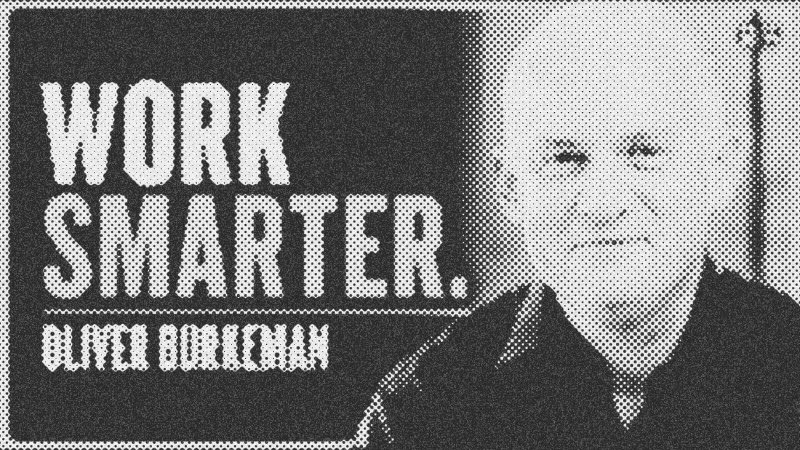
We live in a culture that treats human limitation as a bug rather than a feature. From the moment we wake up, we are bombarded with the message that if we just find the right app, the right morning routine, or the right mental framework, we can finally transcend the friction of being alive. This is the great productivity lie. Oliver Burkeman argues that our greatest psychological hurdle isn't our lack of efficiency, but our refusal to accept that we are finite. He introduces the concept of imperfectionism—not as a celebration of mediocrity, but as a portal to a truly energized life. By embracing the fact that our time, talents, and energy are strictly limited, we stop fighting reality and start living within it.
Modern personal development often functions as a form of psychological avoidance. We use productivity systems to ignore the terrifying truth that we cannot control the future and that every choice we make necessarily involves the death of a thousand other possibilities. When you decide to focus on one project, you are effectively deciding to neglect twenty others. Imperfectionism is the radical act of drop-dropping into that reality. It is the realization that you will never have your life "sorted out" because the supply of things to do—emails, books, travel destinations, career goals—is effectively infinite, while you remain stubbornly finite.
The Psychology of the Insecure Overachiever
Many of us fall into the category of the Insecure Overachiever. This is the person who is highly successful by societal standards—driven, ambitious, and praised—yet motivated by a deep-seated fear of inadequacy. For this individual, every achievement is just a temporary stay of execution against the feeling of being "not enough." They aren't working toward a goal for the joy of it; they are scrambling toward a minimum baseline of human adequacy that they never quite seem to reach.
This dynamic creates a toothless life. You spend your years reserving yourself for a future point of smooth sailing that never arrives. You treat your current existence as a prelude to a more important, more organized life that starts "once the to-do list is clear." But the list is never clear. In the 21st century, the email inbox is a Momento Mori; you will die with unread messages. The Insecure Overachiever must learn that adequacy is not something to be earned through a Getting Things Done methodology. It is a prerequisite for healthy action, not a result of it.
Confronting the Productivity Apocalypse
There is a specific kind of suffering that occurs when even our leisure becomes a chore. Chris Williamson identifies this as a "productivity purgatory," where we only play a sport or read an article because we’ve been told it reduces mortality or increases cognitive function. We have optimized ourselves into a corner where we can no longer enjoy a sunset without wondering how to capitalize on it or record it for future use. This is the "dark playground" of the modern mind: we are too guilty to work effectively and too anxious to play fully.
To break this cycle, we must undergo a process of "unclinching." This isn't a technique you can buy in a planner; it is a physical and psychological shift. It involves seeing through the illusion that a new habit-tracking system will save your soul. Burkeman suggests that we treat information flows as rivers rather than buckets. You don't have a moral obligation to empty the river of information flowing past you. You simply dip in, take what is useful, and let the rest go. The goal of reading a book isn't to squirrel away every fact for a hypothetical future; it is to let the book change who you are in the moment of reading it.
The Liberation of Total Defeat
There is an unexpected power in admitting that a task is impossible rather than just difficult. If you believe getting on top of everything is merely difficult, you will continue to beat yourself up for failing. If you accept that it is mathematically impossible, you are suddenly free to choose. This "liberation of defeat" applies to imposter syndrome as well. Most people doing innovative work feel like they don't know what they're doing—because by definition, they are doing something new. Accepting that no one is coming to save you and no one has the secret map to life allows you to finally show up in the messy present.
Practicing the Reverse Golden Rule
Self-compassion is often dismissed as "fluffy," but it is a rigorous psychological necessity. Burkeman advocates for the Reverse Golden Rule: do not treat yourself in ways you would never dream of treating another human being. If you met your inner critic at a party—someone who berated you for resting or mocked your best efforts—you would recognize them as a damaged and toxic person. Yet, we allow this voice to govern our internal lives.
True growth happens in "daily-ish" increments. Rigid consistency often leads to a brittle psyche that shatters the moment a streak is broken. Instead, we should aim for a consistency that serves life. This means allowing for the "Well Done List"—recognizing when you managed to be cordial during a tiring meeting or stayed present with your child despite a looming deadline. These are the true deliverables of a life well-lived.
The Magic of Finishing
We often avoid finishing things because as long as a project is a "work in progress," it can still be perfect in our imaginations. Once it's finished, it's just a thing—with all its flaws and limitations. This is why we leave the last dish in the sink or the last chapter unwritten. Finishing is an act of mortality. It is a declaration that this is the best I could do with the time I had.
Burkeman encourages us to embrace "daily deliverables." Define a small endpoint for the day and reach it. This respects your finitude. If you can protect just three to four hours for deep, focused work, you are already outperforming the vast majority of the distracted world. The rest of the day can be left to the chaos of serendipity. You don't need to hoard life or prepare it for future consumption. You just need to be willing to live it, one imperfect, unrepeatable moment at a time.
- Insecure Overachiever
- 13%· concepts
- 4,000 Weeks
- 7%· books
- Adam Phillips
- 7%· people
- Atomic Habits
- 7%· books
- Chris Williamson
- 7%· people
- Other topics
- 60%
The Savage Irony Of Trying To Be Productive - Oliver Burkeman
WatchChris Williamson // 1:23:08
