The Psychology of Chaos: Unmasking the Ideological Infrastructure of Modern Anarchy
The Architecture of Radicalization: Beyond the Mask
When we look at the phenomenon of Antifa, we often see only the smoke and the black masks. However, as a psychologist focused on resilience and potential, I see something far more complex: a sophisticated system of psychological and ideological grooming. Andy Ngo, in his investigative work Unmasked: Inside Antifa's Radical Plan to Destroy Democracy, reveals that this isn't just a spontaneous outburst of anger. It is a calculated effort to destabilize the very foundations of the United States.
Antifa presents itself as a noble vanguard against fascism, yet its internal logic is rooted in anarchist-communist theory that seeks the total dissolution of nation-states, borders, and capitalism. This movement doesn't just oppose specific politicians; it rejects the legitimacy of the entire liberal democratic framework. By redefining terms, they transform political violence into "self-defense." If you hold an idea they deem fascist, your very existence becomes an attack on them, justifying a preemptive physical strike. This cognitive distortion allows individuals to commit acts of wanton destruction while maintaining a sense of moral superiority.
The Dual Face of Recruitment: Intellectuals and the Vulnerable
One of the most unsettling aspects of this movement is its recruitment strategy. We see a clear division between the "intellectuals" and the "enforcers." On one side, we have the white-collar professionals—professors, journalists, and attorneys—who have been steeped in radical academic ideologies. These individuals provide the philosophical scaffolding for violence, condensing complex 19th-century theories into palatable, bite-sized pamphlets that function like radicalization literature. They use their status to legitimize chaos from the safety of their offices.
On the other side are the vulnerable: individuals dealing with economic instability, mental health struggles, or a profound lack of belonging. The movement functions as a secular cult, offering a sense of cohesion and a clear enemy to blame for personal grievances. Instead of encouraging self-awareness or personal growth, the ideology teaches these individuals to externalize their pain. It turns their psychological wounds into weapons, convincing them that breaking a window or assaulting a stranger is a virtuous act of "revenge" against a systemic oppressor. This preying on the marginalized is perhaps the most insidious part of their organizational structure.
The Anatomy of a No-Go Zone: Lessons from CHAZ
Ngo’s experience going undercover in the Capitol Hill Autonomous Zone (CHAZ) in Seattle provides a stark look at what happens when these ideologies are given sovereign territory. While the media often portrayed the area as a "summer of love" block party, the reality after dark was a descent into warlordism and misery. Without the rule of law, the area quickly devolved into a space of racial segregation and violence.
Psychologically, the zone served as a laboratory for total social breakdown. The failure of the community garden—where plants died within days—serves as a metaphor for the movement's inability to build. They have mastered the art of destruction, but they possess no capacity for creation. The tragedy of Capitol Hill Autonomous Zone was that it resulted in a 100 percent Black homicide and shooting victim rate, despite being founded on the rhetoric of anti-racism. It proved that when you abolish the institutions of law and order, you don't find utopia; you find the rule of the strongest and most ruthless.
The Symbiosis of Grievance: Antifa and BLM
Throughout 2020, we witnessed a tactical fusion between Antifa and Black Lives Matter. While their end goals differ—with some BLM leaders identifying as revolutionary Marxists who want to replace institutions rather than abolish them—they share a mutual enemy in law enforcement and the traditional United States government. This alliance allows Antifa to use large-scale protests as a cloak for their paramilitary activities.
However, this partnership is fraught with internal tension. In autonomous zones, Antifa members often practiced a form of racial deference, refusing to challenge even the most violent behavior if it came from someone they deemed higher in the "grievance hierarchy." This ideological rigidity creates a brittle social structure that can only hold together as long as there is an external enemy to fight. When left to their own devices, these groups inevitably turn on one another, as seen in the friction between white anarchist factions and Black Marxist groups during the Seattle occupation.
The Institutional Shield and the Path Forward
Perhaps the most significant challenge to restoring order is the perceived complicity of the legacy media and certain political figures. By refusing to condemn political violence when it aligns with their own hatred of an administration, these actors have fed a beast that is now difficult to control. In cities like Portland, the decriminalization of felony rioting and the dropping of charges against thousands of arrestees have created a cycle of lawlessness without consequence. This lack of accountability doesn't just embolden the far-left; it fuels reactionary forces on the far-right, creating a tit-for-tat spiral of radicalization.
True resilience requires us to stand for the rule of law even when it is politically inconvenient. We must recognize that the name "Antifa" is a masterstroke of branding that hides a deeply illiberal agenda. To move forward, the mainstream left must systematically detach itself from these fringe extremists. We need to replace the ideology of revenge with one of personal responsibility and community building. Growth happens when we face our challenges with integrity, not when we burn down the structures that allow us to live in a free society.
- Antifa
- 12%· organizations
- Capitol Hill Autonomous Zone
- 12%· places
- Seattle
- 12%· places
- United States
- 12%· places
- Andy Ngo
- 6%· people
- Other topics
- 47%
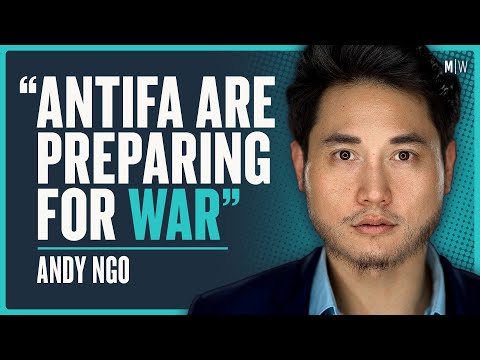
Andy Ngo - Antifa Unmasked: Inside America's Anarchy | Modern Wisdom Podcast 275
WatchChris Williamson // 1:02:06
