Prioritizing Human Flourishing: A Data-Driven Approach to Global Challenges
Beyond the Ledge of Climate Alarmism
Societal growth often requires us to confront uncomfortable truths about how we allocate our most precious resources: time, attention, and capital. For decades, a singular narrative has dominated the global stage, suggesting that Climate Change is not just a pressing environmental issue, but a looming existential threat that will inevitably end human civilization. This perspective, while emotionally resonant, often leads to a state of paralysis or, worse, the misallocation of trillions of dollars toward inefficient solutions. To achieve our true potential as a global community, we must step back from the ledge of alarmism and look at the data through a lens of compassion and economic reality.
When public figures like Greta Thunberg or organizations like the UN frame climate change as an apocalyptic event, they inadvertently narrow the scope of human problem-solving. If the world is ending in twelve years, every other problem—from maternal mortality to basic literacy—feels insignificant. However, the UN Climate Panel does not support the "end of the world" thesis. Instead, they describe a significant challenge that will likely cost the global economy around 4% of GDP by the end of the century. While 4% is a serious figure, it is a manageable hurdle in a world projected to be 450% richer by 2100. We are choosing to obsess over a future reduction in growth while ignoring the acute suffering of billions in the present.
The Economics of Empathy: Identifying the Longest Levers
True resilience involves recognizing that we cannot do everything at once. We must choose the "longest levers"—the actions that produce the greatest benefit for the least cost. Bjorn Lomborg, president of the Copenhagen Consensus Center, argues that our current global priorities are upside down. The world has committed to 169 different Sustainable Development Goals, effectively promising everything to everyone. When you prioritize everything, you prioritize nothing. The result is a scattergun approach that fails to move the needle on the most solvable human tragedies.
Data reveals a startling discrepancy in the "return on investment" for human well-being. For example, spending a dollar on current European climate policies might yield only three cents of climate damage avoidance. In contrast, spending that same dollar on basic health or education in developing nations can yield over sixty dollars in social and economic benefits. This is not about choosing money over the environment; it is about choosing the most effective way to save lives and foster self-reliance. Resilience is built when individuals are healthy, educated, and prosperous enough to adapt to whatever environment they inhabit.
Education and the Learning Crisis
One of the most profound levers for global growth is education, yet we are currently facing what experts call a "learning crisis." We have successfully put most of the world's children into schools, but many are not actually learning. In low-income countries, 80% of ten-year-olds cannot understand a simple sentence. They are physically present in classrooms but are being left behind by a one-size-fits-all curriculum. This failure traps millions in a cycle of poverty that no amount of carbon offsetting can fix.
The solution is remarkably simple and cost-effective: teaching at the right level. By using technology, such as shared tablets with adaptive software for just one hour a day, students can learn three years' worth of material in a single year. This approach costs roughly $30 per child. If we scaled this to 90% of children in the developing world, a $10 billion investment would generate $600 billion in long-term economic gains. This is how we build a resilient future—not by slowing down the global economy to meet arbitrary targets, but by ensuring the next generation has the cognitive tools to solve the problems we cannot yet imagine.
The Hidden Toll of Cold and the Energy Mandate
Another area where narrative conflicts with data is the discussion of temperature-related deaths. Media coverage focuses almost exclusively on heatwaves, which are indeed dangerous and becoming more frequent. However, The Lancet data shows that cold kills nine times more people globally than heat. Every year, 4.5 million people die from cold-related issues, compared to half a million from heat. In many parts of the world, including India, cold remains the far greater threat to human life.
This reality underscores the vital importance of cheap, reliable energy. Energy access is the primary determinant of a society's ability to protect its most vulnerable citizens. When gas prices drop—as they did during the Fracking Revolution in the United States—deaths among the poor decrease because they can afford to heat their homes. Conversely, climate policies that artificially inflate energy costs in the name of Net Zero can have the unintended consequence of increasing cold-related mortality. We must acknowledge that for the world's poorest, the immediate risk of freezing or dying from indoor air pollution (due to burning dung or wood) is a far more existential threat than a few degrees of warming in a century.
Radical Realism: Maternal Health and Infectious Disease
If we wish to act with true compassion, we must address the "boring" problems that the media often ignores. Every year, 300,000 mothers die during childbirth and 2.3 million newborns die within their first 28 days. The vast majority of these deaths are preventable with basic medical supplies. A simple $60 resuscitation bag can save the lives of 25 newborns. Expanding access to basic obstetric care would cost about $5 billion annually and save 1.4 million lives. This represents a return of $87 for every dollar spent.
Similarly, Tuberculosis remains the world’s leading infectious killer, claiming 1.4 million lives annually. We have the medication; we simply lack the infrastructure to ensure patients finish their treatment and that new cases are diagnosed. An investment of $5 billion a year could save a million people over the long run. These are the "unsexy" solutions that actually work. They don't generate viral tweets, but they prevent the permanent collapse of families and communities.
Innovation as the Ultimate Solution
Ultimately, the path to a better world is paved with innovation, not regulation. We saved the whales not by banning whale oil, but by discovering petroleum, which was cheaper and more efficient. We averted global famine in the 1970s not by asking people to eat less, but through the Green Revolution and the work of Norman Borlaug, whose high-yield seeds saved over a billion lives.
In the context of climate change, the most effective policy is a massive increase in Green Energy R&D. If we can innovate until green energy is cheaper than fossil fuels, every nation—including China and India—will switch naturally. No treaties or carbon taxes will be necessary. This market-driven transition is the only realistic way to achieve Net Zero without plunging the world into energy poverty. By shifting our focus from performative activism to practical innovation, we can solve the environmental challenges of the future while honoring the urgent needs of the present.
- India
- 9%· places
- Net Zero
- 9%· concepts
- Africa
- 5%· places
- Bill Gates
- 5%· people
- Bjorn Lomborg
- 5%· people
- Other topics
- 68%
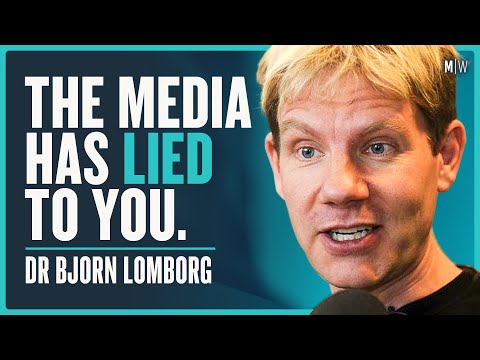
Climate Alarmists Are Getting This All Wrong - Dr Bjorn Lomborg
WatchChris Williamson // 1:08:04
