The Architecture of Mattering: Deconstructing the Modern Meaning Crisis with John Vervaeke
The Biological Necessity of Sense-Making
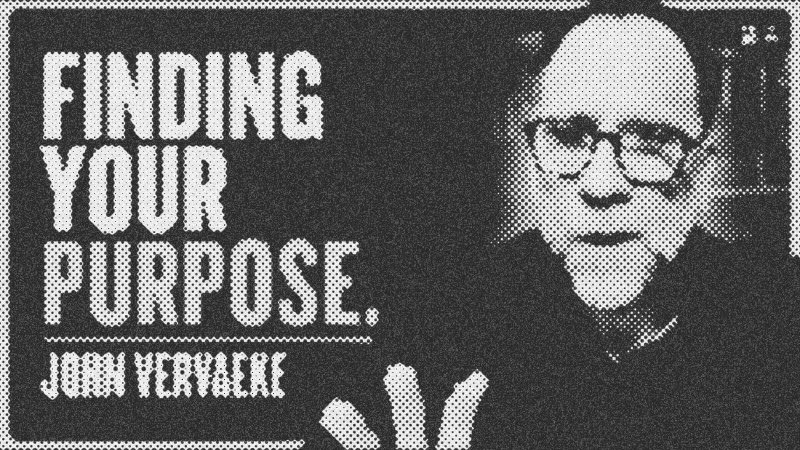
Humans are biologically vulnerable creatures. Unlike the apex predators of the savanna, we lack the sheer physical force to survive in isolation. Our survival as a species has always depended on our ability to coordinate, a feat made possible only through the sophisticated use of language and the development of a shared mental world. However, this evolutionary advantage came with a hidden tax: the need for coherence. Dr. John Vervaeke explains that meaning is not an abstract luxury but a fundamental tool for sense-making. It is the mechanism by which we properly pay attention to information that allows us to solve problems across various domains.
This "agentic" aspect of meaning ensures that our world does not feel absurd. When our sense-making fails, we experience a profound disorientation that mirrors physical pain. We need to feel that our actions are connected to others and to a reality that is stable. Because our greatest superpower is coordination, we must develop relationships built on trust and belonging to avoid the psychological exposure that language creates. When we lose this connection, we lose the standard by which we correct our own self-deception. Meaning, therefore, is the vital link between our individual agency and the collective reality that sustains us.
The Realness Deficit and the Failure of Purpose
One of the most significant critiques John Vervaeke offers of contemporary psychology is its narrow definition of meaning. Standard metrics often focus on three pillars: coherence, purpose, and significance. While these are useful, they are frequently misapplied. Purpose is often framed as a destination—an ultimate goal toward which one works. This is a fragile way to build a life. If you never reach the goal, your life feels wasted; if you do reach it, you are left with a void. Vervaeke suggests replacing the concept of purpose with orientation. Orientation is an infinite game, a continuous journey rather than a finite destination. It is reality-centric rather than ego-centric.
Beyond orientation lies the concept of mattering. People often say they want to be part of something "bigger than themselves," but this is rarely about physical scale. Instead, it is about realness. Vervaeke uses the analogy of a dream: when you wake up, you realize the dream world was smaller and more limited than the waking world. We seek a connection to a reality that makes us feel more "real" to ourselves. This is why a lack of meaning often feels like living in a sitcom or behind a screen—a mediated, surreal existence where nothing truly touches the soul. When we are disconnected from this sense of ultimacy, our lives become ephemeral and shallow, leading to the "surreal" burnout so common in the modern West.
The Crisis of Burnout and the Famine of Wisdom
We are currently witnessing a historic decline in trust—not just in institutions like the Supreme Court of the United States, but in the very fabric of our social connections. This "meaning crisis" manifests as a paradoxical rise in despair, loneliness, and addiction despite unprecedented material affluence. We are trapped in what Vervaeke calls "frenetic frozenness," where we exert more effort just to avoid falling behind without ever actually moving forward. This is the Red Queen fallacy applied to the human psyche: we are running as fast as we can just to stay in the same place of dissatisfaction.
Society has largely responded with three strategies. Some fall into reactive despair, withdrawing into a depressive state of pain. Others attempt a replacement strategy, seeking meaning in "idolatrous surrogates" such as the Marvel Cinematic Universe or political ideologies. These people protect their chosen universes with religious fervor because these narratives provide the orientation their actual lives lack. The third, more hopeful response is the rise of ancient practices like Stoicism, mindfulness, and the Psychedelic Renaissance. These represent a genuine attempt to recover existential resilience—the ability to stay connected to reality even when the routine of daily life is disrupted, as it was during the COVID-19 pandemic.
Unteachable Lessons and the Limits of Logic
There is a pervasive myth in modern culture that we can think our way out of any problem. However, John Vervaeke argues that meaning is not a "thinking problem" that can be solved with propositional logic. Many of the most important truths are what he calls unteachable lessons. For example, the realization that money and success do not equate to happiness is a lesson rarely learned through an argument. It must be lived. This is because some truths are only knowable through transformation—a fundamental shift in who you are and how you participate in the world.
This transformation often requires serious play. Since we cannot know what it is like to be a parent until we are one, we engage in liminal practices, like getting a dog, to "taste" the responsibility before committing. This imaginal work is essential because it allows us to overcome our automatic "salience projectors." We are often poor judges of what is best for us because we are biased by present desires and short-term gratifications. True maturity involves "facing up" to a reality that is humbling and often contradicts our ego’s predictive models. By committing to transformation rather than just information, we open ourselves to the depths of the psyche and the world alike.
Cultivating Resonance: A Path Forward
To move beyond the meaning crisis, we must move from seeking information to seeking resonance. Resonance is a relationship where the psyche and reality reciprocally open to one another. It requires a move away from the "religion of me"—the egocentric spirituality that focuses solely on personal fulfillment—toward a life of responsibility and fellowship. Fellowship differs from mere friendship; it is the act of participating in something committed to the common good, much like the functions once served by traditional religious institutions.
John Vervaeke advocates for an ecology of practices to facilitate this. This includes the "DIME" framework: Dialogical practices (mutual midwifing of insight through conversation), Imaginal practices (using serious play to envision transformation), Mindful practices (both meditation and contemplation), and Embodiment (carrying awareness into physical movement). By integrating these, we can move from being "busy unto death" to being truly present. The goal is to reach a state of reverence, where we are ultimately oriented toward what is most true, good, and beautiful, allowing us to correct our self-deceptions and find our home within reality once more.
- John Vervaeke
- 17%· people
- Chris Williamson
- 4%· people
- Christopher Mastropietro
- 4%· people
- Everything Everywhere All At Once
- 4%· creative works
- Greg Enriquez
- 4%· people
- Other topics
- 65%
The Psychology Of Finding Meaning In Life - John Vervaeke
WatchChris Williamson // 1:23:45
