Israetel: fat loss hinges on calorie deficits and hunger management
The Biological Imperative of the Adipose Reservoir
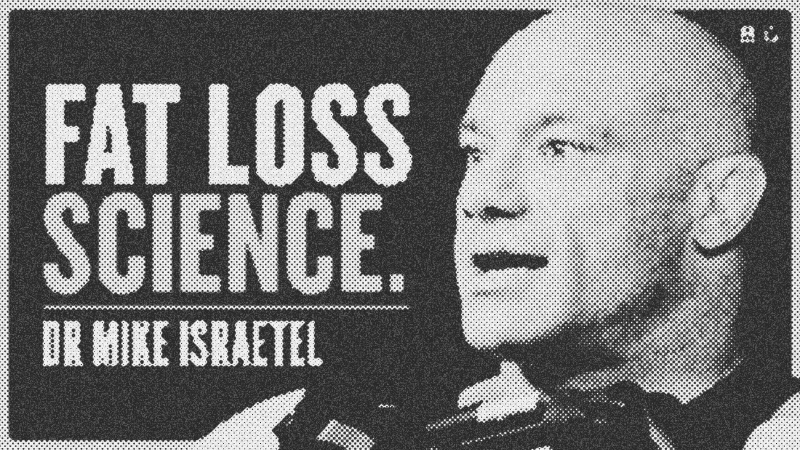
To understand fat loss, we must first recognize that the human body view adipose tissue not as an aesthetic burden, but as a survival masterpiece. Mike Israetel explains that for the vast majority of human evolution, food availability remained predictably intermittent. If your ancestors killed a mammoth, they gorged. Those who could efficiently store that excess energy into a cellular reservoir survived the subsequent two weeks of scarcity. Those who could not simply vanished from the gene pool. This evolutionary pressure created a default physiological state: we are exceptionally talented at gaining fat and inherently resistant to losing it.
Adipose tissue acts as a corporate hotel with an infinite expansion policy. When calories enter the bloodstream and exceed immediate metabolic needs or glycogen storage limits in the liver and muscles, the body checks these guests into fat cells. Unlike muscle tissue, which requires significant metabolic upkeep, fat is relatively cheap to maintain. It sits there, hormonally active but metabolically quiet, waiting for a famine that—in the modern Western world—never arrives. To burn fat, we must force the body to 'check guests out' by creating a persistent energy vacuum.
The Thermodynamic Law of Calorie Counting
There is no intellectual debate within the serious scientific community regarding the primacy of calories. Mike Israetel asserts that calories matter most in fat loss, period. The confusion arises from two distinct groups. The first includes well-meaning individuals who lose weight by changing food quality—increasing fiber or protein—and mistakenly believe the specific food 'hacked' their hormones. In reality, these dietary shifts simply reduced their spontaneous calorie intake, creating a deficit without the need for tracking.
The second group consists of what Mike Israetel describes as 'sociopathic charlatans' who profit from the myth that calorie balance is irrelevant. They sell digital products promising that magic foods or avoiding specific ingredients like seed oils will bypass the laws of physics. While hormones certainly influence how we feel and where we store fat, they do not override the second law of thermodynamics. You do not need to count calories if you are successfully losing weight, but if the scale isn't moving, tracking becomes the ultimate diagnostic tool. It is the difference between a rocket reaching orbit and one failing on the pad; if it's stuck, you have to start calculating the thrust-to-weight ratio.
Managing the Hunger Drive Through Food Volume
If calories are the 'what' of fat loss, hunger management is the 'how.' Most diets fail because they ignore the psychological and physiological toll of deprivation. Mike Israetel advocates for the Food Palatability Reward Hypothesis, popularized by Stephan Guyenet. This model suggests that hyper-palatable foods—those engineered to be exotically delicious—override our satiety signals. When you eat a Cheeto, your brain experiences a dopamine spike that demands more, making willpower a finite and failing resource.
To combat this, successful dieters must strategically lower the palatability of their meals as the diet progresses. This involves transitioning from creamy sauces to dry rubs, and from calorie-dense white rice to high-volume strawberries and green vegetables. The goal is to maximize 'satiety per calorie.' If you have 50 grams of carbohydrates for a meal, a cup of white rice is gone in minutes, leaving you searching for more. However, consuming that same 50 grams through a massive bowl of strawberries provides so much physical volume that your stomach wall stretches, sending satiety signals to the brain. You trade the pleasure of taste for the comfort of fullness.
The Resistance Training Insurance Policy
Weight loss is not synonymous with fat loss. Mike Israetel warns that losing weight without resistance training often results in a 'skinny-fat' physique where a significant portion of the lost mass comes from metabolically active muscle. When the body is in a deficit, it looks to break down tissue for energy. If you are sedentary, muscle is 'expensive' to keep and 'cheap' to burn.
Resistance training acts as an insurance policy, telling the body that the muscle is necessary for survival. By lifting weights close to failure, you provide a stimulus that preserves muscle mass even in a caloric vacuum. This is particularly visible in transformations like that of Dana White, who lost substantial weight while gaining muscle. For the average person, especially women in their 40s and 50s, the fear of becoming 'too bulky' is misplaced. Women lack the serum testosterone for rapid, accidental hypertrophy. Instead, lifting weights ensures that as the fat melts away, what remains is a vital, healthy, and 'toned' silhouette rather than an emaciated one.
Cardio, Steps, and the Ponzner Paradox
Many dieters attempt to out-exercise a bad diet, a strategy Mike Israetel calls 'The Grand Illusion.' He references the Ponzer Paradox, named after Herman Ponzer, which reveals that modern humans burn roughly the same amount of daily energy as indigenous tribes, despite our sedentary lifestyles. The body is highly efficient at compensating for high activity by making us lazier elsewhere or slightly lowering our basal metabolic rate.
Rather than grueling bouts of high-intensity interval training (HIIT), which can skyrocket hunger and fatigue, the most sustainable approach is increasing 'Non-Exercise Activity Thermogenesis' (NEAT) through step counting. Aiming for 10,000 to 12,000 steps daily provides a consistent, low-fatigue calorie burn. Unlike a gym session that leaves you exhausted on the couch, walking is additive. It can be integrated into business meetings or family time, preventing the metabolic 'cheapness' the body adopts when it feels over-exercised.
Pharmaceutical Frontiers and the Anorectic Revolution
We are entering an era where the struggle of willpower may become optional. Mike Israetel discusses the rise of Ozempic (Semaglutide) and Tirzepatide, which he classifies as 'anorectics'—drugs that fundamentally suppress the hunger drive. These medications, including the forthcoming Retatrutide, work by mimicking hormones like GLP-1 and GIP.
While some critics view these as 'cheating,' Mike Israetel dismisses this as 'pure nonsense.' We use air conditioning and antibiotics to improve our lives; why should fat loss be the only arena where we demand suffering? By removing the constant, intrusive signal of hunger, these drugs allow individuals to apply their willpower to more productive areas of life, such as their careers or families, rather than obsessing over the next meal. However, he cautions that even with pharmaceutical help, the principles of protein intake and resistance training remain essential to ensure the weight lost is fat, not muscle.
The Post-Diet Transition and Habit Formation
A diet does not end when you reach your goal weight; it ends when you have successfully transitioned back to maintenance. The day after a diet, your body is at its most vulnerable, with hormones screaming for you to regain every lost pound. Mike Israetel recommends a maintenance phase that lasts at least two-thirds as long as the diet itself.
During this period, you must continue eating 'clean' foods but in larger quantities. Slowly reintegrating hyper-palatable foods—like a weekly pizza or 'diet' ice creams like Halo Top—prevents the rebound effect that plagues 'fad' dieters. The ultimate goal is to move from a capital-'I' Identity of 'being on a diet' to a lowercase-'i' identity of being someone who cares about their health. Fat loss is a phasic process of intentional steps, maintenance, and habit consolidation, leading to a permanent shift in how you relate to the food on your plate.
- Mike Israetel
- 29%· people
- Chris Williamson
- 3%· people
- Dana White
- 3%· people
- Enlightened Ice Cream
- 3%· products
- Eric Helms
- 3%· people
- Other topics
- 58%
A Simple Formula for a Lean, Muscular Physique - Dr Mike Israetel
WatchChris Williamson // 2:22:33
