The Evolutionary Mirror: Why Your Mind Plays Games You Didn't Know You Were In
Beyond the Happiness Mirage
We often treat happiness like a destination, a golden carrot dangling just out of reach that justifies our every move. Dr. David Pinsof challenges this core assumption, arguing that the pursuit of happiness is a fundamentally flawed way to understand human psychology. If we were designed solely to seek internal states, we would have been an evolutionary dead end. A primate that only wants to feel good inside its own head doesn't survive a winter or defend its offspring. Real biological fitness requires us to want things in the physical world: food, safety, sexual partners, and high social standing.
Thinking of happiness as our primary motivator leads to an infinite regress. If you need happiness to want food, what does evolution use to make you want happiness? Instead, happiness functions as a recalibration mechanism. It is the brain's way of updating its software when reality exceeds expectations. When the paella you cooked tastes better than anticipated, the resulting spike in well-being isn't a prize; it's a signal to adjust your future efforts toward Spanish cuisine. This is why happiness is fleeting by design. As soon as a positive outcome becomes expected, the prediction error disappears, and the emotional high vanishes. We aren't chasing happiness; we are chasing external incentives, and our brains use happiness to keep the map of those incentives accurate.
The Architecture of Incentives
If happiness is a poor North Star, incentives provide the true coordinates for human behavior. Incentives encompass everything a primate has evolved to value: status, belonging, comfort, and resources. To navigate life effectively, we must distinguish between means and ends. Money is a powerful incentive, but it is purely a means. If the economy collapsed tomorrow, your desire for pieces of paper would evaporate, but your desire for the security and calories those papers once provided would remain unchanged. Our deepest ends are non-negotiable products of our evolutionary history.
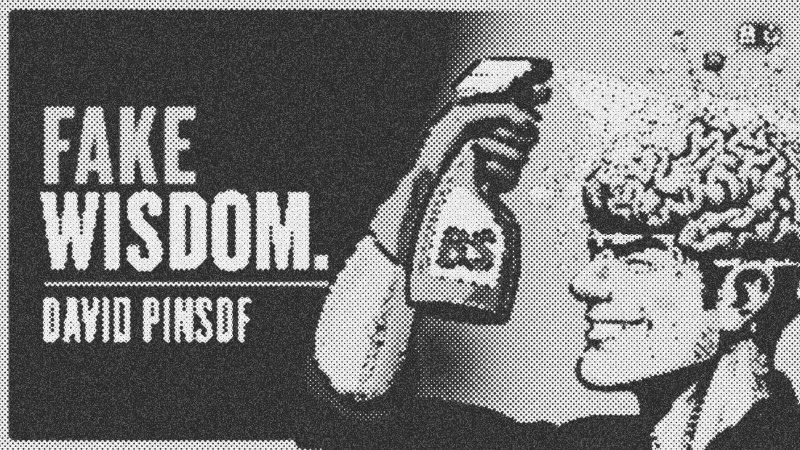
Understanding human culture requires looking at the incentive structures we inhabit. Every social environment has a set of rewards and penalties that dictate which behaviors flourish. From an ultimate level of analysis, we look at why these systems evolved—how they served biological fitness in ancestral environments. From a proximate level, we look at the nuts and bolts of how we process information and react to our current surroundings. When we stop asking "Will this make me happy?" and start asking "What is the incentive structure here?" the world becomes significantly more legible.
The Opinion Game: Battles Over Social Norms
What is an opinion? It is not merely a preference or a belief. You don't have a "strongly held opinion" that you like chocolate; you just like it. An opinion is a preference wrapped in a social judgment. It is a tool used to elevate the status of people who share your tastes and degrade those who don't. When you broadcast an opinion, you are campaigning for a specific social norm to prevail. If you can make William Shakespeare the gold standard for intelligence, you gain status if you have the education and time to quote him. If you can't, your incentive is to frame Shakespeare as overrated and stuffy, thereby protecting your own standing.
This makes the space of public discourse a battlefield. We are all stakeholders in the fight over which norms will govern our status hierarchies. However, the first rule of the status game is that you cannot admit you are playing it. Being seen as a naked status-seeker is a low-status trait. Therefore, we must cloak our maneuvers in high-minded language. We claim to be pursuing "truth," "justice," or "well-being" while covertly nudging the social dial in a direction that favors our specific cohort. This concealment is so deep that we often deceive ourselves, believing our own propaganda so we can more effectively persuade others.
Pseudo-Arguments and the Art of Intimidation
Most arguments are not collaborative attempts to reach the truth. They are pseudo-arguments—performances designed to silence or intimidate the opposition. In a genuine debate, participants listen, define their terms, and look for common ground. In a pseudo-argument, the goal is to make the opponent look uncool, stupid, or morally bankrupt. If I can make you look like a "methodological terrorist" or compare your views to Adolf Hitler, I am not trying to change your mind. I am trying to ensure that you—and anyone like you—are too afraid to speak in the future.
This tactic works by creating coordination problems. In a totalitarian regime, the dictator stays in power not because everyone loves him, but because no one knows how many others hate him. Pseudo-arguments on the internet function similarly. They create an environment of uncertainty where expressing a minority view feels socially suicidal. By optimizing for intimidation rather than persuasion, tribes can gain power and dominate the cultural landscape without ever having to prove their ideas are actually correct.
Deepities and the Illusion of Profundity
To maintain status without taking the risk of being wrong, humans often use "deepities." Coined by Daniel Dennett, a deepity is a statement with two interpretations: one that is true but trivial, and one that is profound but false. Consider the phrase "Everything happens for a reason." On a boring level, it’s true—everything has a physical cause. On a profound level, it suggests a cosmic plan, which is almost certainly false. By toggling between these two meanings, the speaker creates an "aha" moment without providing any actual insight.
Deepities are brain hacks. They provide the emotional payoff of a breakthrough while being intellectually hollow. This extends into "vague bullshit," where jargon and impenetrable language are used to signal group membership. Cult leaders like Rajneesh used these tactics to test loyalty. If an audience is willing to hallucinate meaning in a sentence like "There is no limit to the fullness of emptiness," they are signaling their total devotion to the leader. Our big brains didn't evolve for solo logic; they evolved for these complex social maneuvers—politicking, hypocrisy, and the constant, subtle negotiation of our place in the tribe.
- Adolf Hitler
- 10%· people
- Daniel Dennett
- 10%· people
- David Pinsof
- 10%· people
- Deepity
- 10%· concepts
- Hugo Mercier
- 10%· people
- Other topics
- 50%
This is Your Brain on Bullsh*t - David Pinsof
WatchChris Williamson // 1:09:41
