The Science of Substantial Joy: Decoding the Macronutrients of a Meaningful Life
The Great Misconception: Happiness as a Directional Vector
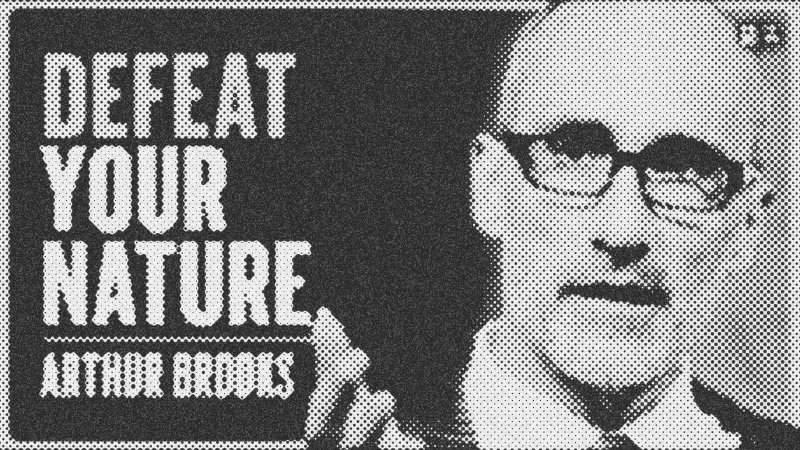
Most people approach the concept of being happy as if it were a physical destination, a peak to be summited where the air is clear and the struggle finally ceases. This is the first and perhaps most damaging error in our modern psychology. Real growth begins when you stop viewing happiness as a terminal state and start seeing it as a direction. You are never truly "happy" in a static sense; you are only ever getting happier or less so. This shift in perspective is liberating because it removes the binary pressure of success or failure.
We often fall into the trap of believing that if we feel unhappy, something is fundamentally broken or abnormal. This couldn't be further from the truth. Negative emotions—sadness, anger, fear, and disgust—serve as critical biological signals. They alert us to aversive stimuli in our environment, much like physical pain prevents us from keeping our hand on a hot stove. To live a full life, we don't need to eliminate these feelings; we need to integrate them. The goal isn't to reach a state of perpetual bliss, which would be evolutionarily disastrous, but to move toward a state of "happier-ness."
The Macronutrients of the Human Spirit
Just as a healthy body requires a specific balance of protein, carbohydrates, and fats, your psychological well-being depends on three specific macronutrients: enjoyment, satisfaction, and meaning. When your life feels "off," it is usually because one of these three elements is deficient.
Enjoyment is frequently confused with mere pleasure, but they occupy different parts of the brain. Pleasure is a limbic response, a fleeting hit of dopamine designed to help you survive and procreate. Enjoyment, however, is a prefrontal cortex activity. It is pleasure plus people plus memory. Taking a shot of vodka alone in the dark is pleasure; sharing a meal and a laugh with friends is enjoyment. One is addictive and isolating; the other is communal and additive to your long-term well-being.
Satisfaction is the joy you feel after a period of struggle. There is a strange human mystery here: we only truly value that which we have sacrificed for. This is why we tell children not to eat before dinner—not just for the nutrition, but because the hunger makes the meal sweeter. However, we face the challenge of homeostasis. Our brains are wired to return to a baseline state so we can stay "in the hunt." This means we can never "keep" satisfaction; we can only continue to earn it through new challenges.
Meaning is the most complex of the three, consisting of coherence (understanding why things happen), purpose (having direction and goals), and significance (the belief that your life matters). While you can survive for a while without enjoyment or satisfaction, a person cannot endure for long without meaning. It is the bedrock upon which the other two are built.
The Four Modern Idols and the Success Trap
St. Thomas Aquinus identified four primary idols that humans tend to chase in place of true fulfillment: money, power, pleasure, and fame (or prestige). These are not inherently evil; they are simply "intermediate goods." They are tools that are incomplete for total happiness. The danger lies in becoming addicted to them, particularly success.
Success addiction is mediated by dopamine and looks remarkably similar to a methamphetamine addict's brain under a scan. The high-performer is often driven by a deep-seated fear of insufficiency. They believe that they are only worthy of love and belonging if they are special. This leads to "self-objectification," where you look in the mirror and see a success machine rather than a human being. To break this cycle, you must move from a "have more" strategy to a "want less" strategy. Satisfaction is a fraction: what you have divided by what you want. Most of the world spends all its energy on the numerator, but the secret to peace is often found in reducing the denominator.
The Big Four: Habits of the Happiest People
If you want to change the "climate" of your life rather than just surviving the daily storms, you must focus on four pillars: faith, family, friendship, and work.
Faith or a life philosophy is essential because it provides transcendence. It makes the universe large and you small. Without it, you are trapped in the tedious psychodrama of your own ego. Whether through traditional religion, stoicism, or the awe of nature, you must find a way to zoom out.
Family and Friendship are the primary delivery systems for oxytocin, the neuropeptide of connection. We are seeing a generation suffer from an "oxytocin deficit" because they have replaced eye contact and touch with digital surrogates. Real friends are "useless" friends—people who love you for who you are, not for what you can do for them (deal friends).
Work provides fulfillment when it meets two criteria: earned success and service to others. To be happy at work, you must feel that your merit is rewarded and that you are an asset to society. The essence of despair is feeling like a liability to be managed. When you know people need you, your work becomes a vocation.
Navigating the Biology of Unhappiness
It is a mistake to think that happiness and unhappiness are two ends of a single spectrum. They are processed in different hemispheres of the brain and can coexist. You can have a high "positive affect" while also having a high "negative affect." Managing unhappiness requires its own set of strategies.
In our modern world, anxiety has become the dominant emotional state because we have replaced acute, episodic fears (like being chased by a predator) with chronic, diffuse stressors (like social media notifications or political polarization). This slight, constant drip of cortisol wears down our resilience. To combat this, we must engage in metacognition—the act of thinking about our thinking. By moving our emotions from the limbic system to the prefrontal cortex, we can observe our envy or our anxiety without being consumed by them. We learn to say, "I am feeling envious," rather than "I am an envious person."
Conclusion: The Path Toward Real Connection
The road to a better life is not found in solving the "complicated" problems of the world—the ones that require better technology or more money. It is found in embracing the "complex" problems of the heart. These are dynamic, ever-changing, and centered entirely on love. We live in a society that tries to sell us toasters to fix our marriages, but the only real solution is to be fully alive in the present moment, to suffer where necessary, and to serve others with intentionality. Growth happens when we stop trying to avoid the discomfort of being human and start using that discomfort as the raw material for our own transformation.
- Arthur Brooks
- 6%· people
- Chris Williamson
- 6%· people
- David Bus
- 6%· people
- Elon Musk
- 6%· people
- Enjoyment
- 6%· concepts
- Other topics
- 69%
Harvard Professor's Guide To Achieving Real Happiness - Arthur Brooks
WatchChris Williamson // 1:45:11
