The Dark Architecture of the Mind: Analyzing the Psychological Legacy of MKUltra
The Psychological Genesis of MKUltra
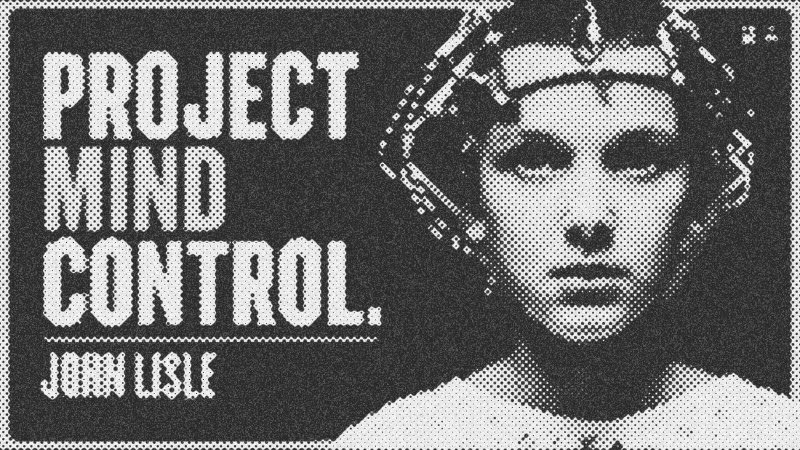
To understand the CIA and its descent into the dark corridors of MKUltra, we must first examine the collective anxiety that gripped the American intelligence community after World War II. Growth often requires a sense of safety, but in the 1950s, the United States felt profoundly vulnerable. The catalyst wasn't just a desire for power; it was a reactive fear. When American pilots returned from the Korean War and admitted to dropping germ bombs—confessions we now know were coerced—the intelligence community didn't see broken men; they saw a new, terrifying technology. They believed the Soviets had cracked the code of human consciousness.
This fear-based mindset led to the birth of a program designed to master the human mind before it could be mastered by others. Sydney Gottlieb, a chemist with a club foot and a stutter, became the architect of this initiative. His personal history as an outsider fueled a desperate need to prove his worth to the state. He didn't see himself as a villain; he saw himself as a protector. This is a crucial lesson in self-awareness: when we operate from a place of deep-seated insecurity and perceived debt, we can justify the most horrific actions under the guise of 'necessity.' Gottlieb’s spiritual interests in meditation and folk dancing existed in a bizarre parallel with his work developing ways to shatter the human psyche.
The LSD Experiments and the Search for Truth
LSD was the 'shining object' of the MKUltra era. Discovered by Albert Hofmann at the Sandoz Corporation, the drug represented a shortcut to the subconscious. The CIA was obsessed with finding a 'truth drug' that could lower inhibitions and make prisoners 'sing like a bird.' This obsession revealed a fundamental misunderstanding of human resilience. True growth and truth-telling come from trust and emotional intelligence, not from chemical bombardment.
Gottlieb and his colleagues, including Robert Lashbrook, began by dosing themselves. They turned their own offices into a laboratory of the absurd, spiking the holiday punch and the morning coffee. This lack of boundaries eventually turned lethal. When they dosed Frank Olson at a retreat, they weren't conducting an experiment; they were pulling a 'prank.' The resulting tragedy—Olson jumping to his death from a New York hotel window—illustrates the catastrophic consequences of treating human life as a variable in a game. Instead of pausing after Olson's death, the program expanded into Operation Midnight Climax, where narcotics officer George White used prostitutes to dose unwitting citizens while he watched from behind a one-way mirror.
Ethical Erasure: From Universities to Prisons
One of the most disturbing aspects of MKUltra was its infiltration of legitimate institutions. By using 'cutout' organizations, the CIA funded researchers at universities and hospitals who often didn't know the true source of their grants. This creates a terrifying environment where the pursuit of knowledge is decoupled from the pursuit of ethics. In prisons like those in Lexington, Kentucky, researchers like Harris Isbell paid addicts in heroin to participate in experiments that kept them under the influence of hallucinogens for weeks at a time.
This stage of the program shows how easily the human mind can be broken when it is isolated and stripped of agency. In Montreal, psychiatrist Ewen Cameron attempted to 'cure' mental illness by reducing patients to a 'blank slate.' Through a process called 'psychic driving,' he played recorded messages on an endless loop for thousands of hours while patients were in chemical comas. He wasn't building them back up; he was hollowing them out. The survivors, like Mary Morrow and Janine Huard, were left as shells of their former selves, unable to perform basic functions. This is the antithesis of the growth mindset. Instead of nurturing the inherent strength of the individual, these methods sought to annihilate the self.
The Fallacy of Control and the Rise of Irony
Despite the horrific nature of these experiments, the ultimate irony is that MKUltra was a spectacular failure in its stated goals. It never created a 'Manchurian Candidate.' It never produced a reliable truth drug. Sydney Gottlieb eventually admitted in his depositions that while they could make someone look crazy, they couldn't control what they said or did. You cannot force a person to be a marionette; the human spirit is far more complex than a series of chemical reactions or auditory loops.
When the program finally collapsed in the 1960s and was exposed in the 1970s, the CIA didn't move toward more enlightened methods. Instead, they reverted to the 'medieval' solution of torture, rebranded as 'enhanced interrogation.' This regression proves that without a foundation of empathy and self-awareness, organizations will always fall back on brute force. The legacy of MKUltra today lives on primarily in the realm of conspiracy theories, such as the baseless 'Project Monarch.' These myths are popular because they satisfy a human need to believe that our problems are the result of external control rather than internal choices.
Building Resilience in the Shadow of History
We must look at MKUltra not just as a historical anomaly, but as a warning about the misuse of psychological principles. True personal development is about reclamation, not manipulation. The victims of these programs suffered because their agency was stolen. As we look toward the future, our focus must remain on strategies that foster self-discovery and emotional intelligence.
We recognize that growth happens through intentional, small steps and the recognition of our inherent strength. The history of MKUltra teaches us that the mind is a sacred space. Any attempt to bypass the hard work of self-awareness through chemical shortcuts or coercive conditioning is doomed to fail. We honor the resilience of those who survived these dark chapters by committing ourselves to a path of growth that is rooted in compassion, transparency, and the unwavering belief that the human spirit cannot be broken by design.
- MKUltra
- 26%· tv shows
- CIA
- 17%· companies
- Albert%20Hofmann
- 4%· people
- Ewen%20Cameron
- 4%· people
- Frank%20Olson
- 4%· people
- Other topics
- 43%
Investigating The True History Of MKUltra & CIA Mind Control - John Lisle
WatchChris Williamson // 1:16:29
