The Architecture of a Seamless Life: Psychology-Backed Strategies for Growth
Your greatest power lies not in avoiding challenges, but in recognizing your inherent strength to navigate them. Growth happens one intentional step at a time, often through the small, frictionless systems we build into our daily existence. When we talk about life hacks, we aren't just looking for clever shortcuts; we are designing an environment that supports our highest potential. These tools and shifts in perspective serve as the scaffolding for a more resilient, self-aware version of yourself.
This collection of insights represents a holistic approach to self-improvement, blending the physical, digital, and psychological. By optimizing how you move, work, and even rest, you create the mental space necessary for deep growth. Let's look at how these intentional adjustments can reshape your experience.
The Psychology of Environmental Design
Your environment acts as a silent partner in your habit formation. If you want to change your behavior, you must first change the cues surrounding you. A simple yet profound example is the 'ballet of the kitchen.' Many of us waste 'dead time'—those minutes spent waiting for a kettle to boil or a pan to heat. By integrating small chores like emptying the dishwasher or prepping water for the day into these gaps, you aren't just being productive; you are practicing Atomic Habits principles. You are stacking habits and reducing future friction.
When you return to a clean kitchen later, you experience a psychological win. Past-you has taken care of future-you. This builds self-trust, a core component of resilience. It is the same reason why Yusef Smith suggests preparing chilled water in advance. If the healthy choice is the easiest choice, your brain will take the path of least resistance toward well-being. This is environment design in its most practical form.
High-Fidelity Focus and Digital Boundaries
In an age of constant noise, the ability to curate your auditory environment is a superpower. Chris Williamson notes that tools like AirPods Pro allow you to exist within your own mind rather than being at the mercy of the world's chaos. The noise-canceling feature isn't just a luxury; it's a tool for sensory management. By lowering the ambient stress of a gym or a busy street, you preserve your cognitive energy for what truly matters.
To deepen this focus, Brain.fm uses functional music backed by scientific research to guide your brain into specific states, whether that is deep work or relaxation. This is particularly effective for those who struggle with procrastination. When you pair high-quality audio with a dedicated focus app, you create a 'sensory trigger' for productivity. Your brain learns that when this specific soundscape begins, it is time to engage. This reduces the 'startup cost' of difficult tasks, making it easier to overcome the initial resistance we all feel when starting something new.
Physical Integrity as a Foundation for Growth
Resilience is not just a mental state; it is a physical one. How you carry yourself in the world influences your internal narrative. This is why proper equipment in the gym, like the Reebok Nano X or Nike Romaleos 4, is more than just a fashion choice. These tools provide the stability needed to push your limits safely. When you squat in a stable shoe, you are sending a signal to your nervous system that you are secure. This allows you to drive force and build strength without the inhibitory feedback of an unstable base.
Furthermore, addressing physical imbalances—such as starting unilateral movements with your weakest side—is a metaphor for personal growth. We often want to lead with our strengths, but true progress comes from giving our 'weaker' parts the fresh energy they need to catch up. Integrating routines like the Foundation Series by Eric Goodman ensures that your physical structure supports your lifestyle rather than hindering it. A body free from chronic pain is a body that can focus on achieving its potential.
Mastering the Hunger of Change
When we are in a phase of 'cutting'—whether that is literally cutting weight or figuratively cutting out bad habits—we often face the friction of desire. The psychology of hunger is fascinating. Chris Williamson shares that performing a small burst of exercise, like 30 push-ups, can actually flip the switch on your nervous system, moving you from 'rest and digest' to a more alert state that suppresses immediate hunger pangs.
Another brilliant strategy for managing nighttime cravings is cleaning your teeth immediately after your last meal. This creates a psychological boundary. You have signaled to your brain that the 'eating' chapter of the day is closed. To break this, you would have to intentionally undo your work, which adds a layer of healthy friction. These small tactics are not about deprivation; they are about using psychological cues to reinforce your intentions.
The Discipline of Curation and Review
Productivity is often misunderstood as doing more. In reality, it is about doing the right things. Jonny Pain emphasizes the importance of a 'review habit' within apps like Omnifocus. The goal is to feel okay with all the things you are not doing right now. By trusting your system to resurface tasks at the appropriate time, you free your mind from the burden of remembering everything. This 'open loop' closure is essential for reducing anxiety.
This discipline extends to our media consumption. Rather than falling into a 'two-screening' trap where you half-watch a show while scrolling through your phone, try watching a foreign film like Parasite with subtitles. The requirement to read forces a level of immersion that is rare in our distracted world. It demands your full presence. Similarly, maintaining a curated 'watch list' ensures that when you do relax, you are consuming content that actually enriches or truly entertains you, rather than just settling for whatever the algorithm suggests.
Small, intentional steps lead to massive shifts. Whether it is using Siri to skip ads and reclaim your time, or determining your 'minimum acceptable standard' for your finances and health, you are the architect of your experience. Start where you are, use the tools available, and watch how your potential begins to unfold.
- Chris Williamson
- 10%· people
- AirPods Pro
- 5%· products
- Atomic Habits
- 5%· books
- Ben Shapiro
- 5%· people
- Brain.fm
- 5%· products
- Other topics
- 71%
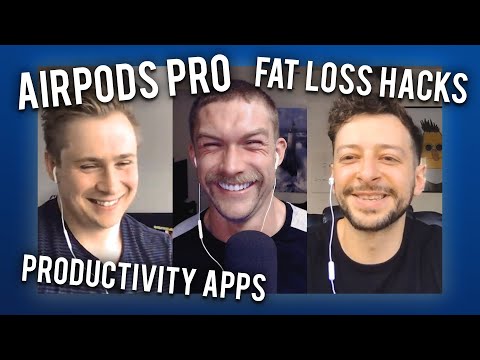
Life Hacks 201 | Modern Wisdom Podcast 187
WatchChris Williamson // 1:38:11
