The Dual Face of Ambition: Understanding the Complexity of Modern Narcissism
The Spectrum of the Self: Defining Grandiose and Vulnerable Narcissism
Narcissism is often reduced to a simple insult, a tag we pin on an ex-partner or a difficult boss. However, from the perspective of psychological science, it is a sophisticated personality structure with distinct variations. At its core, narcissism involves an inflated self-view, a significant lack of empathy, and a relentless need for external admiration. It is not a binary switch—you are not either a narcissist or not—but rather a continuum upon which we all reside. Most people sit comfortably in the middle, possessing enough self-regard to function but enough empathy to maintain healthy bonds.
When we look closer, we see two primary manifestations: Grandiose Narcissism and Vulnerable Narcissism. Grandiose narcissists are the individuals we typically associate with the term. They are characterized by extraversion, high energy, and a charismatic aura. They often gravitate toward leadership, politics, and entertainment because they genuinely believe in their own superiority and entitlement. Their confidence acts as a magnet, drawing people in before the toxic, exploitative side of their personality becomes visible. In contrast, vulnerable narcissists—often called "closet" or "basement" narcissists—share the same sense of entitlement but lack the social energy to pursue it. They are introverted, anxious, and prone to depression, often retreating into fantasies of greatness while resenting the world for failing to recognize their genius. Understanding this distinction is vital because while the grandiose type seeks the spotlight, the vulnerable type often seeks clinical help for the internal misery their ego creates.
The Genetic Blueprint and the Influence of Environment
We must ask where this drive originates. Research indicates that personality is roughly fifty percent heritable. Our genetics provide the "source code" for our temperament, but the environment determines how that code is compiled. While many assume that parenting is the primary architect of narcissism, the data suggests its influence is smaller than we might expect—perhaps only ten to twenty percent. Parents must provide love and stability, but they cannot easily force a child to become one specific type of person.
Instead, a significant portion of what shapes narcissism falls under "non-shared environments"—the unique, often random experiences a person has outside the home, such as their peer groups and the broader culture. This explains why two siblings raised in the same house can end up at opposite ends of the narcissistic spectrum. One might have their ego bolstered by early social success, leaning into grandiosity, while the other might experience trauma or social rejection, causing their narcissistic traits to bend toward vulnerability and defensive withdrawal. The ego is a protective shell; how it hardens depends on the specific pressures applied during development.
Evolutionary Trade-offs: The Short-term Win and the Long-term Loss
From an evolutionary standpoint, traits do not persist unless they offer some survival or reproductive advantage. Narcissism provides a distinct edge in short-term scenarios. Narcissistic individuals excel at "short-term mating success" and can quickly ascend to leadership in new groups because their confidence is mistaken for competence. In a transient, high-mobility society, these traits thrive. If you can move from city to city, constantly finding new audiences and partners who don't yet know your patterns, narcissism can look like a winning strategy.
However, this strategy fails in long-term, stable communities. In a small tribe or a close-knit village, a "narcissistic jerk" is quickly identified and socially penalized. Historically, people who exploited their peers were weeded out. The tragedy of modern narcissism is that it does not scale across a lifetime. As a person ages, the "three S's"—sex, status, and stuff—become harder to maintain. A fifty-year-old grandiose narcissist who has burned every bridge and treated relationships as transactions often finds themselves profoundly alone. They may have the million-dollar watch, but they lack the genuine emotional connection that makes life worth living. They have invested in depreciating assets while ignoring the appreciating asset of character.
The Dark Triad and the Illusion of the Alpha
Narcissism is a member of the "Dark Triad," alongside Psychopathy and Machiavellianism. These three traits share a common core: interpersonal antagonism and callousness. While they overlap, their motivations differ. The psychopath is predatory, seeking to get what they want at any cost without a need for love. The Machiavellian is a master manipulator, focused on long-term schemes. The narcissist is unique because they still want to be loved; they are addicted to the validation of others.
In recent years, we have seen a rise in movements—often in online "manosphere" spaces—that encourage men to cultivate these dark traits under the guise of becoming an "Alpha Male." This is a fundamental misunderstanding of human psychology. These individuals observe that charismatic, narcissistic men often attract attention, and they conclude that the "jerk" behavior is the cause of the attraction. In reality, people are drawn to the charisma and confidence, not the cruelty. By trying to build an armor of callousness to protect themselves from being hurt, these men are actually preventing themselves from experiencing the very intimacy they crave. They are growing a "callus" on their soul that makes them both unfeeling toward others and incapable of feeling true connection themselves.
Digital Dopamine: Social Media as an Attention Mine
Social media has fundamentally altered the way we express and reinforce narcissistic tendencies. Platforms like Instagram function as "attention mines." To keep the network running, you need influencers who are willing to mine their own lives for engagement. These systems are built on an ego-driven feedback loop. When a person posts a photo and receives a flood of likes, it triggers a dopamine hit similar to a drug. This doesn't necessarily "create" a narcissist out of thin air, but it certainly reinforces and amplifies the traits in those already predisposed to them.
Furthermore, the digital age has created a culture where fame is often divorced from achievement. In the past, fame was a byproduct of doing something significant—it was a result of talent or hard work. Today, we have individuals who are "famous for being famous." This creates a hollow sense of self and a rampant "imposter syndrome." When your status is built on a persona rather than a tangible skill or contribution, you are constantly terrified of being found out. This leads to a frantic need to maintain the ruse, resulting in further ego inflation and a disconnect from reality. The person becomes a slave to their own public image, unable to step off the "crack pipe" of digital validation.
The Path to Change: Connection Over Arrogance
Can a narcissist change? The answer is yes, but it requires a shift in focus. Historically, psychologists thought narcissists wouldn't change because they liked being the way they were. However, more recent research shows that many narcissists eventually realize their behavior is costing them their happiness. They see that their relationships are shallow and their internal lives are empty.
Therapy can be effective, provided the individual stays committed. The key is not to fight the arrogance directly, but to cultivate connection. When a person begins to prioritize genuine relationships and empathy, the need for narcissistic defenses naturally diminishes. It is also important to recognize that narcissistic traits are not "bad" in every context. In high-stakes public performance, competitive sports, or certain leadership roles, a healthy dose of ego and confidence is necessary to succeed. The goal is not to eliminate the ego, but to ensure it is rooted in reality and balanced by a capacity for love. True strength lies in the ability to be both confident in one's abilities and vulnerable enough to form a deep, lasting bond with others. As we move into an increasingly atomized future, the ability to prioritize meaning over status will be the ultimate differentiator for well-being.
- Ben Shapiro
- 6%· people
- Blueprint
- 6%· books
- Conor McGregor
- 6%· people
- Elon Musk
- 6%· people
- Grandiose Narcissism
- 6%· concepts
- Other topics
- 71%
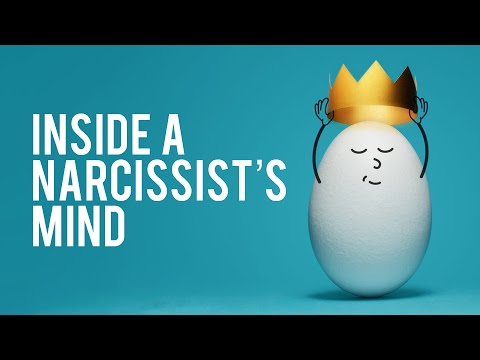
The Psychology Of Narcissism - Professor W Keith Campbell | Modern Wisdom Podcast 278
WatchChris Williamson // 1:14:40
