The Architecture of Character: Building Resilience Through Discipline and Conviction
Navigating the Gauntlet of Personal Growth
Many of us view our mistakes as permanent stains on our records rather than necessary friction for growth. We often find ourselves in what we might call the eating-dirt phase—those seasons where every step forward feels like a struggle and our failures seem more salient than our potential. Whether you are a student struggling with study habits or a professional facing a setback, the challenge lies in how you process the immediate pain of discipline versus the long-term vision of who you intend to become. The gap between where you are and where you want to be is often filled with the mundane, repetitive tasks of proving your reliability to yourself.
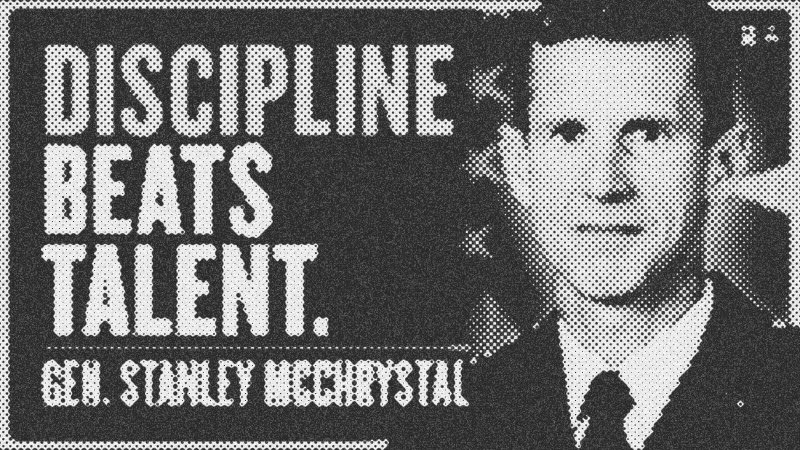
When we look at figures like Stanley McChrystal, it is easy to see the four stars and the retired general, but his journey began with a near-expulsion from West Point. He faced punishment tours and special confinement for a lack of discipline. The lesson here is not just that one can bounce back from failure, but that the initial struggle is often the very forge that creates the resilience required for later success. You must value the things that matter by protecting them when they are at risk, realizing that an opportunity lost is often more painful than the effort required to keep it.
The Psychology of the Peak-End Rule
Our brains are wired to remember experiences through a specific lens known as the peak-end rule. This psychological principle suggests that we judge an experience based on how it felt at its most intense point and how it ended. If you are in the middle of a difficult transition, the intensity of the struggle can color your entire perspective. You might feel the world is against you because you haven't yet reached the redemption phase of your story. This is why it is difficult to have a 30,000-foot view while you are in the trenches of a crisis.
To move past this, we must recognize that last impressions often last longer than first ones. If you can lower the pain threshold toward the end of a difficult period by staying consistent and finding small wins, your memory of the entire ordeal will shift. This is how high-performers alchemize misery into wisdom. They don't ignore the pain; they manage the ending of the struggle with such grace and persistence that the struggle itself becomes a point of pride rather than a source of shame.
Discipline as the Ultimate Predictor
Self-discipline is the ability to get yourself to do the things you know you should do, even when you are tired, angry, or impatient. It is the gap between those who lead effectively and everyone else. While society often looks at elite units like the Army Rangers or Navy SEALs and assumes they are populated by superhumans, the truth is simpler: they are populated by people who refused to quit.
Selection processes for these units are designed to see who self-selects out. Only a tiny fraction of candidates actually flunk due to lack of ability; the rest simply decide that the discomfort is no longer worth the goal. Discipline, then, is essentially consistency under pressure. It is the bedrock of trust. If your personal life—your finances, your health, your relationships—is in shambles, it becomes nearly impossible for others to trust their fate to your leadership. You must take care of the basics before you can ask to be in charge of the complex.
The Power of Gravitational Standards
One of the most effective ways to raise your own level of performance is to align yourself with a group that has high standards. In the 1970s, the US Army was in a state of disarray following the Vietnam War. To fix this, Creighton Abrams formed the Ranger Battalions with the express intent of creating a gravitational pull for the rest of the force. By setting extreme standards for physical fitness and discipline, these units forced the entire army to improve just to keep up.
This principle applies to your personal growth as well. You need to find your own Ranger battalion—a community or a set of personal standards that pulls you upward. Sometimes, this means focusing on the details that seem mundane, like a haircut or the way you fold your clothes. These are litmus tests for your internal state. If you can maintain excellence in the small, invisible things, you build the muscle memory required to maintain it when the stakes are high and the world is watching.
Balancing Ambition with Gratitude
High-performers often live in a special type of hell where they compare themselves to an ever-moving ideal. The closer you get to your goal, the further you push the goalpost. This can lead to a series of miserable successes—achieving the outcome but never allowing yourself a moment of rest or enjoyment. The antidote is camaraderie and shared suffering. Doing difficult things alone is a grind; doing them as part of a team creates a sense of pride that offsets the exhaustion.
There is a purity in obsession, but you must be careful not to let it become toxic. While the lone wolf archetype is popular, it is ultimately inefficient. You need a squad that has your back, people you can high-five when things go well and who will support you when you fail. True success is not just reaching the destination; it is the quality of the life you lived between the start and the finish. If you don't test yourself, you will never know your limits, but if you don't find joy in the process, the victory will feel empty.
Conviction and the Loneliness of Command
Character is a mathematical equation: it is the sum of your convictions and the discipline you have to live up to them. Convictions are not superficial beliefs; they are the values you have pressure-tested and decided are worth dying for. In an era of social media influencers and pundits, many people borrow their beliefs rather than building them. To develop true character, you must red-team your own ideas. You must decide what you stand for when no one is looking and when there is no reward for being right.
Leadership often involves what we call the loneliness of command. Like Ernest Shackleton during his Antarctic expedition, leaders often swim in a sea of self-doubt and uncertainty while maintaining a facade of confidence for their team. This is the price of responsibility. You must recognize the absolute reality of a bad situation—the Stockdale Paradox—while simultaneously holding an unwavering belief in a positive long-term outcome. This moral courage is often harder than physical courage because it requires you to stand alone in your integrity for long periods of time.
Concluding Empowerment
Your journey toward your highest potential is not a straight line; it is a series of intentional choices made when you are at your weakest. Humility is the final piece of this puzzle. It is the respect you show for the organization and the people around you, acknowledging that you are not on a pedestal but are simply playing a role. By combining an unrelenting drive for excellence with a healthy dose of humor and a deep commitment to your team, you create a life of meaning. Growth happens one intentional step at a time, fueled by the discipline to keep moving even when the finish line is not yet in sight. You have the inherent strength to navigate these challenges; you simply have to decide not to quit.
- Army Rangers
- 8%· organizations
- Creighton Abrams
- 8%· people
- Ernest Shackleton
- 8%· people
- James Stockdale
- 8%· people
- Martin Luther King, Jr.
- 8%· people
- Other topics
- 62%
How To Actually Build Discipline - Gen. Stanley McChrystal
WatchChris Williamson // 57:55
