The Biology of Connection: Why Friendship is a Biological Necessity
The Three Pillars of True Connection
Defining friendship requires more than just a vague sense of affinity. Scientific inquiry into the nature of social bonds has established a rigorous tripartite definition. For a relationship to qualify as a genuine friendship in the biological and psychological sense, it must be long-lasting, positive, and reciprocal. These three elements form a stable foundation, yet many people maintain "grandfathered" relationships that fail to meet these criteria. We often cling to historical artifacts—people we knew in school or previous life chapters—who no longer contribute to our well-being or offer a mutual exchange of support.
Recognizing the distinction between a long-term acquaintance and a true friend is vital for mental health. A relationship that is stable but lacks positivity or reciprocity can become a drain on your emotional resources. High-quality friendships act as a "stress buffer," whereas ambivalent or toxic ones can actually increase physiological stress. By auditing your social circle through the lens of these three requirements, you can prioritize the people who truly sustain you, ensuring that your limited social energy is invested where it yields the highest emotional and biological return.
Evolutionary Roots and the Social Brain
Friendship is not a modern luxury or a cultural invention; it is an evolutionary survival strategy. Long before we had digital networks, our ancestors relied on social bonds to protect themselves from physical predators on the savanna and to secure reliable food sources. This necessity shaped the very architecture of the human mind. The social brain hypothesis suggests that the complexity of living in large, cooperative groups drove the expansion of the human brain. We didn't just need to remember faces; we needed to track hierarchies, understand intentions, and predict the behavior of others within a shifting social web.
Our brains are hardwired to find social interaction rewarding. When we engage with a friend, our bodies release neurotransmitters like oxytocin, which facilitates bonding and creates a sense of safety. This physiological reward system ensures we keep coming back to the people who help us survive. While we no longer face literal lions in our daily lives, we face "figurative lions"—career setbacks, health crises, and the chronic stress of modern existence. Our friends serve as the primary defense mechanism against these contemporary threats, providing the resilience needed to maintain equilibrium in an unpredictable world.
Mapping the Social Landscape: Dunbar’s Number and Beyond
Human capacity for connection is finite, governed by both time and cognitive limits. Robin Dunbar, an evolutionary psychologist, famously identified that humans can maintain roughly 150 meaningful relationships. However, this number exists in concentric circles of decreasing intimacy. At the very core is an inner circle of approximately four to six people. These are the individuals you would call in a true crisis, the ones who provide the most significant health benefits. The jump from having zero friends to having just one is the most critical step-change for human longevity and well-being.
Moving outward, we find the circle of 15 (good friends), 50 (friends), and finally 150 (meaningful acquaintances). Beyond that, we may recognize up to 1,500 names and faces, but we lack the "bandwidth" to maintain deep, reciprocal bonds with them. Understanding these limits helps alleviate the guilt of not being able to show up for everyone equally. Social media often blurs these lines, leading us to believe we have hundreds of friends when, biologically, we are only equipped to nurture a handful of truly deep connections. Prioritizing the inner circle is not exclusionary; it is a biological necessity for maintaining the quality of our most vital support systems.
The Lethality of Loneliness
Loneliness is far more than a fleeting emotional state; it is a biological warning light. Much like hunger signals a need for nutrients and thirst signals a need for hydration, loneliness is the body's way of alerting us to a deficit in social connection. When this state becomes chronic, the physical consequences are devastating. Loneliness triggers a state of physiological threat, which can lead to increased inflammation, higher blood pressure, and a weakened immune system.
One of the most startling discoveries in recent years is the impact of social isolation on cellular aging. Research into telomeres—the protective caps on the ends of our chromosomes—shows that they shorten faster in individuals who perceive themselves as lonely. This means that chronic loneliness literally accelerates the aging process at a molecular level. Furthermore, loneliness can create a "vicious spiral" where the feeling of being socially threatened actually degrades our social skills, making it harder to reach out and connect when we need it most. Breaking this cycle requires recognizing that social connection is a health priority on par with nutrition and exercise.
Intentionality in Adult Friendships
As we move into adulthood, the "organic" friendship-building environments of school and university disappear. We are no longer thrust into daily contact with peers in a low-stakes environment. Consequently, adult friendship requires a high degree of intentionality. We must be willing to schedule time for friends with the same rigor we apply to gym sessions or work meetings. This might feel forced or "corporate" to some, but it is the only way to ensure that our most important relationships don't fall to the bottom of an ever-expanding to-do list.
Building better friendships involves active participation in shared interests and a willingness to be vulnerable. Whether it is joining a club based on a hobby or simply being the first to send a text saying, "I'm thinking of you," these small acts of outreach strengthen the bond. Being a good friend also means practicing the art of "showing up"—not just for celebrations, but for the quiet, difficult moments. It requires moving past the "accounting" phase of friendship, where we track who owes whom a favor, and into a state of consistent, reciprocal support. By treating friendship as a skill to be practiced rather than a lucky accident, we can build a social network that provides lifelong resilience.
The Digital Proxy: Friendship in a Virtual World
In eras of physical disruption, technology serves as a vital bridge. While digital interaction can never fully replace the biological impact of face-to-face contact—which triggers specific neural circuits for eye contact and physical presence—it is a powerful supplement. Research suggests that social media is most effective when used as an additional channel for existing offline relationships rather than a replacement for them.
During times when we cannot be together physically, video conferencing and digital messaging become essential tools for maintaining our social fabric. These tools allow us to witness the facial expressions and hear the voices of our loved ones, providing a level of connection far superior to total isolation. The future of friendship likely involves a hybrid model where we embrace the convenience of digital tools while remaining fiercely protective of the "real-life" moments that truly nourish our biology. We must return to one another with a renewed appreciation for the power of a hug, a high-five, and the simple, profound act of being in the same room.
- Cal Newport
- 8%· people
- Chris Williamson
- 8%· people
- Digital Minimalism
- 8%· books
- Dunbar's number
- 8%· concepts
- Other topics
- 62%
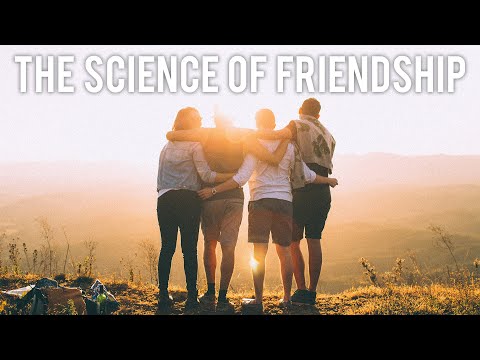
Understanding Friendship | Lydia Denworth | Modern Wisdom Podcast 152
WatchChris Williamson // 51:18
