The Psychology of Transformation: Moving Beyond the 'Lonely Chapter' to Authenticity
Navigating the Weight of Perception
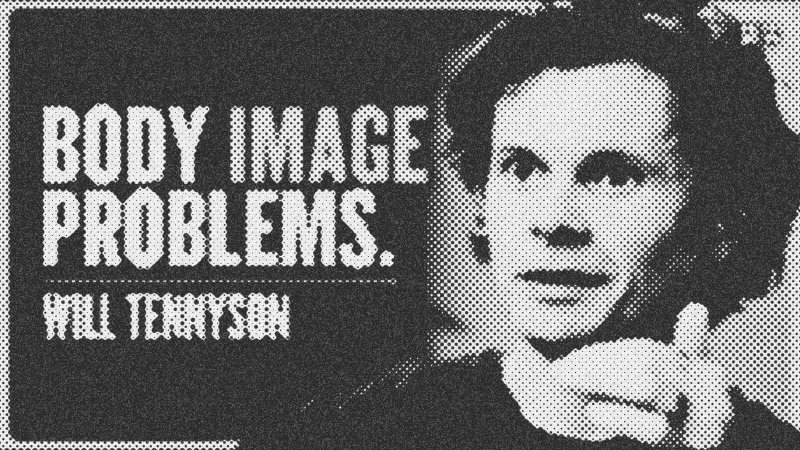
When we look at a success story, we often see the polished 'after' photo—the shredded physique, the thriving career, the radiating confidence. But behind the highlight reel of Will Tennyson lies a history of intense psychological pressure and a complex battle with self-perception. His recent experiment of becoming 'fat for a day' using a medical-grade obese suit wasn't just a YouTube stunt; it was a visceral journey back to a childhood defined by the feeling of being a spectacle.
This experiment revealed a haunting truth about how society treats those whose bodies don't fit the 'fitness' mold. People either laugh, point, or—perhaps most painfully—refuse to make eye contact. This external gaze quickly becomes an internal prison. As a psychologist, I see this often: the 'internalized observer.' When you feel like you are always being watched, you stop acting out of your own values and start acting as a performance for others. For Will, this journey involved losing 100 pounds so rapidly through starvation that he was fainting. The motivation had shifted from health to a desperate attempt to prove himself to others. True transformation only begins when we stop trying to 'fix' ourselves for the crowd and start reclaiming our autonomy.
The Genetic and Biological Realities of Hunger
In the fitness world, there is a pervasive and toxic narrative that weight management is purely a matter of 'willpower' or 'working harder.' This dismisses the profound biological differences between individuals. As discussed in the conversation, behavioral geneticists like Robert Plomin have shown that BMI is significantly heritable—up to 60%. This isn't just about metabolism; it's about the neurobiology of hunger.
Some people possess a higher release of ghrelin (the hunger hormone) or a lower sensitivity to leptin (the fullness hormone). Others have mechanically larger or more 'stretchy' stomachs that require more volume to trigger the sensation of satiety. When someone like Will admits to 'cheating the system' by adding massive amounts of cabbage to his meals to add volume, he isn't being weak; he is managing a biological reality. Empathy in the fitness space must start with the recognition that your 'easy' might be someone else's 'impossible.' Understanding these mechanisms allows us to move away from shame and toward strategic management.
Surviving the 'Lonely Chapter'
One of the most profound concepts explored by Chris Williamson is the Lonely Chapter. This is the period in a personal development journey where you have outgrown your old self and your old social circle, but you haven't yet arrived at your new destination. You are no longer the person who fits in at the local pub, but you aren't yet the person who feels at home in the high-performance gym or the intellectual circle.
You are in a state of 'liminality'—the space between. This chapter is marked by chronic uncertainty. In the movies, the training montage lasts ninety seconds. In reality, it can last five years. During this time, you have no guarantee of glory. You are journaling, meditating, and dieting in a vacuum. It is essential to recognize this phase as a necessary part of growth rather than a sign of failure. The refuge for many during this time is digital content—finding a 'virtual tribe' on YouTube that makes the isolation feel a bit more manageable until the physical reality catches up.
Deconstructing Impostor Syndrome and the Success Bias
Even after reaching three million subscribers and achieving a world-class physique, Will Tennyson admits to 'insane' impostor syndrome. This highlights a critical psychological principle: external achievements rarely fix internal fractures. If you believe you are unworthy of your seat at the table, a bigger table will only make you feel like a bigger fraud.
We often fall into the trap of 'Success Bias' when taking advice from mentors. We look at what a successful person does now rather than what they did to get there. MrBeast might advise focusing on the 'best video possible,' but that advice is for someone who already has a massive production team. For the beginner, the advice should be: 'get the reps in.' The path to overcoming the feeling of being an impostor isn't through more validation; it is through the accumulation of 'proof'—the quiet, unglamorous consistency of doing the work when no one is watching. Over time, these 'small wins' build a foundation of self-efficacy that is harder to shake, even when the 'bad monster' under the bed tries to tell you that you don't belong.
Actionable Practices for Sustainable Change
To move from a state of overwhelm to intentional action, we must simplify our approach to both mental and physical health.
- Macro Fasting: If evening cravings are your downfall, follow Will's strategy of 'saving' your carbs and fats for the end of the day. Consuming high-protein, low-calorie foods like egg whites or Greek yogurt during the day allows you to have 'fun' meals at night without overshooting your caloric needs. This increases compliance by removing the feeling of deprivation.
- The Step Fanaticism: Movement shouldn't always be about intensity. Aim for a high step count—Will aims for 12,500 daily. This isn't just for calorie burning; it is 'therapeutic thinking time.'
- Decentralize Your Identity: Don't let your self-worth rest on a single pillar. As Tim Ferriss suggests, be more than just a 'podcaster' or 'athlete.' Be a friend, a dog owner, or a hobbyist. When one area of your life faces a setback, the others keep you anchored.
- Inject Playfulness: Take your goals seriously, but don't take yourself too seriously. The ability to make a fool of yourself is a 'pressure release valve' that prevents burnout. If you can't laugh at the absurdity of your journey, you're likely to break under the tension of perfectionism.
The Shift to Aging Gracefully
Turning thirty often triggers a realization of mortality that men, in particular, are poorly equipped to handle. We move from feeling like we are 'made of rubber and magic' to noticing gray hairs and longer recovery times. The fitness industry often promotes a 'defy aging at all costs' mentality—epitomized by the extreme protocols of Bryan Johnson. While pushing the limits of longevity is fascinating, we must be careful not to sacrifice the quality of life for the quantity of years.
Aging gracefully means shifting from the 'body as a trophy' to the 'body as a vehicle.' It is about maintaining functionality, mobility, and the capacity to enjoy a meal with loved ones without checking a tracking app. True resilience is the ability to adapt our goals as our biology changes, finding new ways to feel strong and capable without clinging to the ghost of our twenty-year-old selves.
Concluding Empowerment
Your journey of growth is not a linear path to a finish line; it is a series of chapters, some lonelier than others. The discomfort you feel today—the hunger, the uncertainty, the 'out of place' feeling in the gym—is the currency of your future self. You do not need to have unwavering faith in the final outcome to keep moving. You only need the curiosity to see what happens if you don't stop. Recognize your inherent strength, embrace the 'unsexy nuance' of hard work, and remember: the version of you that struggled is the one that gave the version of you today a chance to thrive. Keep stepping forward, one intentional choice at a time.
- AG1
- 7%· products
- Bryan Johnson
- 7%· people
- Chris Williamson
- 7%· people
- Gymshark
- 7%· companies
- Hillsdale College
- 7%· companies
- Other topics
- 64%
The Dark Side of Fitness: “I Starved Myself Until I Fainted" - Will Tennyson (4K)
WatchChris Williamson // 1:25:13
