Constructing Reality: The Psychological Framework of China’s Global Strategy
The Architecture of Asserted Reality
Jamie Metzl highlights a profound shift in how power manifests on the global stage. China operates through a strategy of asserting an imaginary reality and then building the physical infrastructure to force the world to accept it. This isn't merely a territorial dispute; it is a psychological maneuver designed to bypass traditional legal frameworks. By declaring sovereignty over the South China Sea through the nine-dash line, the state creates a new baseline for negotiation. Once they pour cement on a reef, the conversation shifts from "Is this yours?" to "What are you going to do about it?"
Challenging the Post-War Order
The current international system, established after World War II, relies on shared principles of cooperation and law. However, the Chinese Communist Party views this order as a tool of Western primacy meant to stifle their growth. Their goal is to regain the status of the "Middle Kingdom," a historical identity where they sit at the center of regional civilization. To achieve this, they aim for global leadership by 2049, the centenary of the Chinese Revolution. This ambition involves undermining alliances between the United States and regional partners like Japan and Australia.
The First Mover Advantage in Geopolitics
In the South China Sea, China utilizes a "status quo bias" by creating military installations on artificial islands. These land bases function as unsinkable aircraft carriers in a trade-heavy thoroughfare rich in oil and fishing resources. By the time the international community objects, the physical reality is already established. This strategy forces adversaries into a difficult choice: accept the new reality or risk a high-stakes military confrontation. As they invest in hypersonic weapons and nuclear submarines, the cost of challenging these "realities on the ground" continues to rise.
- China
- 12%· countries
- South China Sea
- 12%· locations
- Australia
- 6%· countries
- Chinese Communist Party
- 6%· organizations
- Chinese Revolution
- 6%· events
- Other topics
- 59%
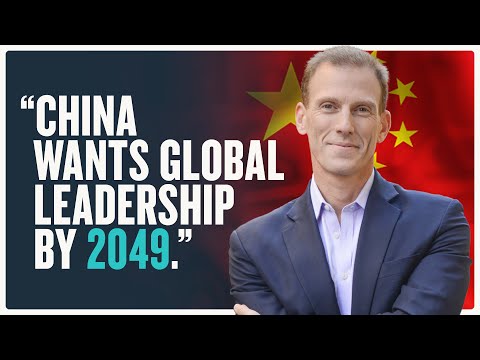
Jamie Metzl - What Is China's Global Plan?
WatchChris Williamson // 8:22
