Unlocking Your Potential: Bridging the Gap Between Intention and Impact
As individuals, we often find ourselves at the crossroads of intention and action, where the path to our aspirations feels laden with obstacles. The journey to personal growth, much like navigating a complex landscape, presents moments where the magnitude of challenges can seem daunting. It is a fundamental truth that many things we perceive as difficult are indeed hard, precisely because they demand more from us. However, our greatest adversaries are often not external forces, but the subtle distractions we permit into our lives, diverting us from the purposeful actions we instinctively know we should be taking. We frequently delay necessary tasks, allowing the procrastination to consume more time and energy than the task itself would have required.
The Power of Initiating Action
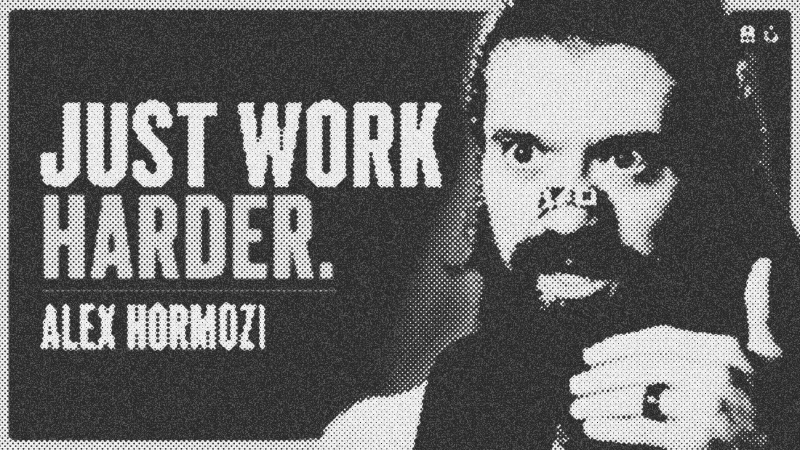
One profound insight reveals that much of our struggle stems from overthinking the initial step. There is immense power in simply beginning, a concept that can be likened to 'pulling the thread'. When we take that first small action, what once seemed overwhelming and intangible begins to unfold into manageable steps. The six problems that initially appeared as an insurmountable mountain transform into discernible tasks, allowing us to 'wrap our arms around it' and tackle it one small piece at a time. This creates a positive reinforcement cycle: with each thread pulled, the unknown becomes tangible, making subsequent actions easier. Conversely, delaying action reinforces the habit of postponement, perpetuating a cycle of 'mañana, mañana'.
At the heart of personal effectiveness lies the distance between a thought or a desire and its realization. The smaller this gap, the greater our personal power. This principle suggests that if we wish to exert more influence over our lives, we must strive to reduce the time between deciding to do something and actually doing it. This means challenging the 'productivity rain dance', the elaborate rituals we sometimes engage in before starting work, which often consume valuable mental energy without truly moving the needle. True preparation, as observed by Alex, involves tasks directly related to the outcome, such as researching an audience for a presentation, rather than superfluous routines that merely serve as a delay tactic. It's about optimizing for outcomes, understanding that effective inputs will naturally follow. Strategies like the 'Rule of 100' or working 'open to goal', as learned by Alex from a successful gym owner, emphasize relentless focus on the inputs that most directly correlate with desired results. This ruthless dedication to specific, high-leverage actions can lead to disproportionate success, transforming work into a game where consistent effort yields significant rewards.
Cultivating Resilience Through Mindset Shifts
Life inevitably brings challenges, but the notion that 'bad things come in threes' often misrepresents reality. Rather, a single negative event can snowball into a cascade of further problems if we fail to cope effectively. For example, a personal setback can lead to professional disengagement, affecting performance, and subsequently, other areas of life. A crucial mindset shift involves recognizing this pattern and actively seeking ways to decrease the likelihood of further negative outcomes, boiling down responses to concrete actions. Individuals demonstrate resilience by maintaining their behavioral trajectory even when faced with adversity. This capacity to separate how one feels from what is required to be done is not merely willpower, but a neurologically represented strengthening of brain connections, particularly in the anterior mid-cingulate cortex, as discussed by Huberman. It is akin to 'hypertrophying' a muscle; the more we engage in tasks we don't feel like doing, especially when we truly resist them, the stronger these neural pathways become. The ultimate expression of this resilience is to move beyond even considering one's feelings, simply doing what is necessary. As Rory Sutherland suggests, things are not what they are, but what we think they are. Reframing our experiences, such as interpreting the physical sensations of an intense workout as enjoyable rather than a heart attack, can profoundly alter our subjective reality. A friend of Alex's, a therapist, even prompts clients facing difficult situations, like divorce, to consider,
- 100 Million Leads
- 2%· book
- Alex Hormozi
- 2%· person
- Andy Groves
- 2%· person
- Anterior mid-cingulate cortex hypertrophy
- 2%· concept
- B.F. Skinner
- 2%· person
- Other topics
- 89%
How Small Wins Compound Into Greatness - Alex Hormozi (4K)
WatchChris Williamson // 3:03:00
