The Economy of Outrage: Protecting Your Emotional Currency in a Performative Age
The Architecture of Constant Offense
We are living in an era where the stock price of outrage is at an all-time high. It functions as a constant carousel, spinning so fast that no matter when a critique of the system is released, it feels immediately timely. This phenomenon is not accidental; it is a structural reality of our digital existence. We have transitioned from a society that values measured discourse to one that prizes the speed of reaction over the depth of understanding. This shift transforms our internal emotional states into a form of public performance, where the goal is no longer to solve a problem but to signal our position within it.
When we look at the mechanics of this modern anger, we see that it has become a tradable commodity. It is an investment of time, energy, and emotion. Historically, this currency had immense value. The Suffragettes and the leaders of the Civil Rights Movement invested their outrage to purchase tangible progress—the right to vote, the dismantling of segregation. Today, however, we are aimlessly investing this precious resource. We throw it at everything from minor advertising blunders to deep-seated systemic injustices with the same level of intensity. By failing to seek a return on our emotional investment, we devalue the currency itself. When the volume is always at ten, we lose the ability to cut through the noise when a situation genuinely demands to be heard.
The Fear of the Fence and Performative Communication
A primary driver of this exhaustion is what we can call the fear of the fence. As humans, we are increasingly terrified of the "corridor of indecision." We worry that if we take the time to say, "I don't know enough yet," or "I need to listen more," we will be perceived as apathetic, uninformed, or worse—complicit. To avoid this social stigma, we rush into rooms and pick sides before we have even processed the facts. Once we have picked a side, we feel shackled to it. We pigheadedly defend a knee-jerk reaction because appearing wishy-washy is seen as a greater sin than being wrong.
This leads directly to Performative Communication. Our social media feeds have become personal PR releases. Every post is a highlight reel designed to project a specific moral image. We become more concerned with seeming progressive than actually being progressive. This is not just a social pressure; it is a biological one. The rush of endorphins that follows a viral tweet or a flurry of likes is a physical reward for being agreed with. We have weaponized our innate need for tribal belonging, using outrage as the tool to prove we are part of the "virtuous" crowd. We perform our goodness in front of a digital audience, often ignoring the fact that real change requires quiet, sustained effort rather than loud, fleeting posts.
Deciphering Intent vs. Impact: The H&M Case Study
To understand where outrage fails, we must look at the distinction between systemic flaws and malicious intent. Take the example of the H&M "monkey" hoodie incident. A black child was photographed wearing a garment labeled "coolest monkey in the jungle." The global reaction was swift and furious, labeling the brand as intentionally racist. However, a deeper psychological analysis suggests a different problem: a failure of employment structure and diversity. For that image to reach the website, a dozen people had to look at it and fail to see the potential for offense.
This was not a multi-million dollar company deciding to be racist for the day; it was an act of massive negligence born from a lack of diverse perspectives in the room. When we react with the same level of knee-jerk anger to a tone-deaf marketing mistake as we do to active white supremacy, we stifle the very conversations needed to fix the underlying system. If the response to every blunder is a total boycott, we lose the opportunity to demand better internal processes and structural changes. We are jumping at the leaves of the tree rather than dismantling the roots of the power structure.
The Myth of Cancel Culture and the Accountability Curtain
The term "cancel culture" is often used as a catch-all for any public backlash, but it is frequently a myth. Figures like JK Rowling are cited as being "cancelled," yet their books continue to sell, and their platforms remain massive. The danger of the cancel culture narrative is that it has created a curtain for public figures to hide behind. Instead of engaging in self-reckoning when they make a mistake, they can claim they are victims of a "snowflake" mob. This inverts the conversation, turning the transgressor into the martyr.
We see this in the case of Danny Baker, who faced backlash for a tweet involving a monkey and a royal baby. Rather than acknowledging the historical weight of that imagery, the conversation was diverted into a debate about free speech and censorship. When we allow this, we lose the ability to hold people accountable for their actions. True accountability requires a space for growth, which is currently absent on the internet. We must accept that people have the capacity to change. If we protest for progress but refuse to acknowledge when someone has actually evolved, we are being hypocrites. You cannot demand change while insisting that people remain tethered to who they were a decade ago.
The Frictionless Path to Polarization
A century ago, if you wanted to express outrage to a large group, it was effortful. You had to physically move, speak to people face-to-face, and witness their reactions. This effort provided a natural "beat" for reflection. You had to ask yourself if the issue was worth the trouble. Today, the path from thought to projection is frictionless. We can broadcast our anger to the entire globe in seconds, detached from the human being on the receiving end. This speed has robbed us of our critical thinking.
We are not biologically built to consume the entire world's news in real-time. Because we are overwhelmed, we consume information thinly—reading only headlines or watching twenty-second clips. This thinly consumed information leads to thinly spread outrage. We form judgments based on Clickbait and out-of-context snippets because we feel an obligation to move with the conversation. If a topic is trending, we feel we must have a "take" on it. This results in the "outrage conga line," where we join a movement without even knowing where it started or where it is going. To regain our sanity, we must reclaim the power to curate our own experiences and realize that not every trending topic requires our emotional participation.
Conclusion: Toward an Outrage Intervention
The future of our public discourse depends on our ability to exercise emotional intelligence over our digital impulses. We must stop conflating mob justice with social justice. While the mob feels good in the moment, it rarely builds anything of lasting value. We need an intervention to move from being "fingers"—scattered and weak—to being a "fist"—concerted, sustained, and impactful.
You owe it to yourself to only be outraged by that which truly moves you. Treat your emotional energy as your life savings. Stop pouring it down the drain on trivialities that offer no return on investment. By becoming more intentional about where we spend our anger, we can restore the power of our voices. Growth happens one intentional step at a time, and the first step is choosing to step off the carousel of constant offense and back into the realm of meaningful, human connection.
- Ashley%20'Dotty'%20Charles
- 6%· people
- BBC
- 6%· companies
- Cancel%20Culture
- 6%· concepts
- Clickbait
- 6%· concepts
- Danny%20Baker
- 6%· people
- Other topics
- 72%
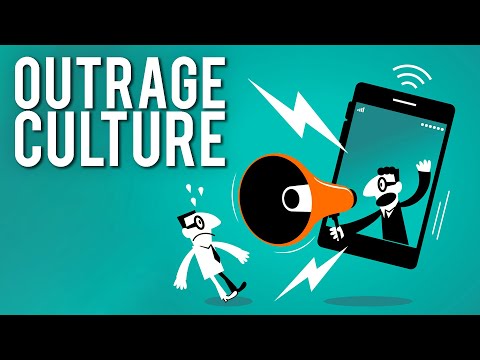
Why Everyone Is Outraged | Ashley 'Dotty' Charles | Modern Wisdom Podcast 204
WatchChris Williamson // 1:09:02
