Jordan Peterson says your desire for comfort is keeping you miserable
The Peril of a Cushioned Life
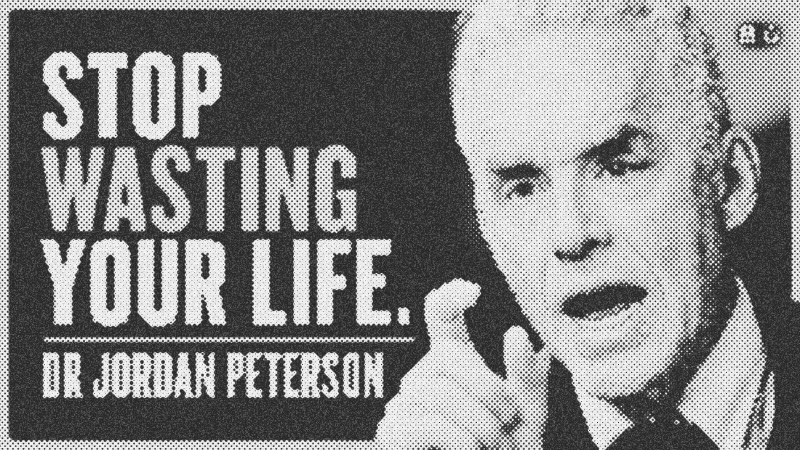
We live in an era of unprecedented comfort. We have engineered a world where physical labor is optional, where ambient temperatures are perfectly regulated, and where instant gratification sits in the palm of our hands. Yet, beneath this veneer of material plenty, a quiet crisis of meaning fester. Dr. Jordan Peterson argues that this lack of friction is precisely what is making us miserable. Life is inherently difficult, demanding, and often tragic. When we try to avoid this reality by hiding in a cushioned existence, we do not escape suffering; we merely exchange the clean, transformative battle of adventure for the slow, toxic rot of bitterness.
There is a profound moral obligation to do remarkable things with your existence. This is not a call to superficial success or raw ambition. Rather, it is a defensive strategy against the darkness of your own heart. When you refuse to face the challenges of life head-on, you do not remain static. You retreat. That retreat breeds resentment. You look at those who are competent, those who are striving and succeeding, and instead of feeling inspired, you feel jealous. You start wishing for their downfall. This is the psychological origin of malevolence. To avoid this descent into cynicism, you must choose the path of maximum adventure, which is fundamentally tethered to the pursuit of truth.
Moving Past the Bait of Cynicism
Cynicism is a seductive trap. It often masquerades as wisdom, presenting itself as a mature step up from naive optimism. When you are young and naive, you see only the good in the world. You have no conception of malevolence, either in the hearts of others or in your own. But eventually, life bites you. You experience betrayal, failure, or loss. Your naive worldview shatters, and you fall into cynicism. The cynical mind looks at the wreckage and says, "Everything is corrupt, nothing can get better, and anyone who tries is a fool."
In one sense, cynicism is an improvement over naivety. At least the veils have fallen from your eyes. You see the darker aspects of reality. But the great danger is ending there. Cynicism allied with arrogance is a terminal diagnosis for the soul. It lets you off the hook. It gives you a perfect excuse to avoid responsibility, to pursue short-term hedonic pleasure, and to dismiss the struggles of others. True wisdom requires you to be cynical about your own cynicism. Ask yourself: how does this jaded attitude serve my cowardice? To move beyond this state, you must substitute courage for naivety. This means looking directly at the potential catastrophes of the future and choosing to move forward with faith anyway.
The Anatomy of True Faith and False Personas
We must rescue the word "faith" from its modern, superficial definitions. For critics like Richard Dawkins, faith is dismissed as mere belief in superstitious nonsense. In its deepest existential sense, faith is a commitment to action. It is the willing decision to act out the proposition that you can navigate whatever wave life throws at you, provided you do so with goodwill and truth. It is not an intellectual claim about the cosmos; it is a moral stance toward the future.
This stands in stark contrast to the delusions of the modern world, particularly the creation of false online personas. Many young people today attempt to solve their lack of identity by constructing a highly marketed, sanitized version of themselves on social media. They try to get credit without doing the work. This practice is psychologically ruinous. You cannot construct a false persona designed to extract admiration from the world without that falsehood altering your soul. When you practice lying, you rewire your neural circuitry. You begin to see the world through the warped frame of your own deceptions, blinding yourself to the actual opportunities and dangers in your path.
This dynamic is highly visible in modern subcultures, such as those that grew out of the pickup artist community. Men were taught scripted, psychopathic tricks to feign confidence and manipulate women for short-term gratification. But as host Chris Williamson points out, this behavior only deepens the gap between who they are and the extravagant persona they must maintain. It breeds a profound, jaded hostility toward relationships. When you treat others as objects for short-term consumption, you end up lonely, anxious, and deeply bitter.
Scaling the Dragon to Size
When we set high standards for ourselves, the gap between who we are today and who we want to be can feel utterly paralyzing. You look at your ideal self—the great thinker, the perfectly fit athlete, the highly competent professional—and you feel despondent. This pain can be so intense that you retreat into your own "inner citadel," a spiritual surrender where you convince yourself that the goals you actually want are foolish and not worth pursuing. You cut off your own legs and claim you never wanted to walk anyway.
To overcome this paralysis, you must practice the art of humility. If the gap between you and your ideal is crushing you, you have created a dragon too large for you to fight. You must scale the dragon down. Reduce the target until it is small enough that you are actually willing to move toward it. If you cannot clean your entire house, clean one drawer. If you cannot go to the gym for an hour, do ten pushups.
This is the practical reality of the Matthew Principle: to those who have, more will be given. When you take even a trivial, seemingly shameful step in the right direction, you initiate an exponential process. Growth does not occur in a linear fashion; it compounds geometrically. Once you get the ball rolling, your confidence and competence will build at a rate that will astonish you. But you must be willing to start at the bottom, accepting the temporary shame of your own weakness.
The Wisdom of adversarial Encounters
One of the most counterintuitive aspects of personal development is the necessity of our enemies. We naturally seek comfort, validation, and agreeable company. But our friends often lie to us to keep the peace. It is our enemies, our harshest critics, who will point out the genuine flaws in our character that we are too blind to see.
This is why we must learn to appreciate adversarial encounters, even when they are incredibly painful. Peterson reflects on his own career, noting that his most hostile media interviews, such as his famous clashes with journalists, ultimately did him the most good. They forced him to examine his arguments, look into the nooks and crannies of his own mind, and refine his speech to be crystal clear. When you are attacked, do not simply react with outrage. Look at the criticism with clinical detachment. Is there a grain of truth in what they are saying? If so, seize it. Use their hostility as a form of alchemy, transforming their attempt to tear you down into a tool to build yourself up.
This requires intellectual humility, which is the willingness to ask stupid questions and admit your own ignorance. The truly foolish person is the one who pretends to know everything, thereby closing themselves off to any potential learning. When you ask a genuine question, even if it reveals your lack of knowledge, you allow the world to correct you. Do this a thousand times, and you are no longer ignorant.
The Sacred Ground of Everyday Action
True sanity is not something you carry around inside your head. It is not a subjective state of mind that you can achieve through positive thinking or isolated meditation. Your sanity is the dynamic concordance between you and the world. It is embedded in your relationships, your family, your work, and your community. When you isolate yourself, pursuing isolated, short-term hedonic goals, you fall into a solipsistic madness.
To find your footing in a chaotic world, you must adopt a sacrificial relationship to reality. This is the deep lesson of ancient mythological narratives, such as the story of Abraham. Abraham had a comfortable, sheltered life, but he chose to leave his zone of comfort to pursue the adventure of life, making increasingly difficult sacrifices along the way. Work itself is a sacrificial gesture—the surrender of present ease for the promise of a better future.
When you align your actions with the highest good you can conceptualize, and you speak the truth without trying to manipulate the outcome, you place the force of reality behind you. There is no greater adventure than this. It is a path of risk, discomfort, and constant self-examination. But it is the only path that leads to genuine, earned wisdom and a life that is truly worth living.
- Andrew Tate
- 13%· people
- Ben Shapiro
- 13%· people
- Chris Williamson
- 13%· people
- Douglas Murray
- 13%· people
- Elon Musk
- 13%· people
- Other topics
- 38%
The Gap Between Who You Are and Who You Could Be - Jordan Peterson (4K)
WatchChris Williamson // 3:23:32
